The Francis Crick Institute, 1 Midland Road, London NW1 1AT, United Kingdom.
Phys Rev Lett. 2018 Dec 7;121(23):238102. doi: 10.1103/PhysRevLett.121.238102.
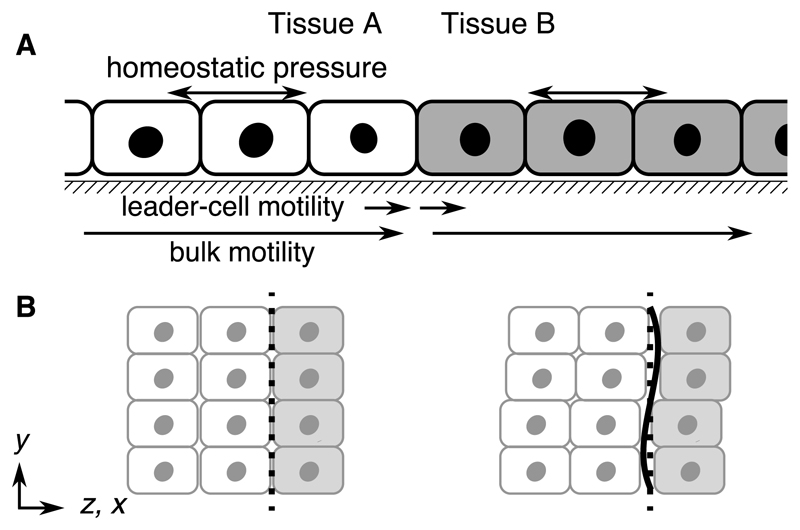
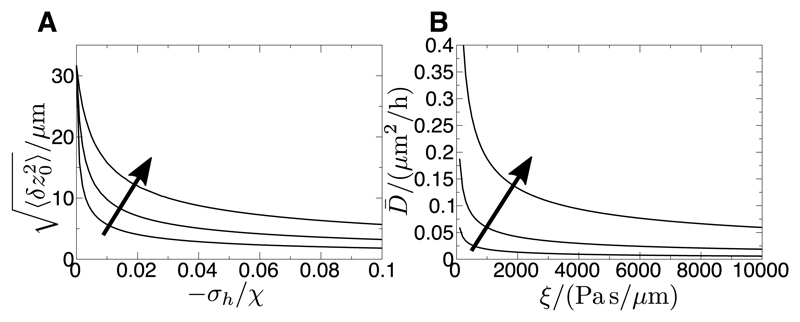
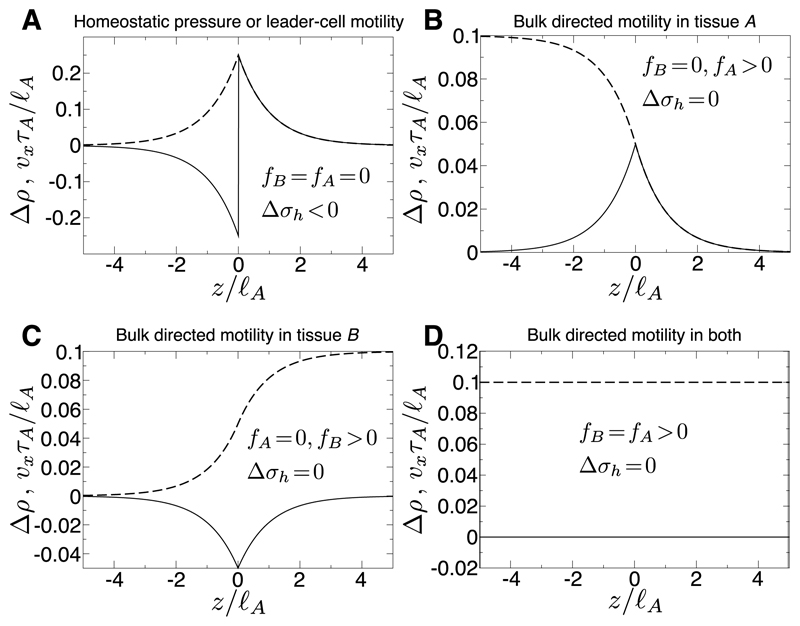
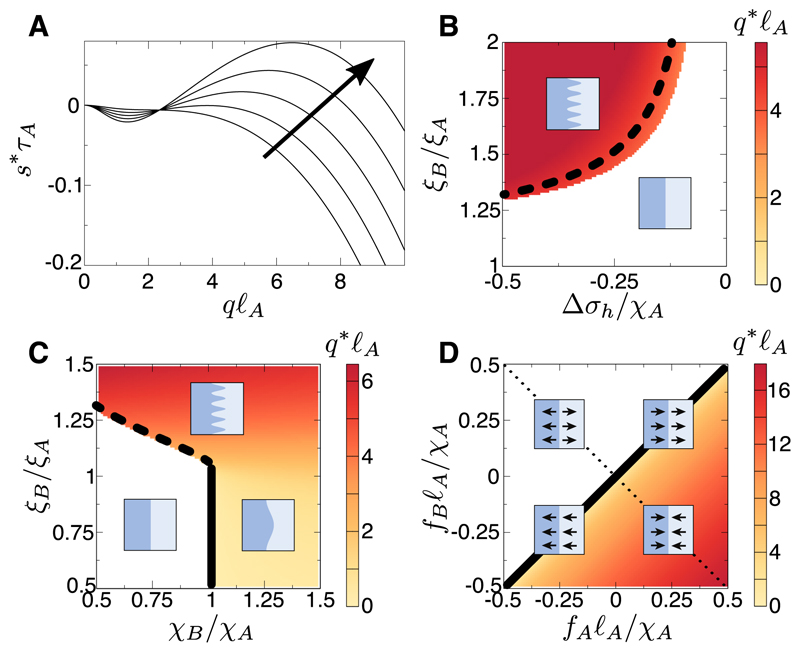
Cell division and death can be regulated by the mechanical forces within a tissue. We study the consequences for the stability and roughness of a propagating interface by analyzing a model of mechanically regulated tissue growth in the regime of small driving forces. For an interface driven by homeostatic pressure imbalance or leader-cell motility, long and intermediate-wavelength instabilities arise, depending, respectively, on an effective viscosity of cell number change, and on substrate friction. A further mechanism depends on the strength of directed motility forces acting in the bulk. We analyze the fluctuations of a stable interface subjected to cell-level stochasticity, and find that mechanical feedback can help preserve reproducibility at the tissue scale. Our results elucidate mechanisms that could be important for orderly interface motion in developing tissues.
细胞分裂和死亡可以受到组织内机械力的调节。我们通过分析在小驱动力作用下机械调节组织生长的模型,研究了对传播界面稳定性和粗糙度的影响。对于由体内平衡压力失衡或先导细胞运动驱动的界面,会出现长和中等波长的不稳定性,分别取决于细胞数量变化的有效粘度和基底摩擦。另一个机制取决于在体内定向运动力的强度。我们分析了稳定界面在细胞水平随机性下的波动,发现机械反馈可以帮助在组织尺度上保持重现性。我们的研究结果阐明了在发育组织中有序界面运动可能很重要的机制。