Ren Jun, Niu Gengming, Wang Xin, Song Tao, Hu Zhiqing, Ke Chongwei
Department of General Surgery, Shanghai Fifth People's Hospital, Fudan University, Shanghai, China.
J Cancer. 2018 Nov 13;9(24):4586-4595. doi: 10.7150/jca.27672. eCollection 2018.
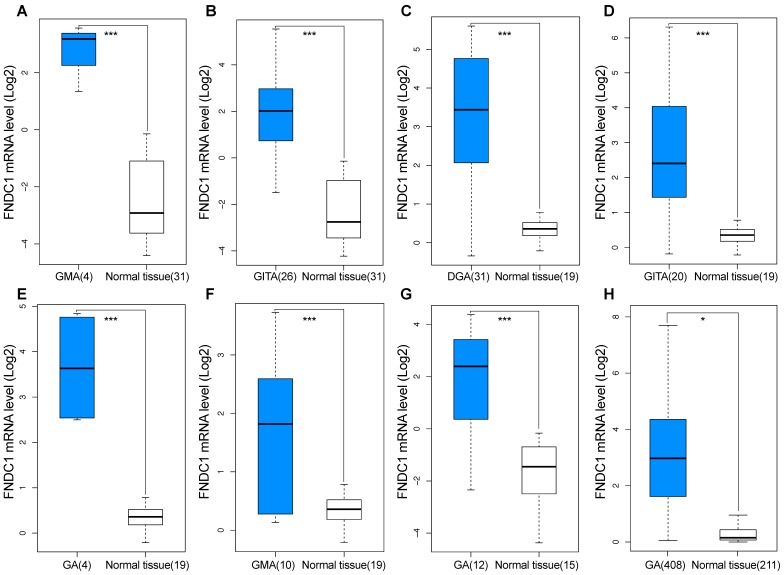
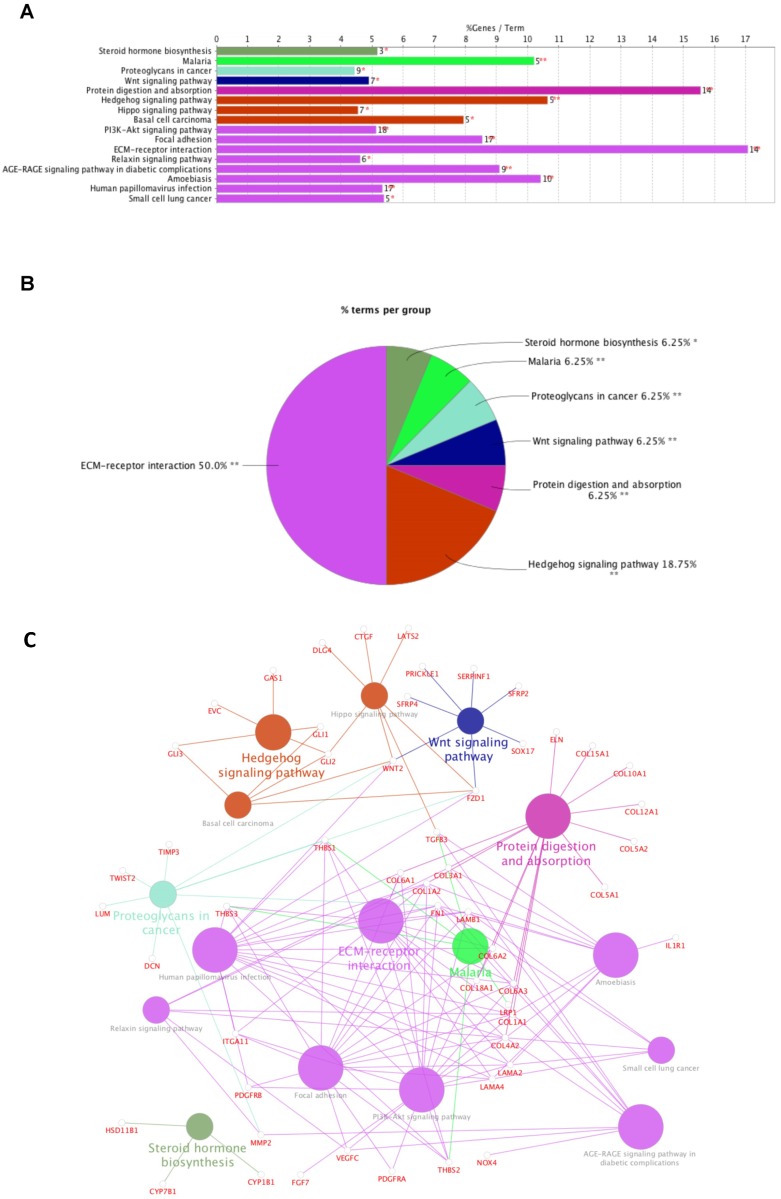
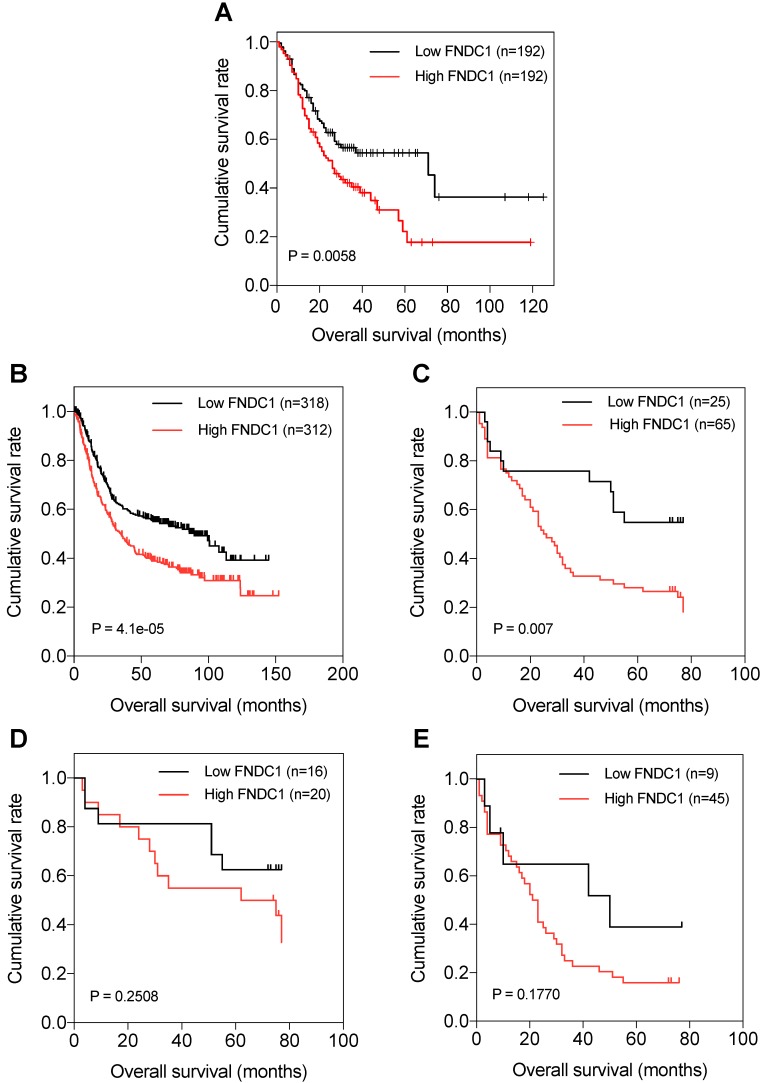
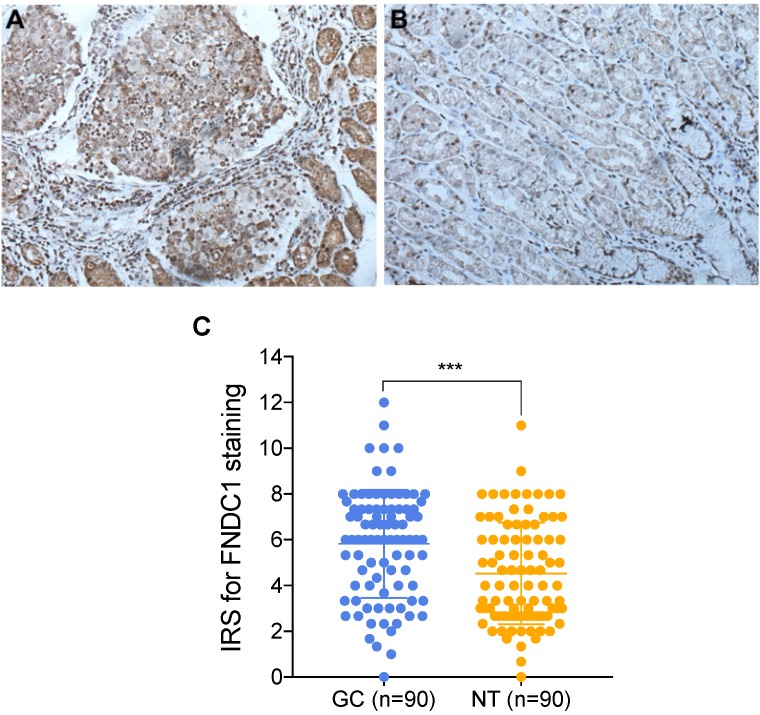
The aims of this study were to compare the expression of fibronectin type III domain containing 1 (FNDC1) in gastric cancer (GC) and normal gastric tissue, to explore the prognostic significance of FNDC1 expression in patients with gastric adenocarcinoma, and to analyze FNDC1-related signaling pathways. The expression level of FNDC1 was initially predicted using the Oncomine and Cancer Genome Atlas databases. A Kaplan-Meier plotter database was mined to examine the clinical prognostic significance of FNDC1 mRNA in patients with GC. Subsequently, immunohistochemistry was used to measure FNDC1 protein expression levels in tissue from 90 cases of GC and paired adjacent normal tissue. Kaplan-Meier univariate and Cox multivariate survival analyses were used to determine the prognostic role of FNDC1 expression. Bioinformatic data indicated that FNDC1 mRNA expression levels were significantly highly expressed in GC compared with normal gastric tissue (all < 0.05), and patients with GC with high FNDC1 mRNA expression levels had remarkably lower overall survival (all < 0.01). Immunohistochemical results revealed that expression levels of FNDC1 protein were significantly increased in GC compared with normal gastric tissue ( < 0.001). Additionally, Kaplan-Meier univariate and Cox multivariate survival analyses indicated that increased expression of FNDC1 was an independent predictor of poor prognosis in patients with GC (all < 0.05). FNDC1 was highly expressed in GC, and high expression of FNDC1 was an independent predictor of poor prognosis in patients with GC. FNDC1 co-expressed genes were largely enriched in extracellular matrix-receptor interactions, which are closely related to tumor metastasis.
本研究的目的是比较含III型纤连蛋白结构域1(FNDC1)在胃癌(GC)组织和正常胃组织中的表达情况,探讨FNDC1表达在胃腺癌患者中的预后意义,并分析与FNDC1相关的信号通路。首先利用Oncomine和癌症基因组图谱数据库预测FNDC1的表达水平。挖掘Kaplan-Meier plotter数据库以检验FNDC1 mRNA在GC患者中的临床预后意义。随后,采用免疫组织化学法检测90例GC组织及其配对的癌旁正常组织中FNDC1蛋白的表达水平。采用Kaplan-Meier单因素和Cox多因素生存分析来确定FNDC1表达的预后作用。生物信息学数据表明,与正常胃组织相比,FNDC1 mRNA在GC中显著高表达(均P<0.05),且FNDC1 mRNA高表达的GC患者总生存期显著较低(均P<0.01)。免疫组织化学结果显示,与正常胃组织相比,GC中FNDC1蛋白表达水平显著升高(P<0.001)。此外,Kaplan-Meier单因素和Cox多因素生存分析表明,FNDC1表达增加是GC患者预后不良的独立预测因素(均P<0.05)。FNDC1在GC中高表达,且FNDC1高表达是GC患者预后不良的独立预测因素。FNDC1共表达基因主要富集于细胞外基质-受体相互作用,这与肿瘤转移密切相关。