Teder Hindrek, Koel Mariann, Paluoja Priit, Jatsenko Tatjana, Rekker Kadri, Laisk-Podar Triin, Kukuškina Viktorija, Velthut-Meikas Agne, Fjodorova Olga, Peters Maire, Kere Juha, Salumets Andres, Palta Priit, Krjutškov Kaarel
1Competence Centre on Health Technologies, Tartu, Estonia.
2Institute of Biomedicine and Translational Medicine, University of Tartu, Tartu, Estonia.
NPJ Genom Med. 2018 Dec 18;3:34. doi: 10.1038/s41525-018-0072-5. eCollection 2018.
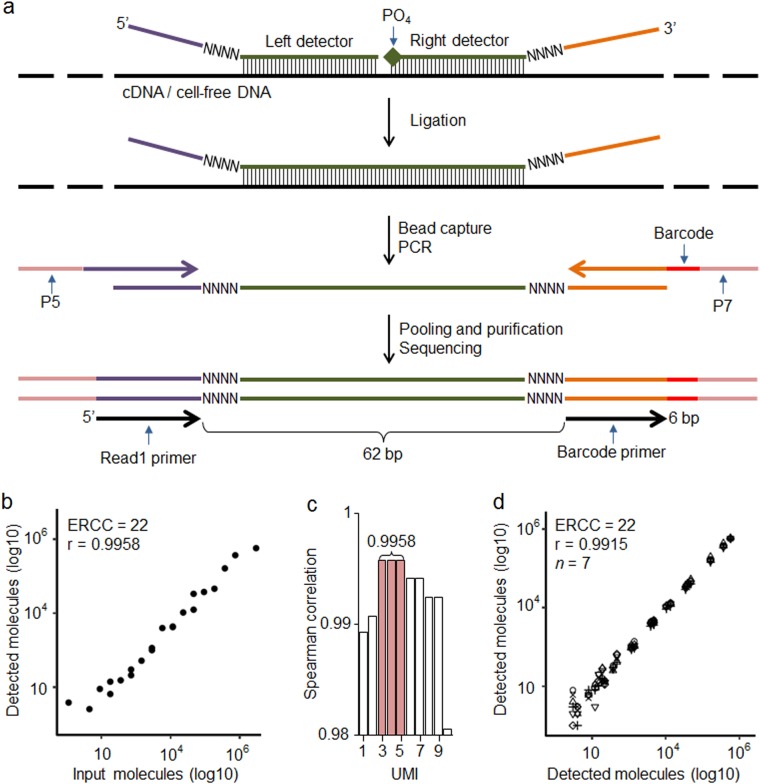
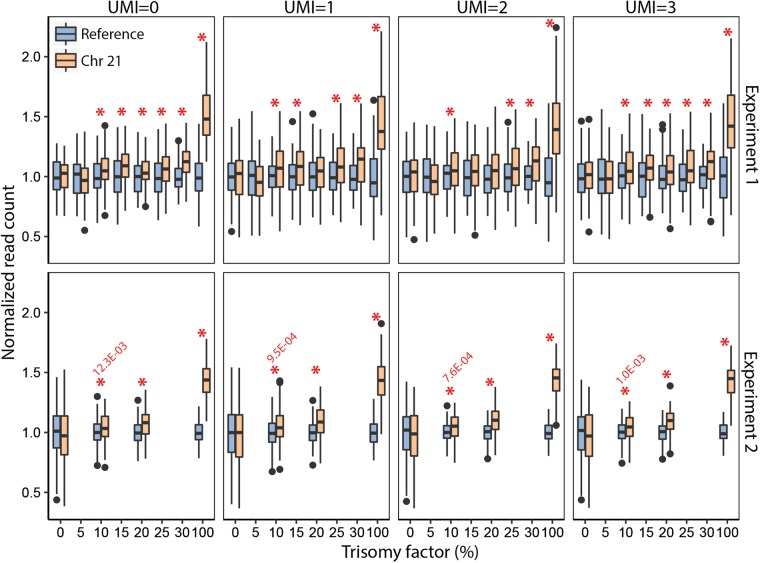
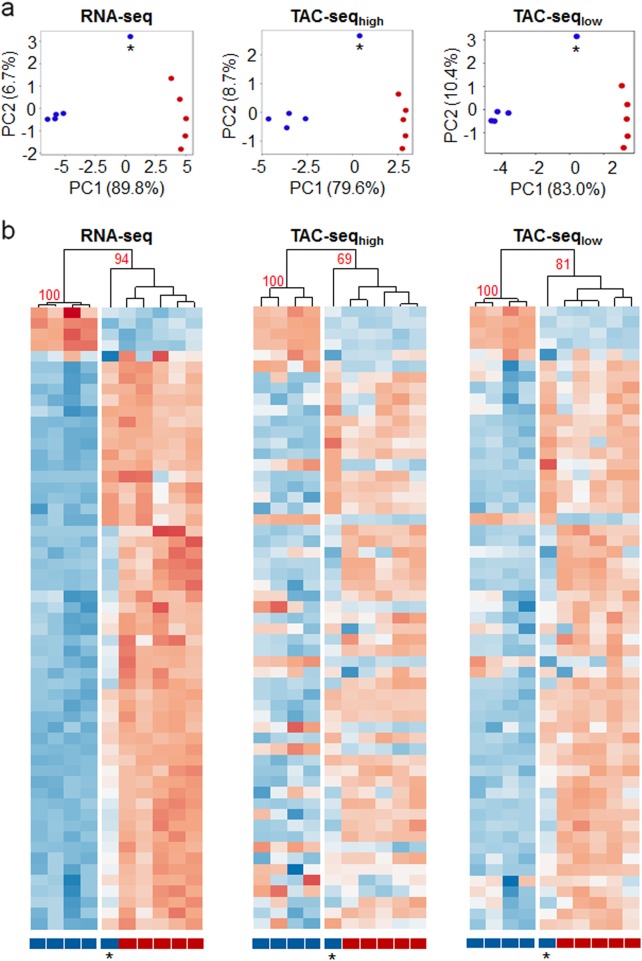
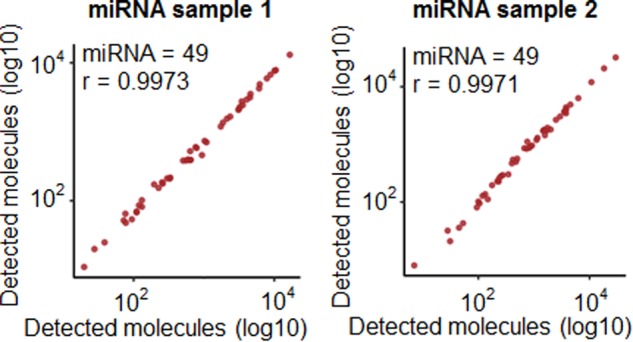
Targeted next-generation sequencing (NGS) methods have become essential in medical research and diagnostics. In addition to NGS sensitivity and high-throughput capacity, precise biomolecule counting based on unique molecular identifier (UMI) has potential to increase biomolecule detection accuracy. Although UMIs are widely used in basic research its introduction to clinical assays is still in progress. Here, we present a robust and cost-effective TAC-seq (Targeted Allele Counting by sequencing) method that uses UMIs to estimate the original molecule counts of mRNAs, microRNAs, and cell-free DNA. We applied TAC-seq in three different clinical applications and compared the results with standard NGS. RNA samples extracted from human endometrial biopsies were analyzed using previously described 57 mRNA-based receptivity biomarkers and 49 selected microRNAs at different expression levels. Cell-free DNA aneuploidy testing was based on cell line (47,XX, +21) genomic DNA. TAC-seq mRNA profiling showed identical clustering results to transcriptome RNA sequencing, and microRNA detection demonstrated significant reduction in amplification bias, allowing to determine minor expression changes between different samples that remained undetermined by standard NGS. The mimicking experiment for cell-free DNA fetal aneuploidy analysis showed that TAC-seq can be applied to count highly fragmented DNA, detecting significant ( = 7.6 × 10) excess of chromosome 21 molecules at 10% fetal fraction level. Based on three proof-of-principle applications we demonstrate that TAC-seq is an accurate and highly potential biomarker profiling method for advanced medical research and diagnostics.
靶向新一代测序(NGS)方法在医学研究和诊断中已变得至关重要。除了NGS的灵敏度和高通量能力外,基于独特分子标识符(UMI)的精确生物分子计数有潜力提高生物分子检测的准确性。尽管UMIs在基础研究中被广泛使用,但其引入临床检测仍在进行中。在此,我们提出了一种强大且经济高效的TAC-seq(通过测序进行靶向等位基因计数)方法,该方法使用UMIs来估计mRNA、微小RNA和游离DNA的原始分子数量。我们将TAC-seq应用于三种不同的临床应用,并将结果与标准NGS进行比较。从人子宫内膜活检中提取的RNA样本使用先前描述的57种基于mRNA的接受性生物标志物和49种不同表达水平的选定微小RNA进行分析。游离DNA非整倍体检测基于细胞系(47,XX, +21)基因组DNA。TAC-seq mRNA谱分析显示与转录组RNA测序具有相同的聚类结果,微小RNA检测显示扩增偏差显著降低,从而能够确定不同样本之间标准NGS未确定的微小表达变化。游离DNA胎儿非整倍体分析的模拟实验表明,TAC-seq可用于对高度片段化的DNA进行计数,在10%胎儿比例水平检测到21号染色体分子显著过量(= 7.6 × 10)。基于三个原理验证应用,我们证明TAC-seq是一种用于先进医学研究和诊断的准确且极具潜力的生物标志物谱分析方法。