Department of Pediatrics, Sainte-Justine University Hospital and Research Center, University of Montreal, Montreal, Quebec, Canada.
Department of Pediatrics, Children's Hospital of Eastern Ontario, University of Ottawa, Ottawa, Ontario, Canada.
PLoS One. 2019 Jan 4;14(1):e0210366. doi: 10.1371/journal.pone.0210366. eCollection 2019.
Risk of developing a malignancy when born premature is unknown. We hypothesised that risk of certain cancers might be increased in youth born preterm versus term. We therefore performed a systematic review and meta-analysis to evaluate the incidence of malignancy in the context of preterm birth, according to various cancer types.
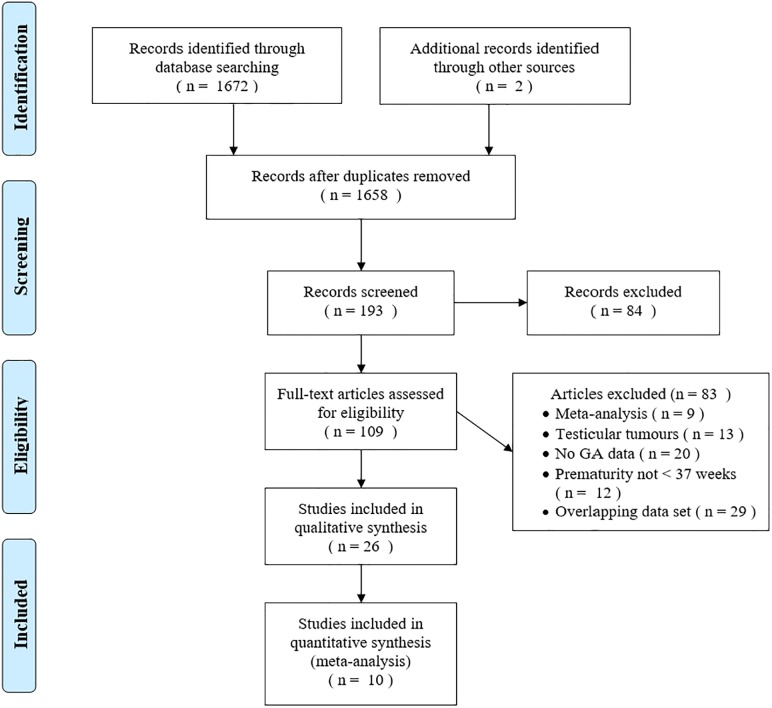
The study was designed per MOOSE and PRISMA guidelines. Articles were identified through November 2015. Observational studies exploring the association between childhood malignancy and birth characteristics were included. Of the 1658 records identified, 109 full text articles were evaluated for eligibility. Random effects meta-analyses were conducted on 10/26 studies retained; 95% confidence intervals were computed and adjusted following sensitivity analysis. Publication bias was evaluated using funnel plots, Begg's and Egger's tests.
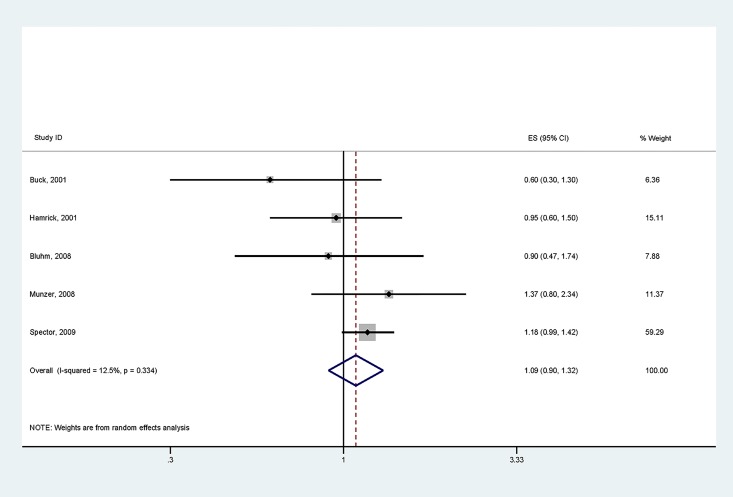
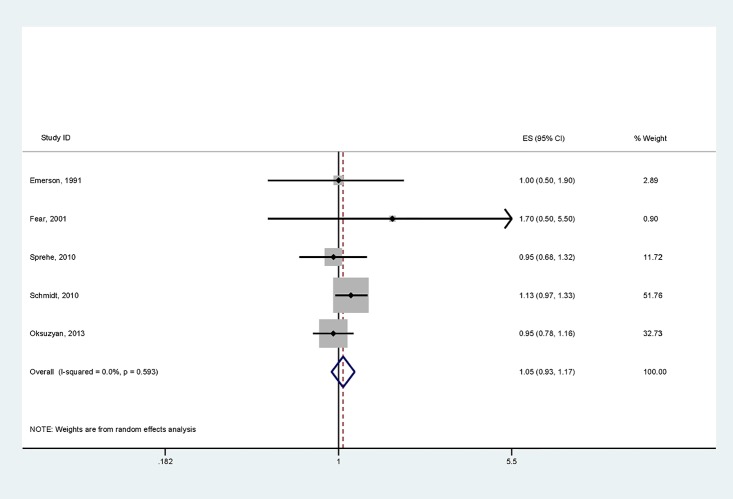
No differences in risk of primary central nervous system tumor [OR 1.05; 95% CI 0.93-1.17, 5 studies, 580 cases] and neuroblastoma [OR 1.09; 95% CI 0.90-1.32, 5 studies, 211 cases] were observed in individuals born <37 versus ≥37 weeks' gestation. Preterm birth was consistently associated with hepatoblastoma [ORs 3.12 (95% CI 2.32-4.20), 1.52 (95% CI 1.1-2.1), 1.82 (95% CI 1.01-3.26), and 2.65 (95% CI 1.98-3.55)], but not leukemia, astrocytoma, ependymoma, medulloblastoma, lymphoma, nephroblastoma, rhabdomyosarcoma, retinoblastoma or thyroid cancer.
Children born premature may be at increased risk for hepatoblastoma but there is no strong evidence of an increased risk of primary central nervous system tumours or neuroblastoma. There is insufficient evidence to conclude whether prematurity modulates the risk of other childhood cancers.
早产儿发生恶性肿瘤的风险尚不清楚。我们假设与足月产儿相比,早产儿发生某些癌症的风险可能会增加。因此,我们进行了系统评价和荟萃分析,根据各种癌症类型,评估早产儿背景下恶性肿瘤的发生率。
该研究根据 MOOSE 和 PRISMA 指南进行设计。通过 2015 年 11 月检索文献。纳入了探讨儿童期恶性肿瘤与出生特征之间关联的观察性研究。在确定的 1658 份记录中,评估了 109 篇全文文章的资格。对保留的 26 项研究中的 10 项进行了随机效应荟萃分析;计算了 95%置信区间,并在敏感性分析后进行了调整。使用漏斗图、贝格和埃格检验评估发表偏倚。
在出生时 <37 周与≥37 周的个体中,未观察到原发性中枢神经系统肿瘤(OR 1.05;95%CI 0.93-1.17,5 项研究,580 例)和神经母细胞瘤(OR 1.09;95%CI 0.90-1.32,5 项研究,211 例)风险的差异。早产儿出生与肝母细胞瘤持续相关(ORs 3.12(95%CI 2.32-4.20)、1.52(95%CI 1.1-2.1)、1.82(95%CI 1.01-3.26)和 2.65(95%CI 1.98-3.55)),但与白血病、星形细胞瘤、室管膜瘤、髓母细胞瘤、淋巴瘤、肾母细胞瘤、横纹肌肉瘤、视网膜母细胞瘤或甲状腺癌无关。
早产儿出生的儿童患肝母细胞瘤的风险可能增加,但没有强有力的证据表明原发性中枢神经系统肿瘤或神经母细胞瘤的风险增加。没有足够的证据可以得出早产儿是否会改变其他儿童癌症的风险的结论。