Department of Science, University of Rome "Roma TRE", Viale Guglielmo Marconi, 446, 00146 Rome, Italy.
Cells. 2019 Jan 3;8(1):19. doi: 10.3390/cells8010019.
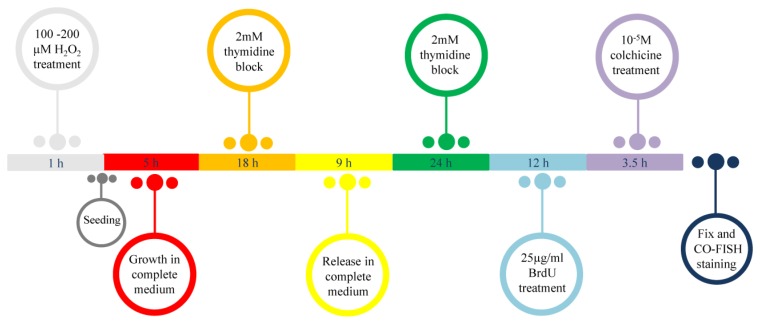
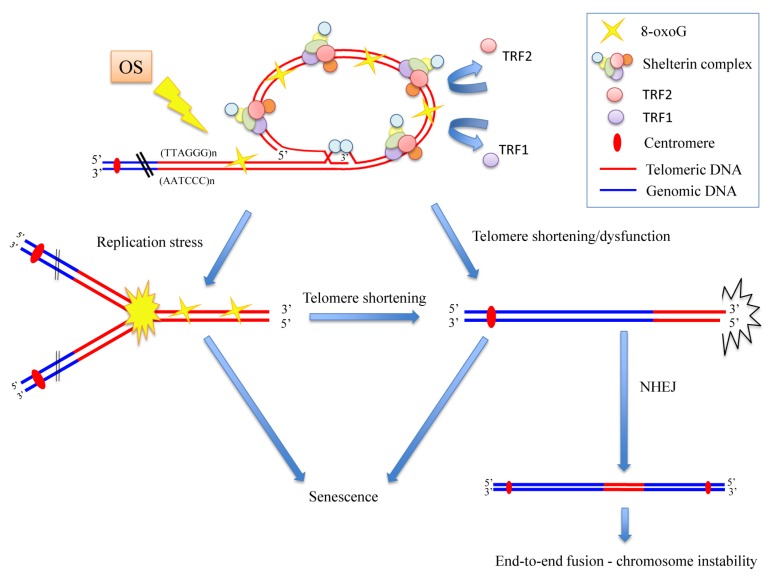
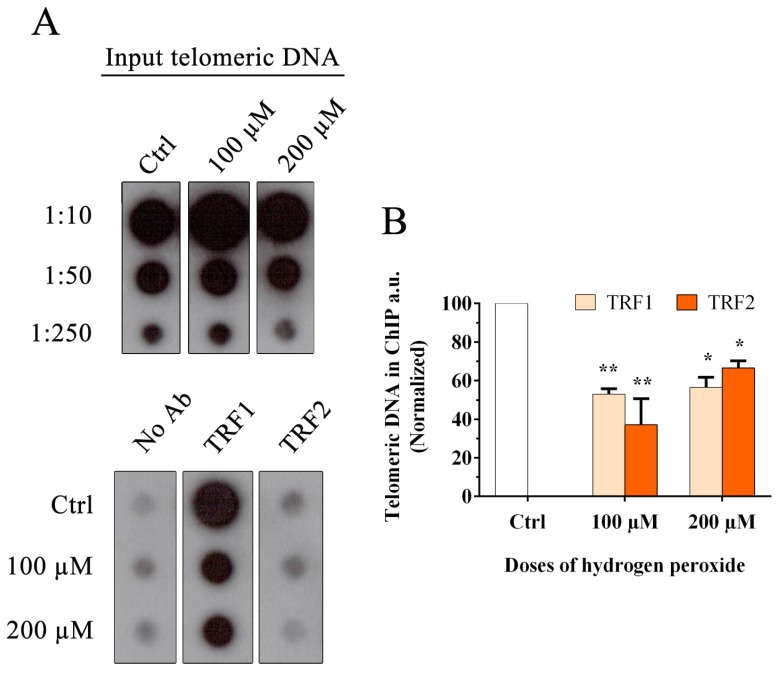
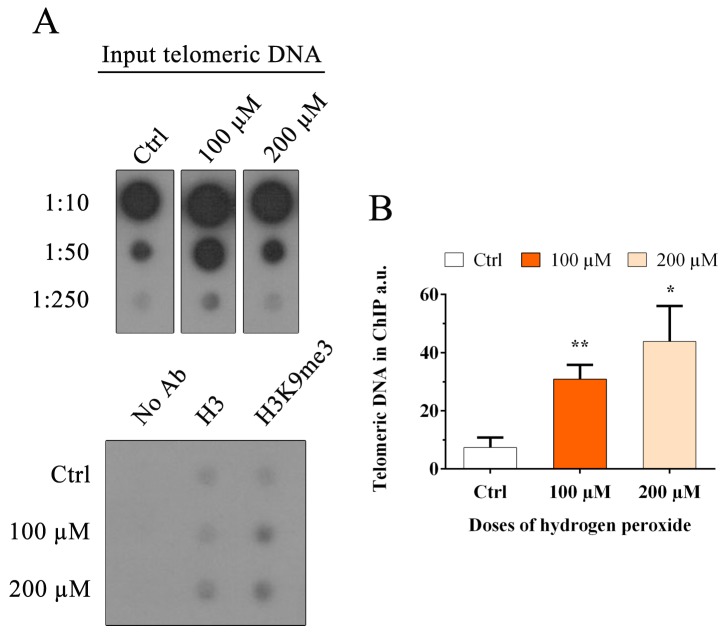
Oxidative DNA damage, particularly 8-oxoguanine, represents the most frequent DNA damage in human cells, especially at the telomeric level. The presence of oxidative lesions in the DNA can hinder the replication fork and is able to activate the DNA damage response. In this study, we wanted to understand the mechanisms by which oxidative damage causes telomere dysfunction and senescence in human primary fibroblasts. After acute oxidative stress at telomeres, our data demonstrated a reduction in TRF1 and TRF2, which are involved in proper telomere replication and T-loop formation, respectively. Furthermore, we observed a higher level of γH2AX with respect to 53BP1 at telomeres, suggesting a telomeric replication fork stall rather than double-strand breaks. To confirm this finding, we studied the replication of telomeres by Chromosome Orientation-FISH (CO-FISH). The data obtained show an increase in unreplicated telomeres after hydrogen peroxide treatment, corroborating the idea that the presence of 8-oxoG can induce replication fork arrest at telomeres. Lastly, we analyzed the H3K9me3 histone mark after oxidative stress at telomeres, and our results showed an increase of this marker, most likely inducing the heterochromatinization of telomeres. These results suggest that 8-oxoG is fundamental in oxidative stress-induced telomeric damage, principally causing replication fork arrest.
氧化 DNA 损伤,特别是 8-氧鸟嘌呤,是人类细胞中最常见的 DNA 损伤,尤其是在端粒水平。DNA 中的氧化损伤会阻碍复制叉的前进,并能激活 DNA 损伤反应。在这项研究中,我们想了解氧化损伤导致人类原代成纤维细胞端粒功能障碍和衰老的机制。在端粒处发生急性氧化应激后,我们的数据表明,参与适当端粒复制和 T 环形成的 TRF1 和 TRF2 减少。此外,我们在端粒处观察到相对于 53BP1 的更高水平的 γH2AX,这表明端粒复制叉停滞而不是双链断裂。为了证实这一发现,我们通过染色体定向荧光原位杂交(CO-FISH)研究了端粒的复制。获得的数据显示,过氧化氢处理后未复制的端粒增加,这证实了 8-氧鸟嘌呤的存在可以诱导端粒处复制叉停滞的观点。最后,我们在端粒处发生氧化应激后分析了 H3K9me3 组蛋白标记,结果显示该标记增加,很可能诱导端粒异染色质化。这些结果表明,8-氧鸟嘌呤在氧化应激诱导的端粒损伤中是至关重要的,主要导致复制叉停滞。