Department of Urology, Tongji Hospital, Tongji Medical College, Huazhong University of Science and Technology, Wuhan, Hubei, AL, China (mainland).
Institute of Urology of Hubei Province, Wuhan, Hubei, China (mainland).
Med Sci Monit. 2019 Jan 7;25:193-239. doi: 10.12659/MSM.912294.
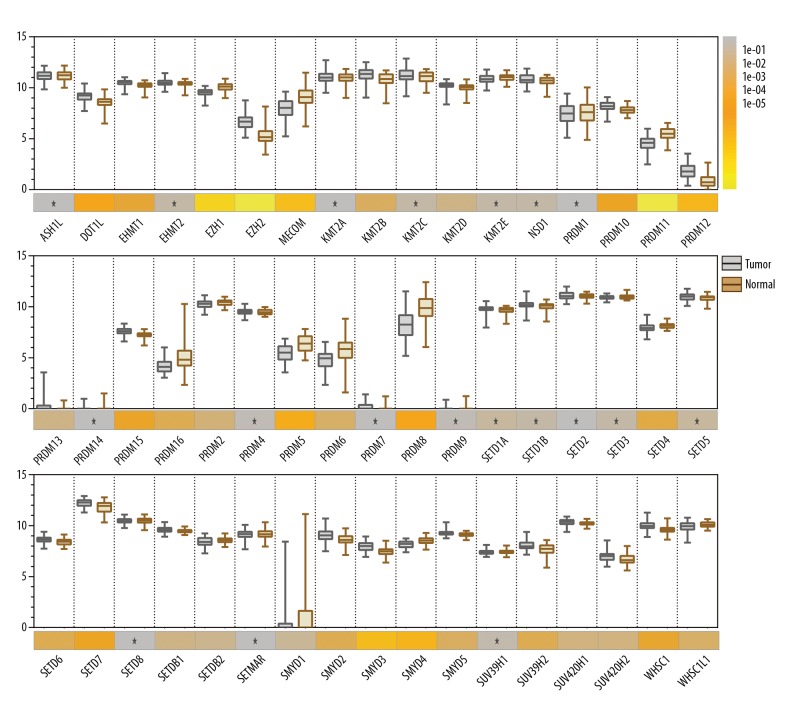
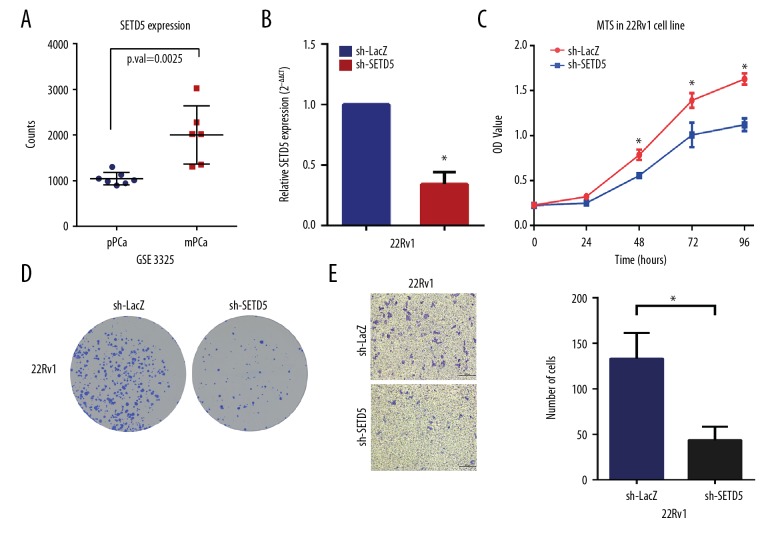
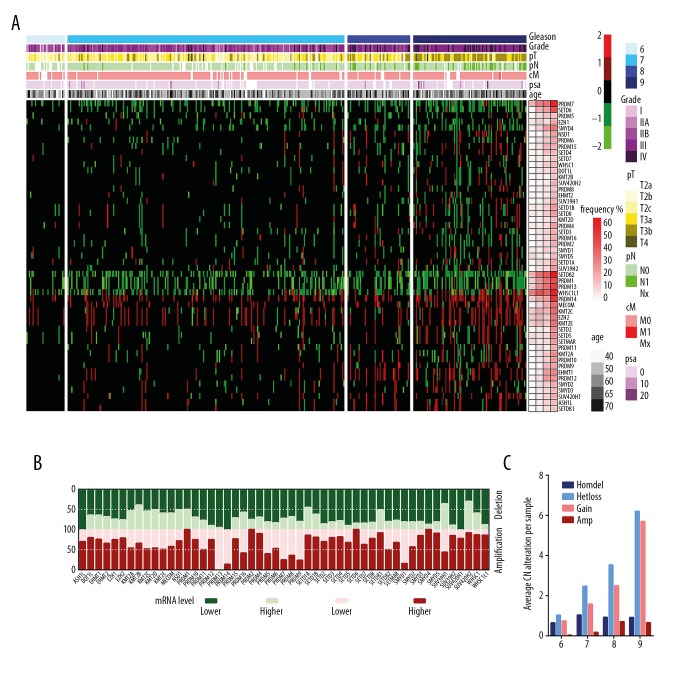
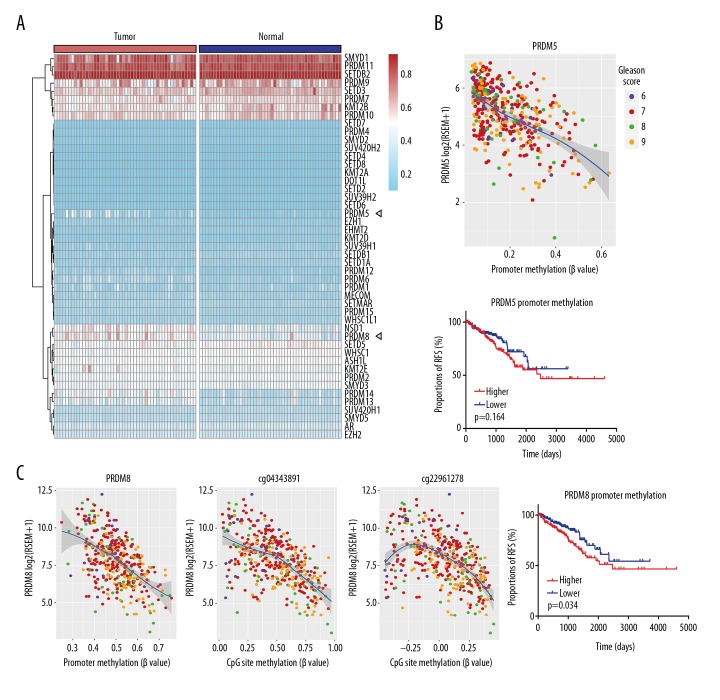
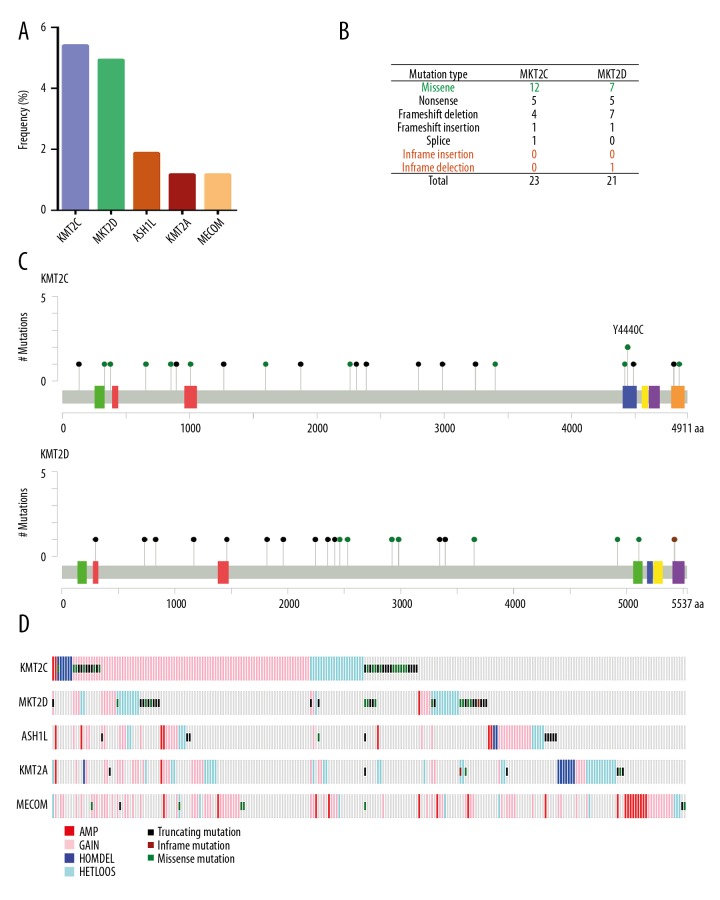
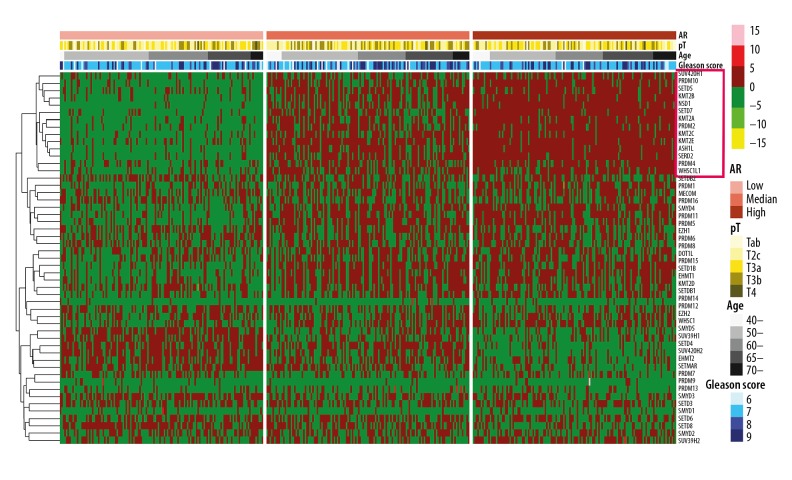
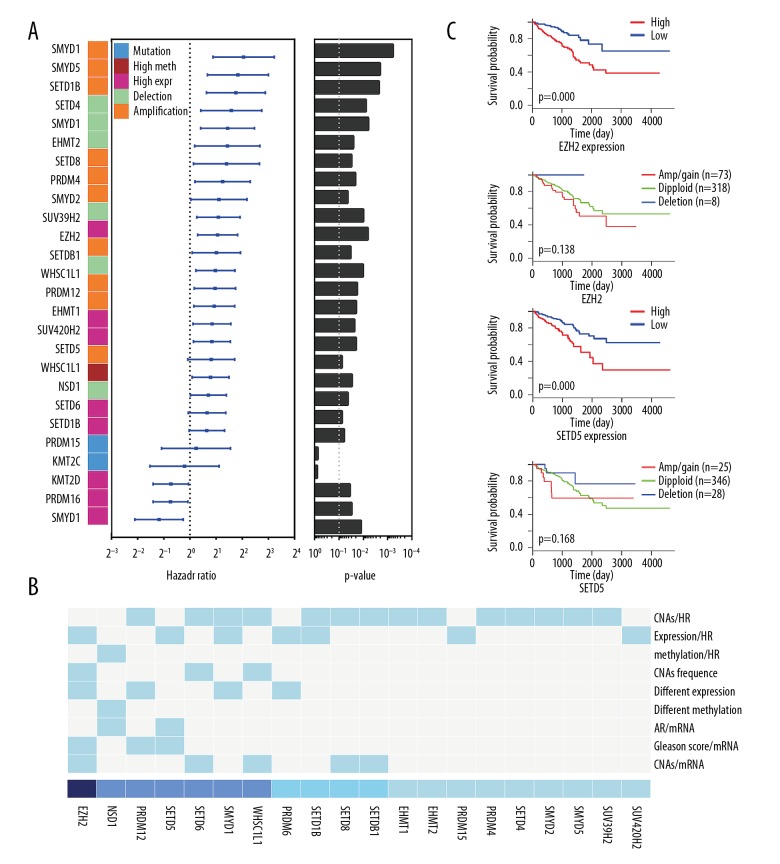
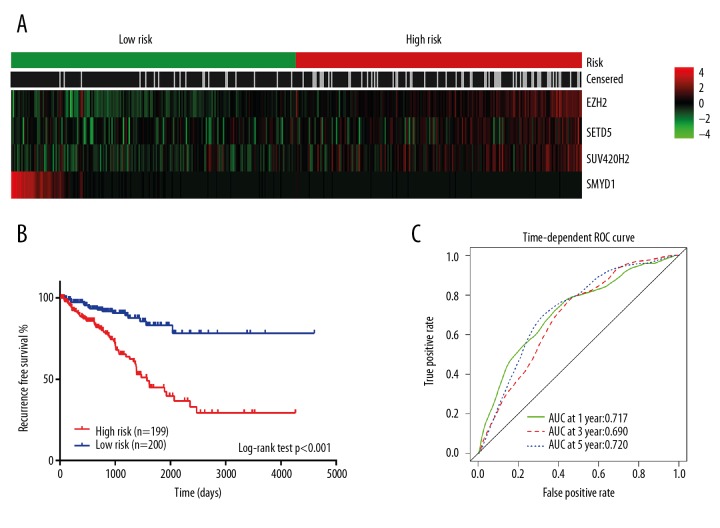
BACKGROUND The histone methyltransferase (HMT) family includes histone lysine methyltransferases (HKMTs) and histone/protein arginine methyltransferases (PRMTs). The role of HMT gene variants in prostate cancer remains unknown. Therefore, this study aimed to evaluate HMT gene variants in the pathogenesis and prognosis of human prostate cancer, using in vitro cell studies and bioinformatics analysis. MATERIAL AND METHODS Integrative bioinformatics analysis of the expression of 51 HMT genes in human prostate cancer was based on datasets from the Cancer Genome Atlas (TCGA). Correlation and regression analysis were used to identify critical HMTs in prostate cancer. Kaplan-Meier and the area under the receiver operating characteristics curve (AUROC) were performed to evaluate the function of the HMTs on prognosis. Gene expression and function of 22Rv1 human prostate carcinoma cells were studied. RESULTS The HMT genes identified to have a role in the pathogenesis of prostate cancer included the EZH2, SETD5, PRDM12, NSD1, SETD6, SMYD1, and the WHSC1L1 gene. The EZH2, SETD5, and SMYD1 genes were selected as a prognostic panel, with the SUV420H2 HMT gene. SETD2, NSD1, and ASH1L were identified as critical genes in the development of castration-resistant prostate cancer (CRPC), similar to mixed-lineage leukemia (MLL) complex family members. Knockdown of the SETD5 gene in 22Rv1 prostate carcinoma cells in vitro inhibited cancer cell growth and migration. CONCLUSIONS HMT gene variants may have a role in the pathogenesis of prostate cancer. Future studies may determine the role of HMT genes as prognostic biomarkers in patients with prostate cancer.
组蛋白甲基转移酶(HMT)家族包括组蛋白赖氨酸甲基转移酶(HKMT)和组蛋白/蛋白质精氨酸甲基转移酶(PRMT)。HMT 基因变异在前列腺癌中的作用尚不清楚。因此,本研究旨在通过体外细胞研究和生物信息学分析,评估 HMT 基因变异在人类前列腺癌发病机制和预后中的作用。
基于癌症基因组图谱(TCGA)的数据集,对 51 个 HMT 基因在人前列腺癌中的表达进行了综合生物信息学分析。采用相关和回归分析确定前列腺癌中的关键 HMT。采用 Kaplan-Meier 和接受者操作特征曲线下面积(AUROC)评估 HMT 对预后的作用。研究了 22Rv1 人前列腺癌细胞的基因表达和功能。
确定与前列腺癌发病机制有关的 HMT 基因包括 EZH2、SETD5、PRDM12、NSD1、SETD6、SMYD1 和 WHSC1L1 基因。EZH2、SETD5 和 SMYD1 基因被选为预后面板,SUV420H2 HMT 基因也被选为预后面板。SETD2、NSD1 和 ASH1L 被确定为去势抵抗性前列腺癌(CRPC)发展的关键基因,与混合谱系白血病(MLL)复合物家族成员相似。体外敲低 22Rv1 前列腺癌细胞中的 SETD5 基因可抑制癌细胞生长和迁移。
HMT 基因变异可能在前列腺癌的发病机制中起作用。未来的研究可能会确定 HMT 基因作为前列腺癌患者预后生物标志物的作用。