Szymańska Kamila, Kałafut Joanna, Przybyszewska Alicja, Paziewska Beata, Adamczuk Grzegorz, Kiełbus Michał, Rivero-Müller Adolfo
Department of Biochemistry and Molecular Biology, Medical University of Lublin, Lublin, Poland.
Independent Medical Biology Unit, Medical University of Lublin, Lublin, Poland.
Front Endocrinol (Lausanne). 2018 Dec 13;9:760. doi: 10.3389/fendo.2018.00760. eCollection 2018.
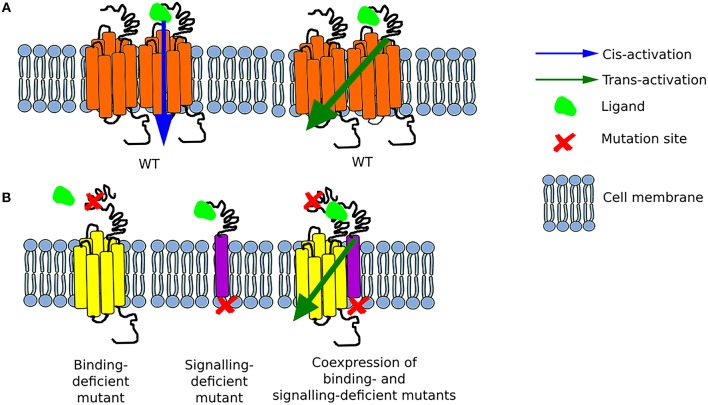
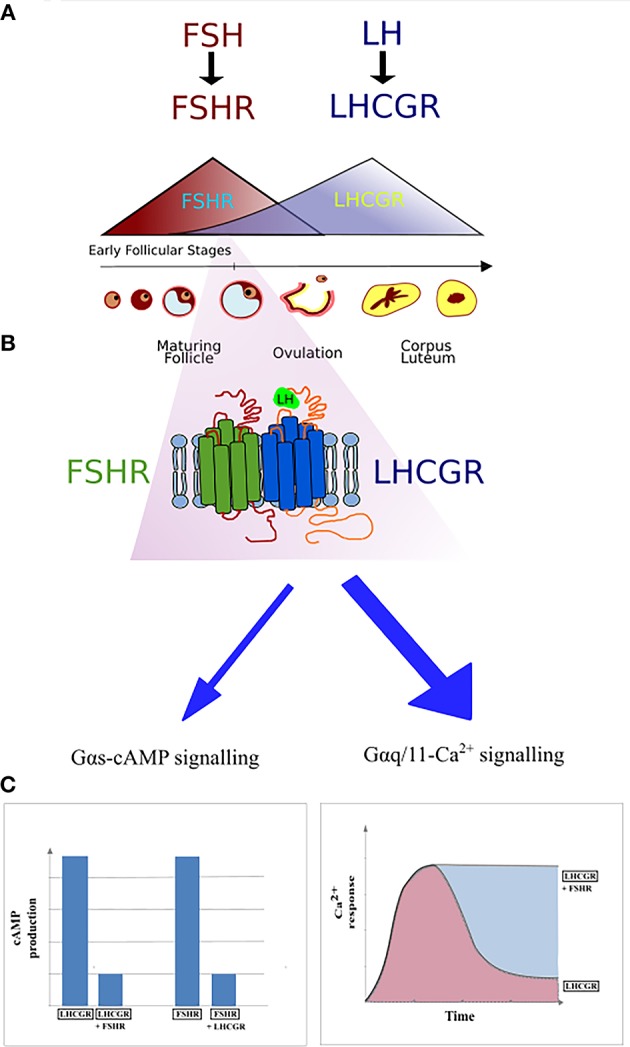
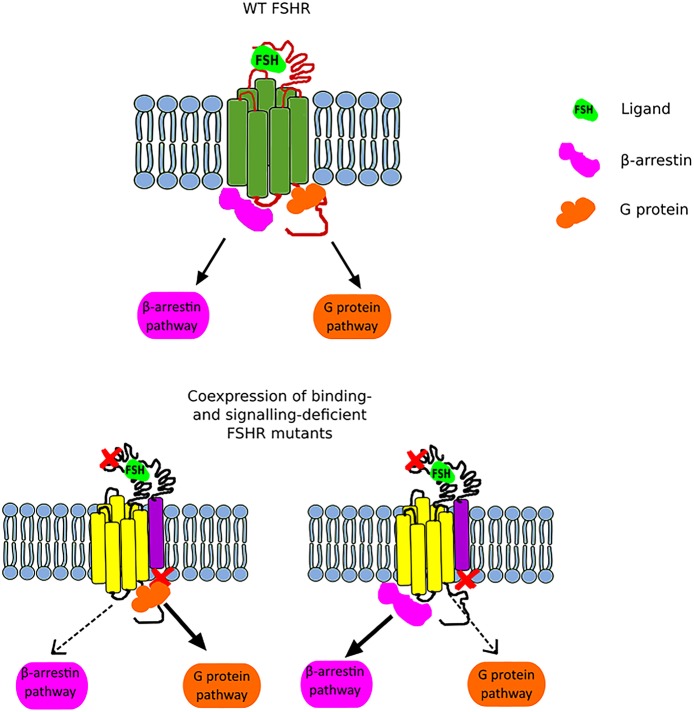
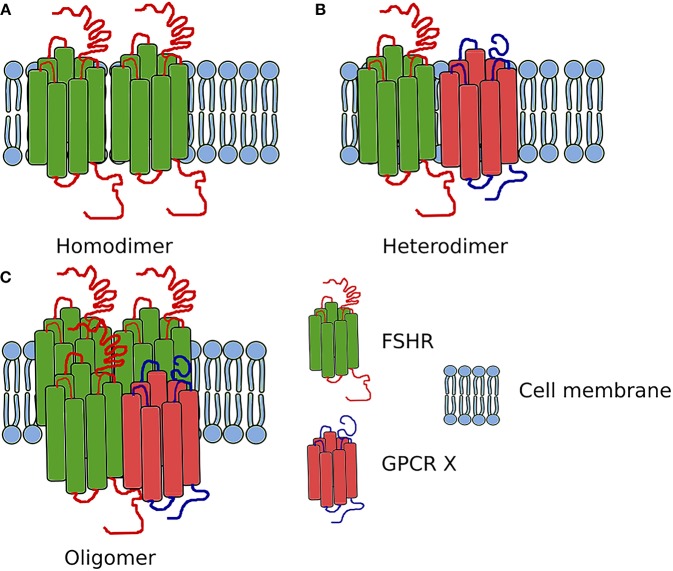
Follicle stimulating hormone (FSH) plays a key role in human reproduction through, among others, induction of spermatogenesis in men and production of estrogen in women. The function FSH is performed upon binding to its cognate receptor-follicle-stimulating hormone receptor (FSHR) expressed on the surface of target cells (granulosa and Sertoli cells). FSHR belongs to the family of G protein-coupled receptors (GPCRs), a family of receptors distinguished by the presence of various signaling pathway activation as well as formation of cross-talking aggregates. Until recently, it was claimed that the FSHR occurred naturally as a monomer, however, the crystal structure as well as experimental evidence have shown that FSHR both self-associates and forms heterodimers with the luteinizing hormone/chorionic gonadotropin receptor-LHCGR. The tremendous gain of knowledge is also visible on the subject of receptor activation. It was once thought that activation occurs only as a result of ligand binding to a particular receptor, however there is mounting evidence of trans-activation as well as biased signaling between GPCRs. Herein, we describe the mechanisms of aforementioned phenomena as well as briefly describe important experiments that contributed to their better understanding.
促卵泡激素(FSH)在人类生殖中起着关键作用,其中包括诱导男性精子发生和女性雌激素生成。FSH的功能是通过与靶细胞(颗粒细胞和支持细胞)表面表达的同源受体——促卵泡激素受体(FSHR)结合来实现的。FSHR属于G蛋白偶联受体(GPCR)家族,该家族受体的特点是存在各种信号通路激活以及形成相互作用的聚集体。直到最近,人们还认为FSHR天然以单体形式存在,然而,晶体结构以及实验证据表明,FSHR既能自我缔合,也能与促黄体生成素/绒毛膜促性腺激素受体——LHCGR形成异二聚体。在受体激活这一主题上也有了巨大的知识收获。曾经人们认为激活仅发生在配体与特定受体结合的情况下,然而,越来越多的证据表明存在反式激活以及GPCR之间的偏向性信号传导。在此,我们描述上述现象发生的机制,并简要介绍有助于更好理解这些现象的重要实验。