Molecular Immunology, Robert Koch-Institute, Berlin, Germany.
Protein Biochemistry, Institute for Biochemistry, Free University of Berlin, Berlin, Germany.
Front Immunol. 2018 Dec 13;9:2806. doi: 10.3389/fimmu.2018.02806. eCollection 2018.
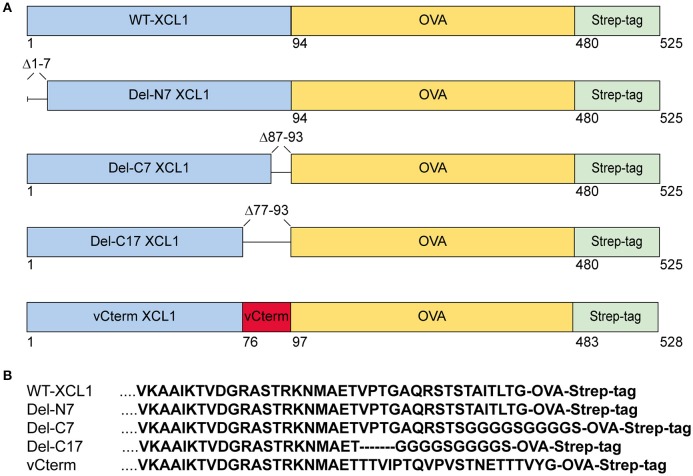
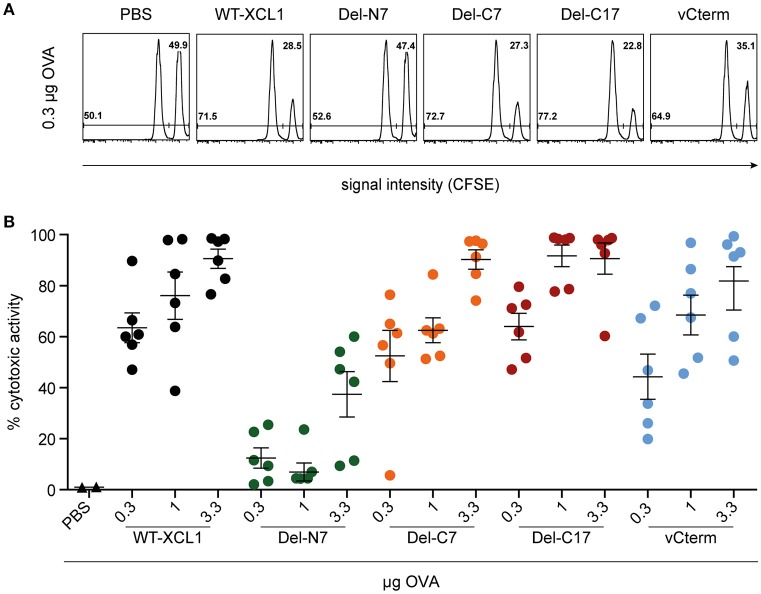
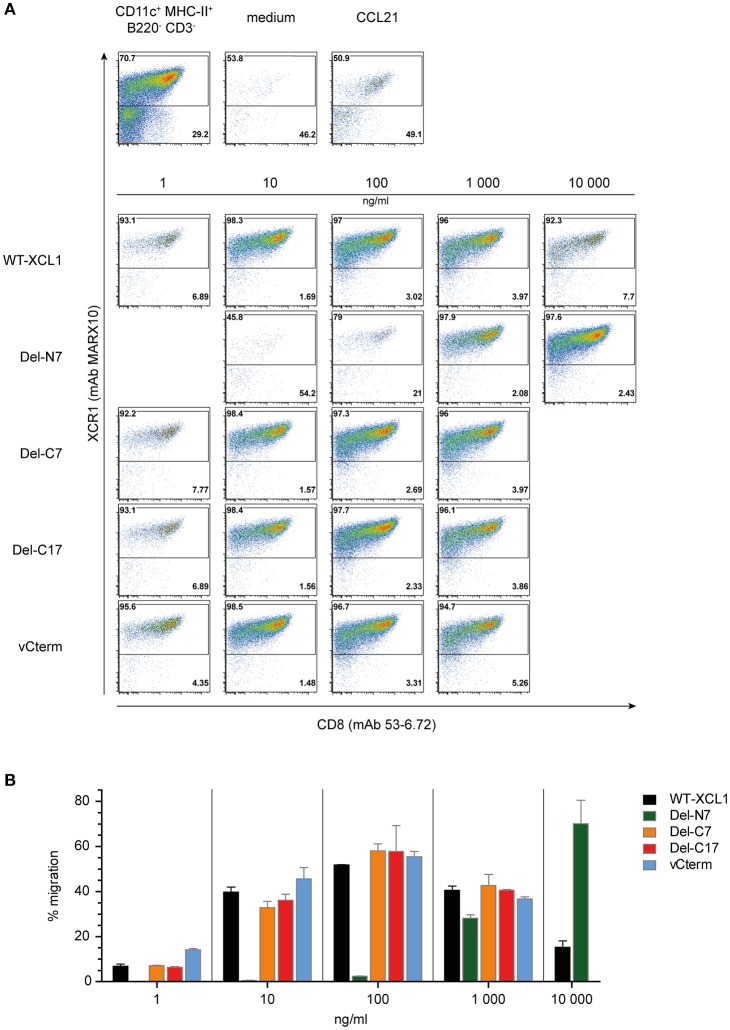
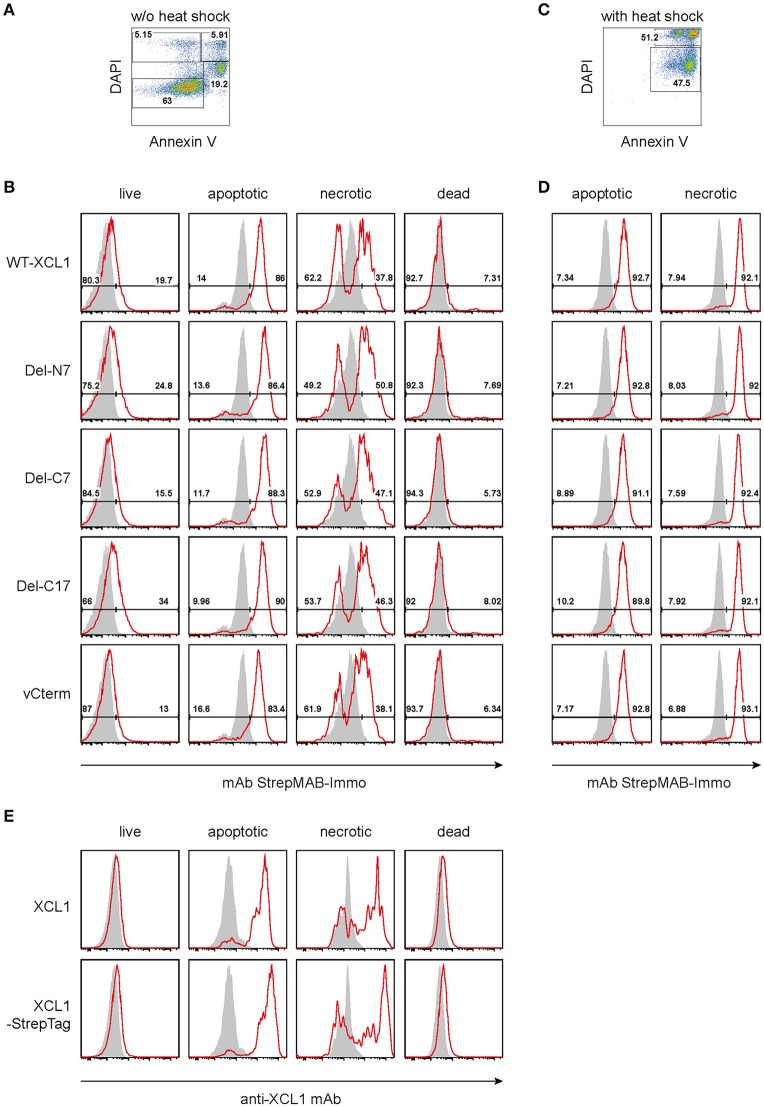
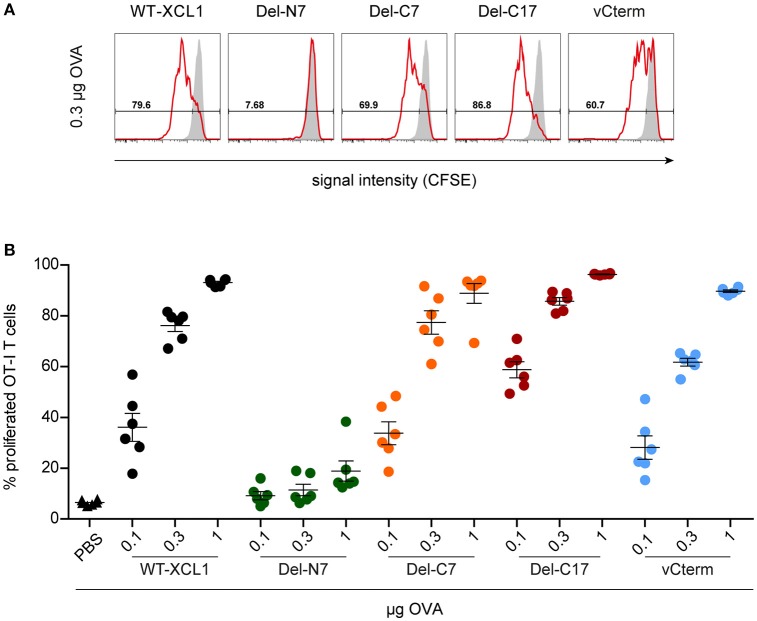
XCL1 is the ligand for XCR1, a chemokine receptor uniquely expressed on cross-presenting dendritic cells (DC) in mouse and man. We are interested in establishing therapeutic vaccines based on XCL1-mediated targeting of peptides or proteins into these DC. Therefore, we have functionally analyzed various XCL1 domains in highly relevant settings and . Murine XCL1 fused to ovalbumin (XCL1-OVA) was compared to an N-terminal deletion variant lacking the first seven N-terminal amino acids and to several C-terminal (deletion) variants. Binding studies with primary XCR1 DC revealed that the N-terminal region stabilizes the binding of XCL1 to its receptor, as is known for other chemokines. Deviating from the established paradigm for chemokines, the N-terminus does not contain critical elements for inducing chemotaxis. On the contrary, this region appears to limit the chemotactic action of XCL1 at higher concentrations. A participation of the XCL1 C-terminus in receptor binding or chemotaxis could be excluded in a series of experiments. Binding studies with apoptotic and necrotic XCR1-negative cells suggested a second function for XCL1: marking of stressed cells for uptake into cross-presenting DC. studies using CD8 T cell proliferation and cytotoxicity as readouts confirmed the critical role of the N-terminus for antigen targeting, and excluded any involvement of the C-terminus in the uptake, processing, and presentation of the fused OVA antigen. Together, these studies provide basic data on the function of the various XCL1 domains as well as relevant information on XCL1 as an antigen carrier in therapeutic vaccines.
XCL1 是 XCR1 的配体,XCR1 是一种趋化因子受体,仅在小鼠和人类的交叉呈递树突状细胞 (DC) 上表达。我们有兴趣基于 XCL1 介导的将肽或蛋白靶向这些 DC 来建立治疗性疫苗。因此,我们在高度相关的环境中对各种 XCL1 结构域进行了功能分析。与缺乏前七个 N 末端氨基酸的 N 末端缺失变体以及几种 C 末端(缺失)变体相比,与卵清蛋白 (XCL1-OVA) 融合的小鼠 XCL1。与原代 XCR1 DC 的结合研究表明,N 端区域稳定了 XCL1 与其受体的结合,这与其他趋化因子已知的情况相同。与趋化因子的既定范例不同,N 端不包含诱导趋化性的关键元件。相反,该区域似乎限制了 XCL1 在较高浓度下的趋化作用。一系列实验排除了 XCL1 C 末端参与受体结合或趋化性的可能性。与凋亡和坏死的 XCR1 阴性细胞的结合研究表明 XCL1 具有第二种功能:标记应激细胞以摄取交叉呈递 DC。使用 CD8 T 细胞增殖和细胞毒性作为读出的研究证实了 N 端对于抗原靶向的关键作用,并排除了 C 端在融合 OVA 抗原的摄取、加工和呈递中的任何作用。总之,这些研究提供了有关各种 XCL1 结构域功能的基本数据,以及有关 XCL1 作为治疗性疫苗中抗原载体的相关信息。