Sá-Caputo Danúbia, Paineiras-Domingos Laisa Liane, Francisca-Santos Arlete, Dos Anjos Elzi Martins, Reis Aline Silva, Neves Mario Fritsch Toros, Oigman Wille, Oliveira Ricardo, Brandão Andrea, Machado Christiano Bittencourt, Chiementin Xavier, Taiar Redha, Sartório Alessandro, Bernardo-Filho Mario
Programa de Pós-Graduação em Fisiopatologia Clínica e Experimental, Faculdade de Ciências Médicas, Universidade do Estado do Rio de Janeiro, Rio de Janeiro, RJ, Brazil.
Laboratório de Vibrações Mecânicas e Práticas Integrativas, Departamento de Biofísica e Biometria, Instituto de Biologia Roberto Alcântara Gomes e Policlínica Américo Piquet Carneiro, Universidade do Estado do Rio de Janeiro, Av. 28 de Setembro, 87, fundos, 4° andar, Rio de Janeiro, RJ, 20551031, Brazil.
BMC Endocr Disord. 2019 Jan 9;19(1):6. doi: 10.1186/s12902-018-0329-0.
Metabolic syndrome (MetS) is a cluster of metabolic abnormalities that increases the cardiovascular risk. Regular physical exercise can promote benefits, but the MetS individuals are demotivated to perform it. Thus, new possibilities are important as an alternative intervention. The whole-body vibration can be considered an exercise modality and would be a safe and low-cost strategy to improve functional parameters of individuals in different clinical conditions. The aim of this exploratory study was to assess effects of whole-body vibration on functional parameters of MetS individuals. The hypothesis of this work was that the whole-body vibration could improve the functionality of MetS individuals.
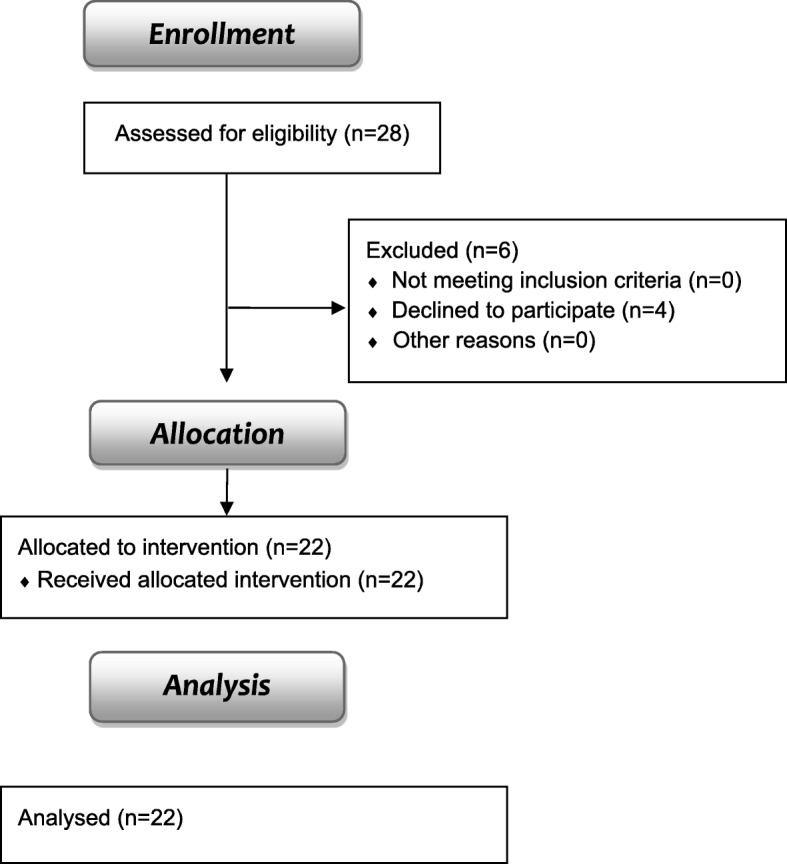
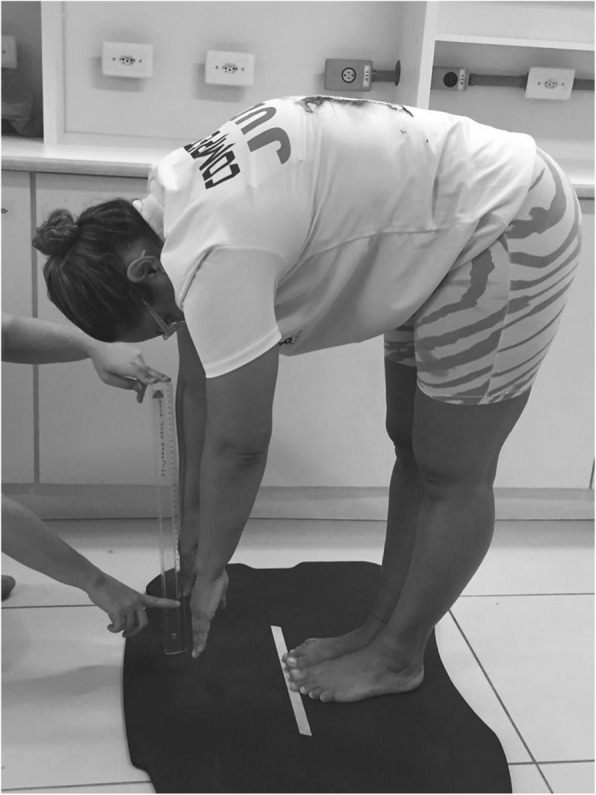
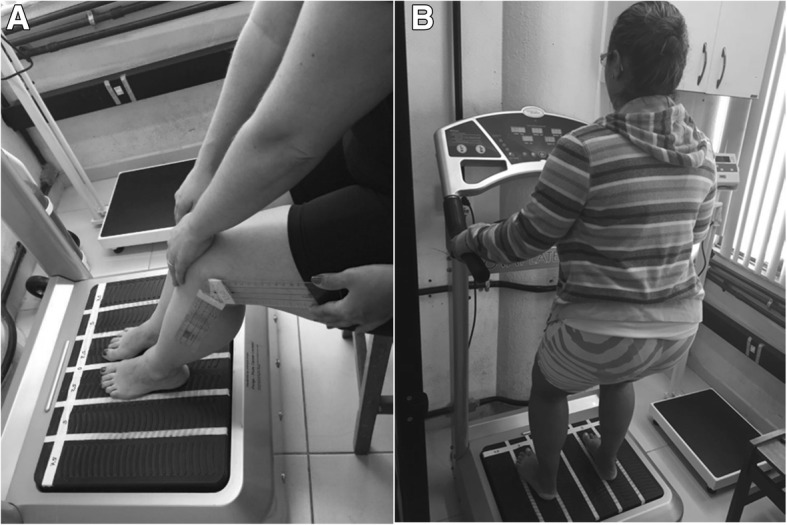
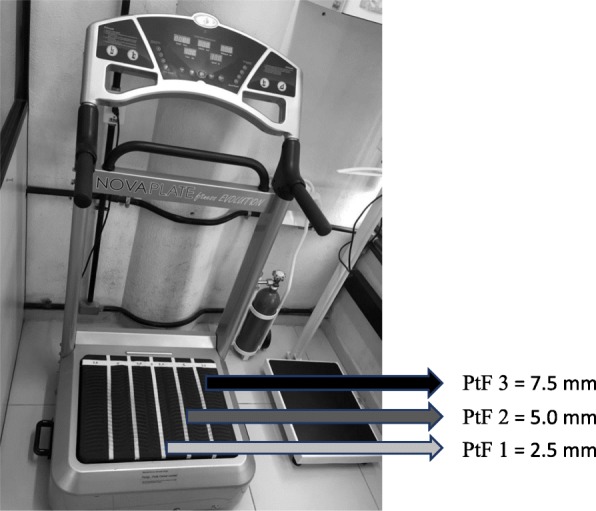
Twenty-two individuals performed the intervention. The vibration frequency varied from 5 to 14 Hz and the peak-to-peak displacements, from 2.5 to 7.5 mm. Each session consisted of one minute-bout of working time followed by a one minute-bout of passive rest in each peak-to-peak displacement for three-times. The whole-body vibration protocol was applied twice per week for 5 weeks. Data from the trunk flexion, gait speed, sit-to-stand test and handgrip strength were collected. Physiological parameters (blood pressure and heart rate) were also evaluated. The Wilcoxon Rank test and Student t-test were used.
No significant changes (p > 0.05) were observed in physiological parameters (arterial blood pressure and heart rate). Significant improvements were found in trunk flexion (p = 0.01), gait speed (p = 0.02), sit-to-stand test (p = 0.005) and handgrip strength (p = 0.04) after the whole-body vibration.
In conclusion, whole-body vibration may induce biological responses that improve functional parameters in participants with MetS without interfering in physiological parameters, comparing before and after a 5-week whole-body vibration protocol.
Register in the Registro Brasileiro de Ensaios Clínicos (ReBEC) with the number RBR 2bghmh (June 6th, 2016) and UTN: U1111-1181-1177. (virgula).
代谢综合征(MetS)是一组代谢异常,会增加心血管疾病风险。规律的体育锻炼有益,但代谢综合征患者缺乏锻炼的动力。因此,作为替代干预措施,新的可能性很重要。全身振动可被视为一种运动方式,并且是改善不同临床状况个体功能参数的安全且低成本的策略。本探索性研究的目的是评估全身振动对代谢综合征个体功能参数的影响。本研究的假设是全身振动可改善代谢综合征个体的功能。
22名个体参与了干预。振动频率从5赫兹到14赫兹不等,峰峰值位移从2.5毫米到7.5毫米。每个阶段包括在每个峰峰值位移下进行一分钟的工作时间,随后是一分钟的被动休息,重复三次。全身振动方案每周应用两次,持续5周。收集了躯干屈曲、步速、坐立试验和握力的数据。还评估了生理参数(血压和心率)。使用了威尔科克森秩和检验和学生t检验。
生理参数(动脉血压和心率)未观察到显著变化(p>0.05)。全身振动后,躯干屈曲(p = 0.01)、步速(p = 0.02)、坐立试验(p = 0.005)和握力(p = 0.04)有显著改善。
总之,在为期5周的全身振动方案前后对比,全身振动可能会引发生物反应,改善代谢综合征参与者的功能参数,而不干扰生理参数。
在巴西临床试验注册中心(ReBEC)注册,编号为RBR 2bghmh(2016年6月6日),UTN:U1111 - 1181 - 1177。(逗号)