School of Biological and Health Systems Engineering, Arizona State University, USA.
Department of Clinical and Health Psychology, Center for Cognitive Aging and Memory, McKnight Brain Institute, University of Florida, USA.
Neural Plast. 2018 Dec 6;2018:8525706. doi: 10.1155/2018/8525706. eCollection 2018.
Phosphene generation is an objective physical measure of potential transcranial alternating current stimulation (tACS) biological side effects. Interpretations from phosphene analysis can serve as a first step in understanding underlying mechanisms of tACS in healthy human subjects and assist validation of computational models.
OBJECTIVE/HYPOTHESIS: This preliminary study introduces and tests methods to analyze predicted phosphene occurrence using computational head models constructed from tACS recipients against verbal testimonies of phosphene sensations. Predicted current densities in the eyes and the occipital lobe were also verified against previously published threshold values for phosphenes.
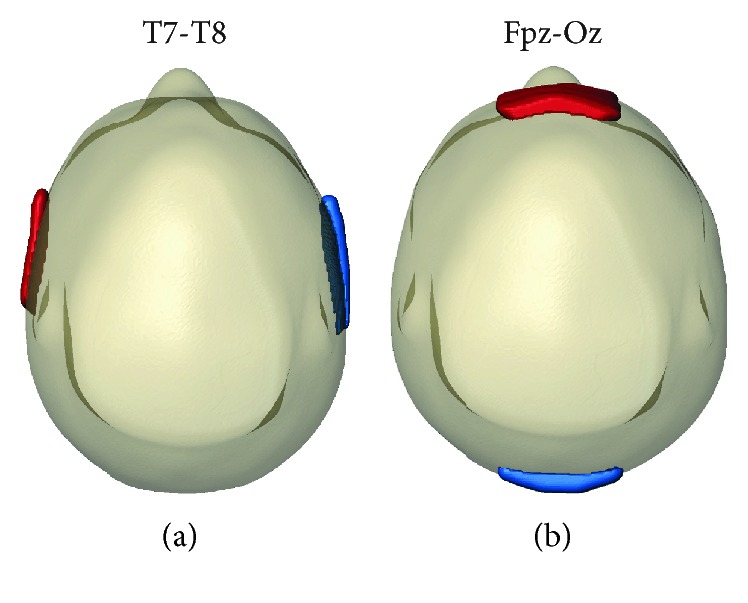
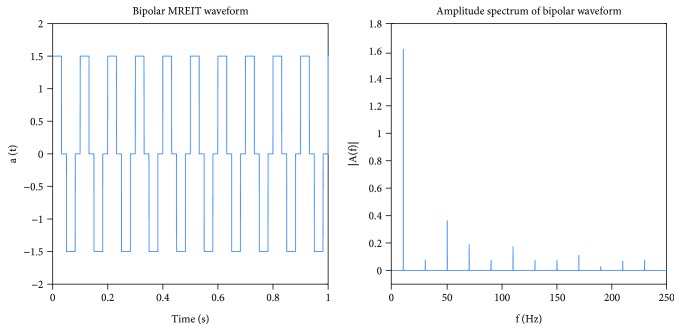
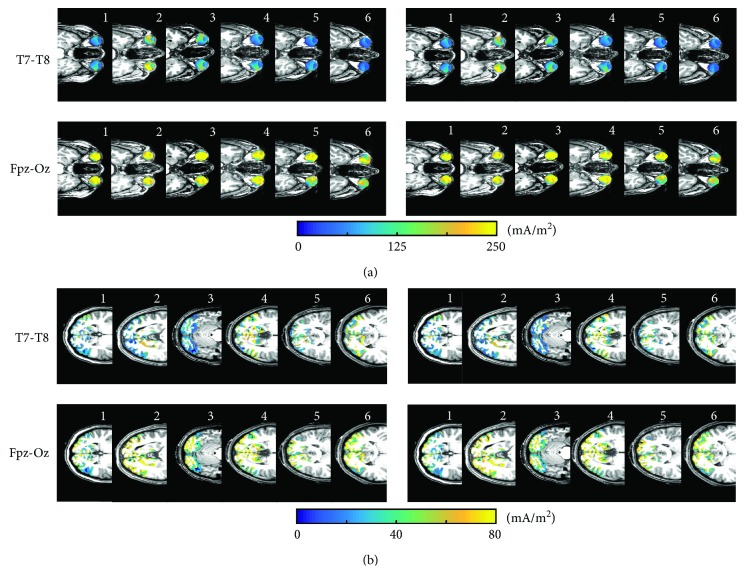
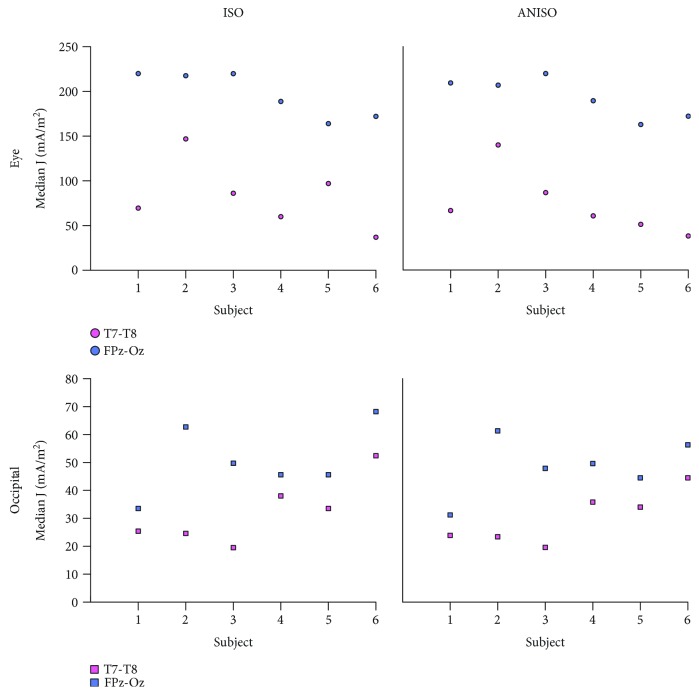
Six healthy subjects underwent 10 Hz tACS while being imaged in an MRI scanner. Two different electrode montages, T7-T8 and Fpz-Oz, were used. Subject ratings of phosphene experience were collected during tACS and compared against current density distributions predicted in eye and occipital lobe regions of interest (ROIs) determined for each subject. Calculated median current densities in each ROI were compared to minimum thresholds for phosphene generation.
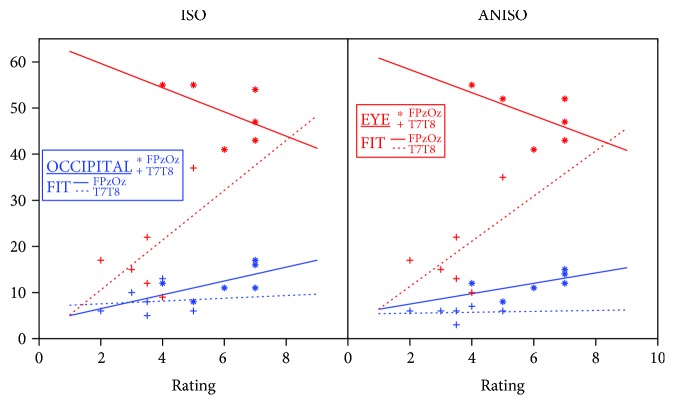
All subjects reported phosphenes, and predicted median current densities in ROIs exceeded minimum thresholds for phosphenes found in the literature. Higher current densities in the eyes were consistently associated with decreased phosphene generation for the Fpz-Oz montage. There was an overall positive association between phosphene perceptions and current densities in the occipital lobe.
These methods may have promise for predicting phosphene generation using data collected during in-scanner tACS sessions and may enable better understanding of phosphene origin. Additional empirical data in a larger cohort is required to fully test the robustness of the proposed methods. Future studies should include additional montages that could dissociate retinal and occipital stimulation.
发光现象的产生是经颅交流电刺激(tACS)潜在生物学副作用的客观物理测量。发光分析的解释可以作为理解健康人体中 tACS 潜在机制的第一步,并有助于验证计算模型。
目的/假设: 本初步研究介绍并测试了使用来自 tACS 接受者的计算头颅模型分析预测发光发生的方法,并与发光感觉的口头证词进行比较。还验证了眼睛和枕叶中的预测电流密度与先前发表的发光阈值相对应。
6 名健康受试者在 MRI 扫描仪中接受 10 Hz tACS。使用了两种不同的电极布置方式,T7-T8 和 Fpz-Oz。在 tACS 期间收集了受试者对发光体验的评分,并将其与每个受试者确定的眼和枕叶感兴趣区域(ROI)中的预测电流密度分布进行比较。计算每个 ROI 中的中位数电流密度,并与发光产生的最小阈值进行比较。
所有受试者均报告了发光现象,预测 ROI 中的中位数电流密度超过了文献中发现的发光最小阈值。Fpz-Oz 导联中眼睛的电流密度越高,发光的产生就越低。枕叶中的发光感知与电流密度之间存在总体正相关。
这些方法可能有希望使用在扫描中 tACS 期间收集的数据来预测发光的产生,并可能有助于更好地理解发光的起源。需要在更大的队列中进行更多的实证数据来充分测试所提出方法的稳健性。未来的研究应包括可分离视网膜和枕叶刺激的其他导联。