Immunology and Functional Genomics Unit, Centro Cardiologico Monzino IRCCS, Milan, Italy.
Vascular Biology and Regenerative Medicine Unit, Centro Cardiologico Monzino IRCCS, Milan, Italy.
Dis Markers. 2018 Dec 9;2018:8395651. doi: 10.1155/2018/8395651. eCollection 2018.
Cardiotoxicity is a detrimental side effect of the anticancer drug doxorubicin (DOX), characterized by progressive heart dysfunction. Circulating microRNAs (miRNAs) are recognized as potential biomarkers of cardiac disease; thus, we aimed to investigate their association with late cardiotoxicity in an animal model of disease.
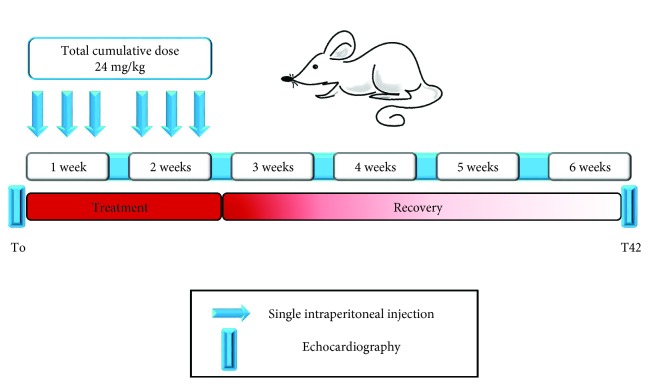
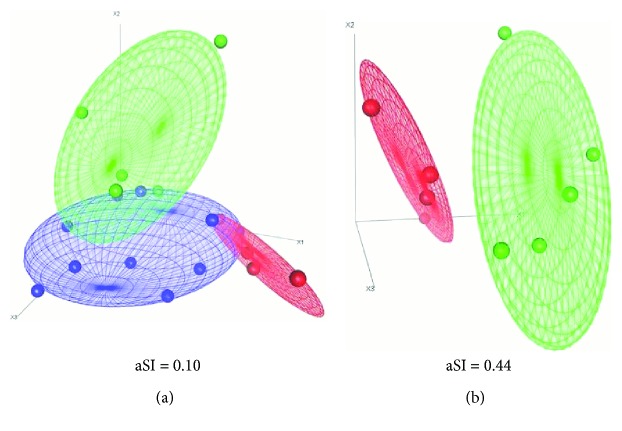
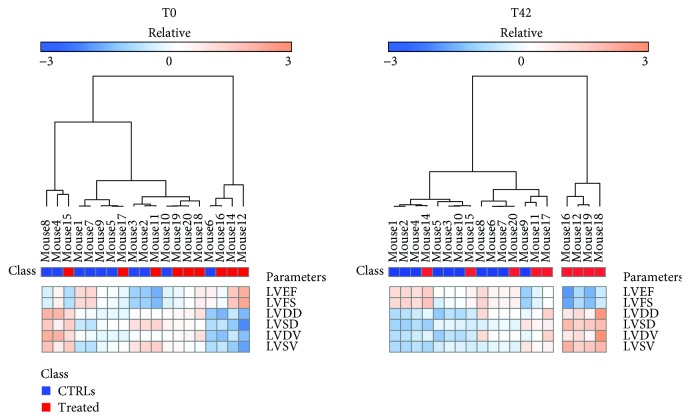
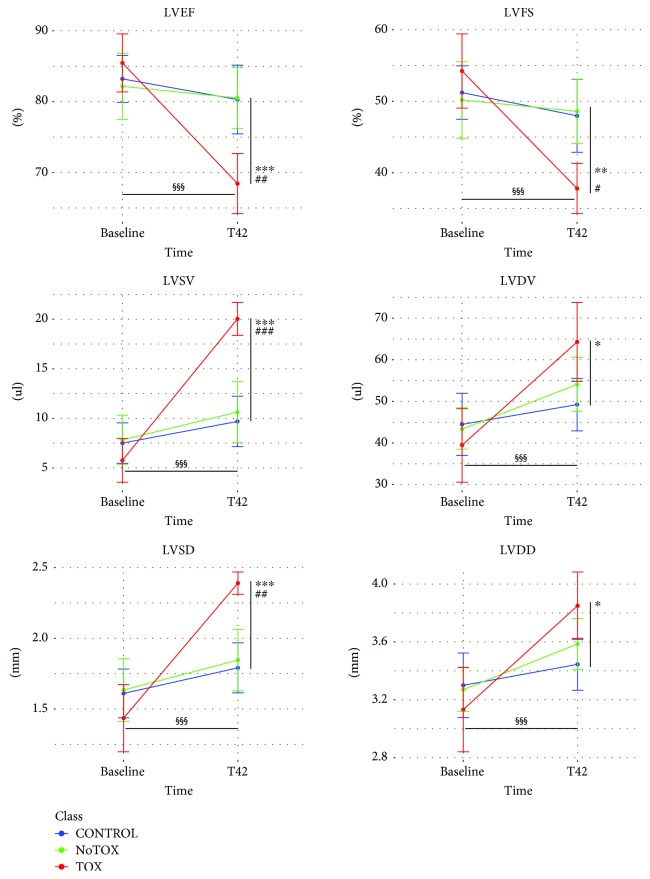
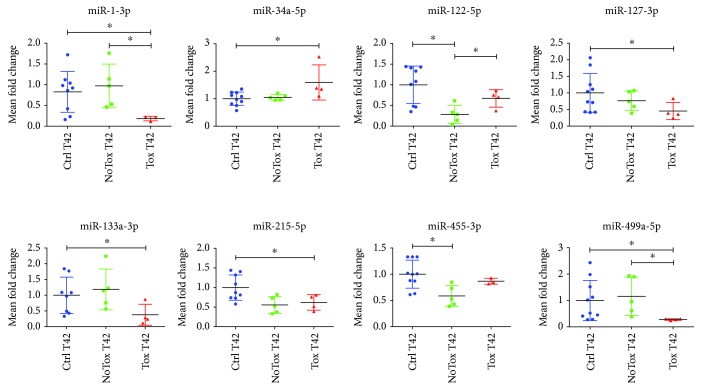
Twenty C57BL/6 female mice were administered with 24 mg/kg cumulative dose of DOX or saline during 2 weeks, followed by a recovery period of one month (T42). Echocardiography was performed at baseline and at T42, and plasma samples were collected at T42. The selection of all miRNAs of interest was conducted by literature overview and by screening, followed by RT-qPCR validation The analysis of cardiac function at T42 evidenced five DOX-treated animals indistinguishable (NoTox) from controls (CTRLs), while four presented heart impairment (Tox). Our analyses identified eight dysfunction-associated plasma miRNAs. In particular, seven miRNAs were found downregulated in comparison to CTRLs, miR-1-3p, miR-122-5p, miR-127-3p, miR-133a-3p, miR-215-5p, miR-455-3-p, and miR-499a-5p. Conversely, miR-34a-5p showed increased levels in Tox plasma samples. Noteworthy, we determined a cluster composed of miR-1-3p, miR-34a-5p, miR-133a-3p, and miR-499a-5p that distinguished with high-accuracy Tox from NoTox mice.
This is the first study indicating that, similarly to what is observed in patients, DOX-administered animals present a differential cardiac response to treatment. Moreover, our results indicate the presence of specific plasma miRNAs whose expression reflect the presence of cardiac dysfunction in response to drug-induced injury.
心脏毒性是抗癌药物阿霉素(DOX)的一种有害副作用,其特征为进行性心脏功能障碍。循环 microRNAs(miRNAs)被认为是心脏疾病的潜在生物标志物;因此,我们旨在研究其与疾病动物模型中晚期心脏毒性的关联。
20 只 C57BL/6 雌性小鼠接受 24mg/kg 累积剂量 DOX 或生理盐水治疗 2 周,随后进行一个月的恢复期(T42)。在基线和 T42 时进行超声心动图检查,并在 T42 时采集血浆样本。通过文献综述和筛选选择所有感兴趣的 miRNAs,随后通过 RT-qPCR 进行验证。在 T42 时对心脏功能的分析表明,有 5 只 DOX 处理的动物与对照组(CTRLs)无法区分(NoTox),而有 4 只动物出现心脏损伤(Tox)。我们的分析确定了 8 种与功能障碍相关的血浆 miRNAs。特别是,与 CTRLs 相比,有 7 种 miRNAs 下调,分别为 miR-1-3p、miR-122-5p、miR-127-3p、miR-133a-3p、miR-215-5p、miR-455-3-p 和 miR-499a-5p。相反,miR-34a-5p 在 Tox 血浆样本中的水平升高。值得注意的是,我们确定了一个由 miR-1-3p、miR-34a-5p、miR-133a-3p 和 miR-499a-5p 组成的簇,能够以高准确度区分 Tox 和 NoTox 小鼠。
这是第一项表明,与在患者中观察到的情况类似,接受 DOX 治疗的动物对治疗有不同的心脏反应的研究。此外,我们的结果表明,存在特定的血浆 miRNAs,其表达反映了药物引起的损伤导致心脏功能障碍的存在。