Casson Jake, Davies Owen G, Smith Carol-Anne, Dalby Matthew J, Berry Catherine C
Centre for Cell Engineering, Institute of Molecular, Cell and Systems Biology (IMCSB), The University of Glasgow, Glasgow, UK.
School of Sport, Exercise and Health Sciences, Loughborough University, Loughborough, UK.
J Tissue Eng. 2018 Dec 25;9:2041731418810093. doi: 10.1177/2041731418810093. eCollection 2018 Jan-Dec.
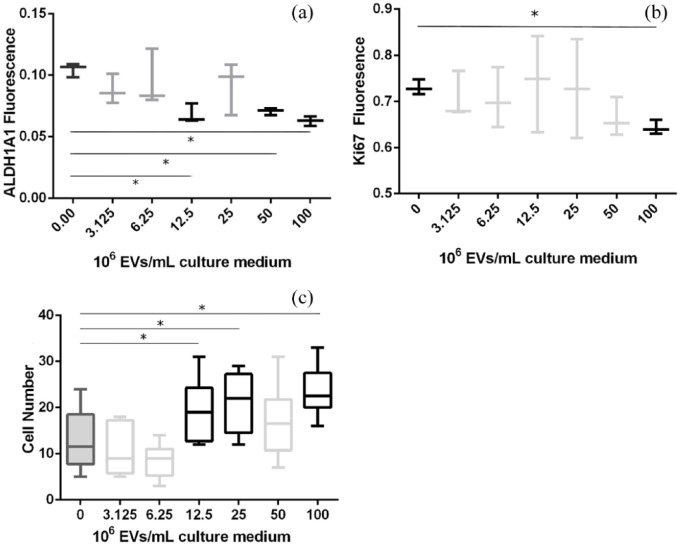
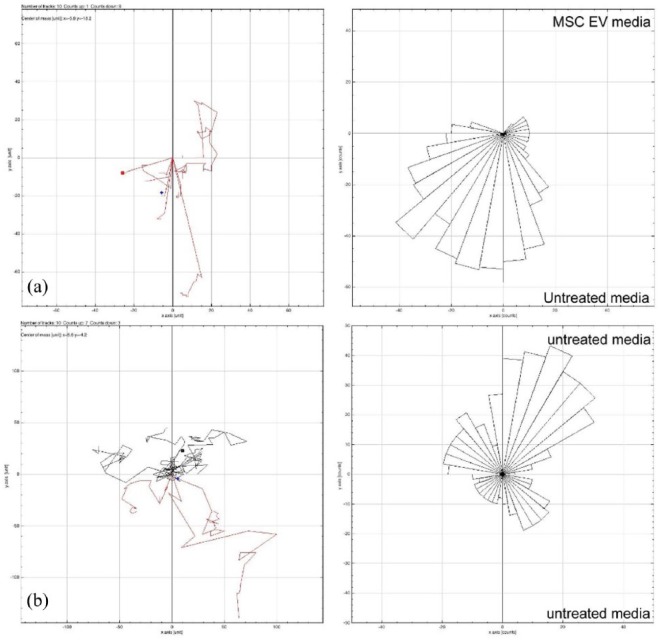
Disseminated breast cancer cells have the capacity to metastasise to the bone marrow and reside in a dormant state within the mesenchymal stem cell niche. Research has focussed on paracrine signalling factors, such as soluble proteins, within the microenvironment. However, it is now clear extracellular vesicles secreted by resident mesenchymal stem cells into this microenvironment also play a key role in the initiation of dormancy. Dormancy encourages reduced cell proliferation and migration, while upregulating cell adhesion, thus retaining the cancer cells within the bone marrow microenvironment. Here, MCF7 breast cancer cells were treated with mesenchymal stem cell-derived extracellular vesicles, resulting in reduced migration in two-dimensional and three-dimensional culture, with reduced cell proliferation and enhanced adhesion, collectively supporting cancer cell dormancy.
播散性乳腺癌细胞有转移至骨髓并在间充质干细胞龛中处于休眠状态的能力。研究主要集中在微环境中的旁分泌信号因子,如可溶性蛋白。然而,现在很清楚的是,驻留的间充质干细胞分泌到这个微环境中的细胞外囊泡在休眠起始中也起关键作用。休眠促使细胞增殖和迁移减少,同时上调细胞黏附,从而将癌细胞保留在骨髓微环境中。在此,MCF7乳腺癌细胞用间充质干细胞衍生的细胞外囊泡处理,导致在二维和三维培养中迁移减少,细胞增殖减少且黏附增强,共同支持癌细胞休眠。