Department of Psychology and Neuroscience, University of Colorado Boulder, Boulder, Colorado 80301.
Center for Neuroscience, University of Colorado Boulder, Boulder, Colorado 80301.
eNeuro. 2018 Dec 21;5(6). doi: 10.1523/ENEURO.0328-18.2018. eCollection 2018 Nov-Dec.
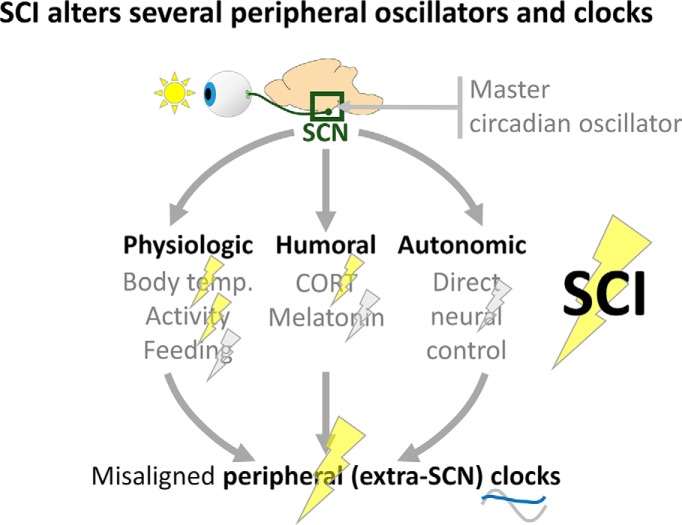
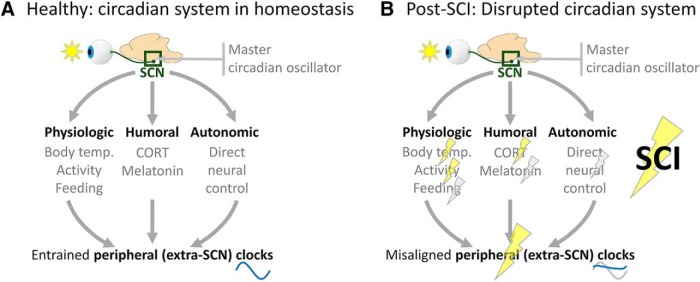
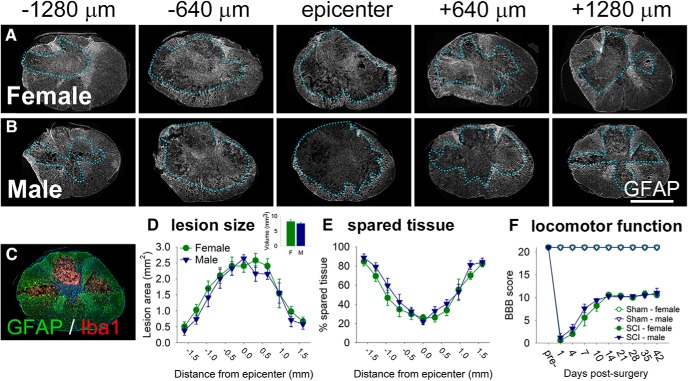
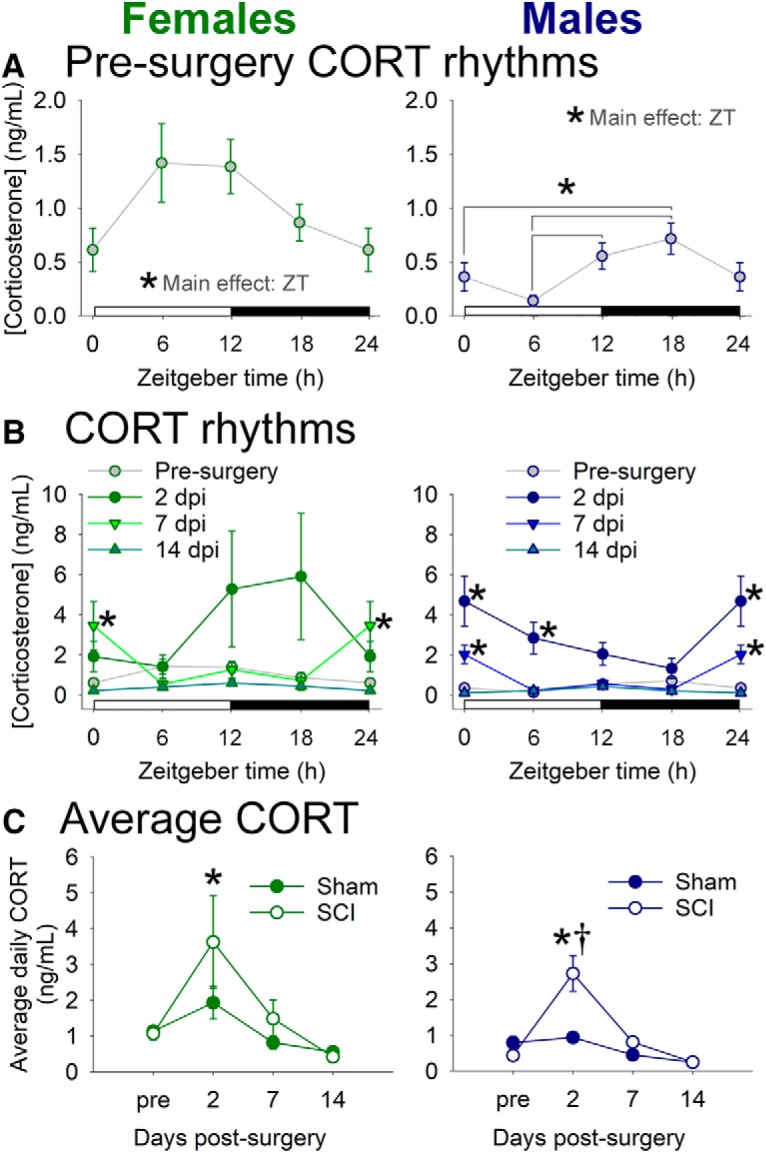
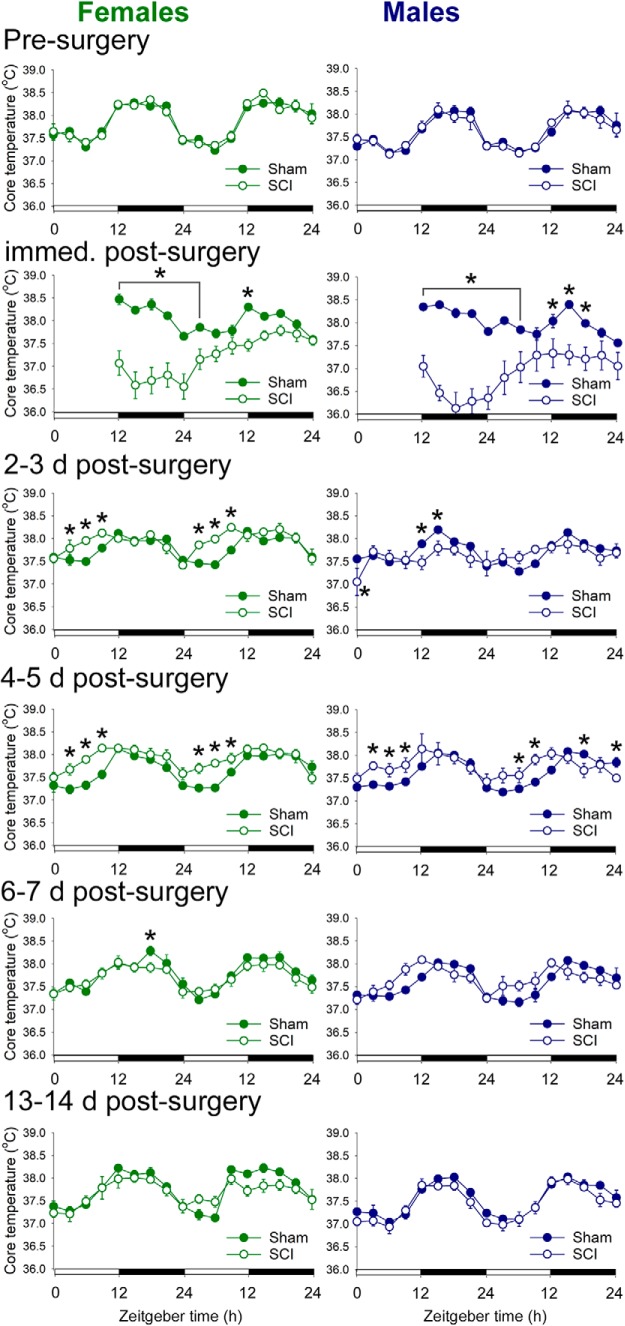
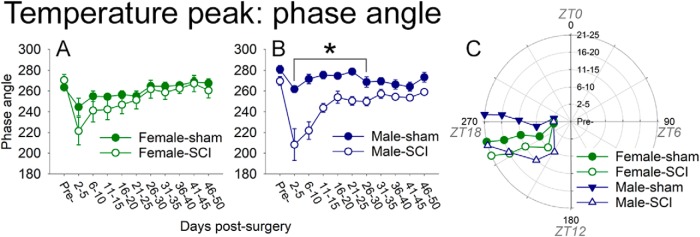
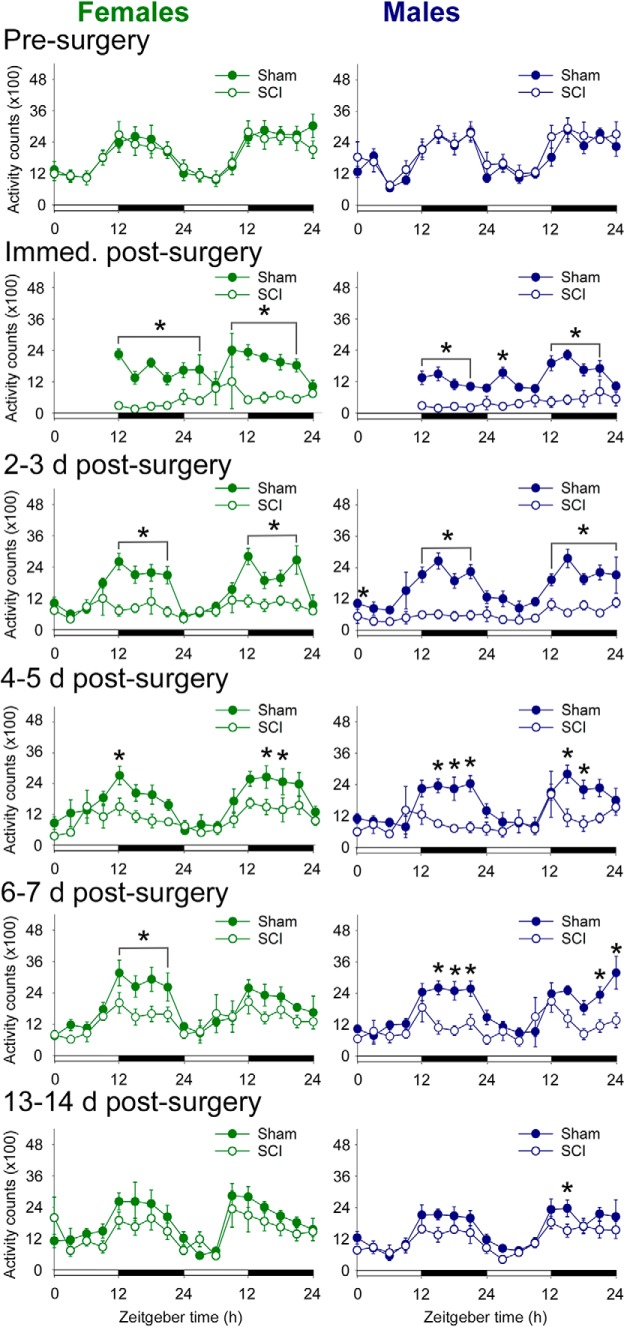
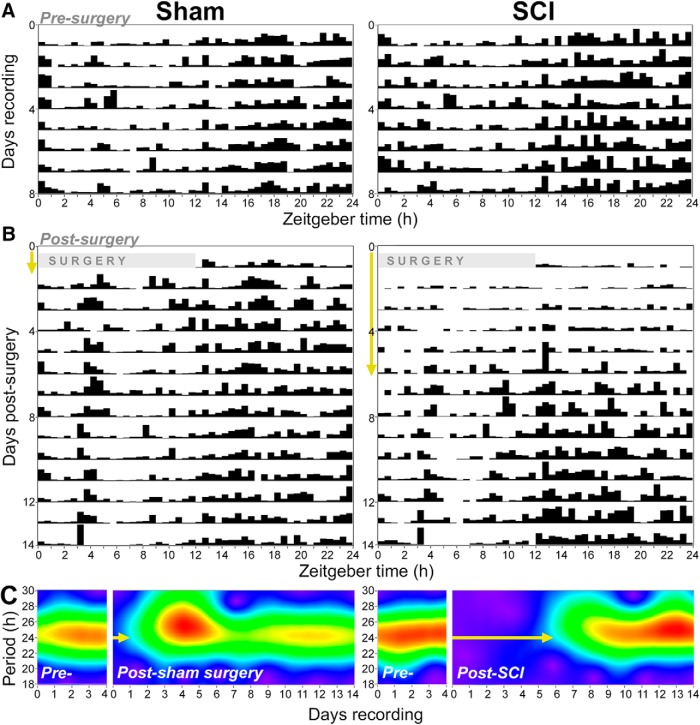
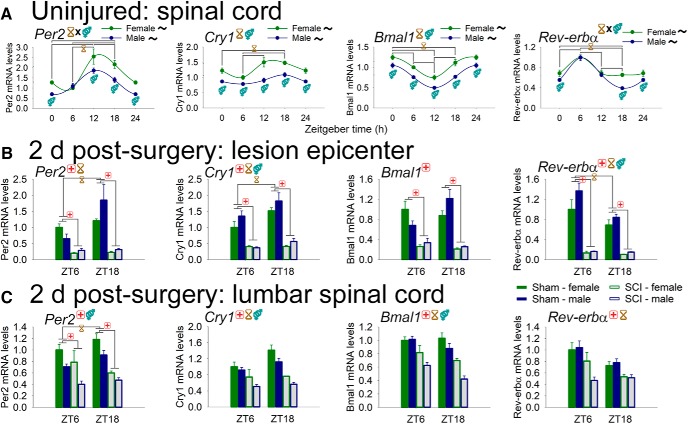
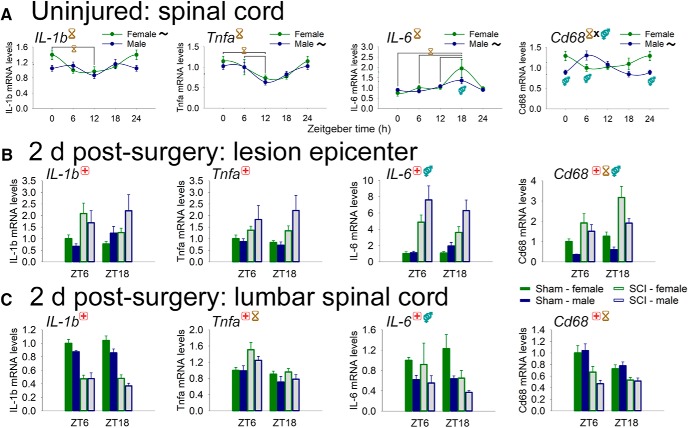
Spinal cord injury (SCI) perturbs many physiological systems. The circadian system helps maintain homeostasis throughout the body by synchronizing physiological and behavioral functions to predictable daily events. Whether disruption of these coordinated daily rhythms contributes to SCI-associated pathology remains understudied. Here, we hypothesized that SCI in rats would dysregulate several prominent circadian outputs including glucocorticoids, core temperature, activity, neuroinflammation, and circadian gene networks. Female and male Sprague Dawley rats were subjected to clinically relevant thoracic 9 moderate contusion SCI (or laminectomy sham surgery). Diurnal measures-including rhythms of plasma corticosterone (CORT), body temperature, and activity (using small implanted transmitters), and intraspinal circadian and inflammatory gene expression-were studied prior to and after surgery. SCI caused overall increases and disrupted rhythms of the major rodent glucocorticoid, CORT. Presurgery and sham rats displayed expected rhythms in body temperature and activity, whereas rats with SCI had blunted daily rhythms in body temperature and activity. In parallel, SCI disrupted intraspinal rhythms of circadian clock gene expression. Circadian clock genes can act as transcriptional regulators of inflammatory pathways. Indeed, SCI rats also showed dysregulated rhythms in inflammatory gene expression in both the epicenter and distal spinal cord. Our data show that moderate SCI in rats causes wide-ranging diurnal rhythm dysfunction, which is severe at acute time points and gradually recovers over time. Normalizing post-SCI diurnal rhythms could enhance the recovery of homeostasis and quality of life.
脊髓损伤 (SCI) 扰乱了许多生理系统。昼夜节律系统通过将生理和行为功能与可预测的日常事件同步,帮助维持全身的内稳态。昼夜节律的这些协调的日常节律的破坏是否有助于 SCI 相关的病理学仍然研究不足。在这里,我们假设大鼠的 SCI 会使几种突出的昼夜节律输出失调,包括糖皮质激素、核心体温、活动、神经炎症和昼夜节律基因网络。雌性和雄性 Sprague Dawley 大鼠接受了临床相关的胸 9 中度挫伤 SCI(或椎板切除术假手术)。昼夜测量——包括血浆皮质酮 (CORT)、体温和活动的节律(使用小型植入式发射器),以及脊髓内昼夜节律和炎症基因表达——在手术前和手术后进行研究。SCI 导致主要啮齿动物糖皮质激素 CORT 的整体增加和节律紊乱。术前和假手术大鼠表现出体温和活动的预期节律,而 SCI 大鼠的体温和活动昼夜节律减弱。平行地,SCI 破坏了脊髓内昼夜节律时钟基因表达的节律。昼夜节律基因可以作为炎症途径的转录调节因子。事实上,SCI 大鼠在中枢和远端脊髓中的炎症基因表达也表现出节律失调。我们的数据表明,大鼠中度 SCI 导致广泛的昼夜节律功能障碍,在急性时间点严重,并随时间逐渐恢复。使 post-SCI 昼夜节律正常化可以增强内稳态和生活质量的恢复。