Department of Cattle and Sheep Diseases, National Veterinary Research Institute, Puławy, Poland.
Laboratory of Serological Diagnosis, National Veterinary Research Institute, Puławy, Poland.
PLoS One. 2019 Jan 10;14(1):e0210244. doi: 10.1371/journal.pone.0210244. eCollection 2019.
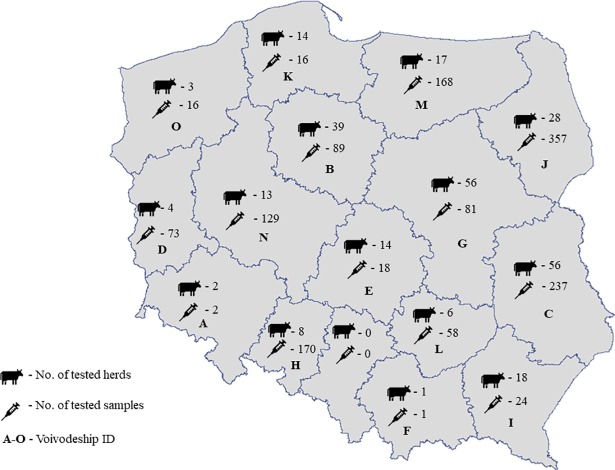
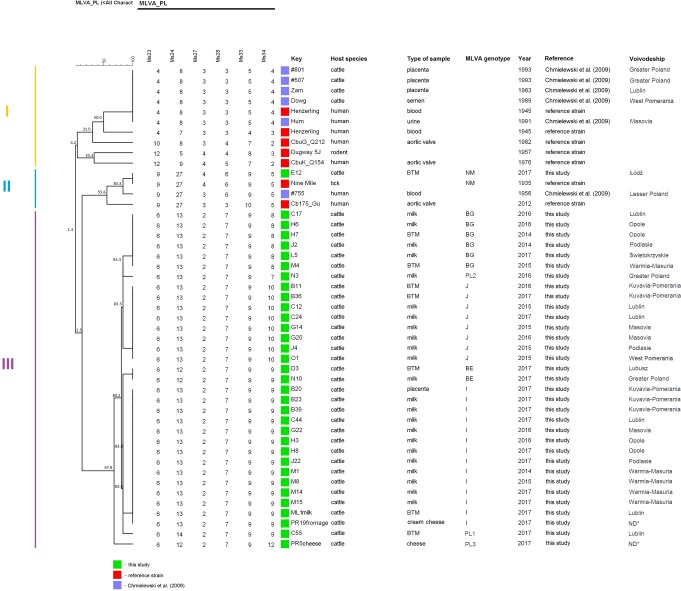
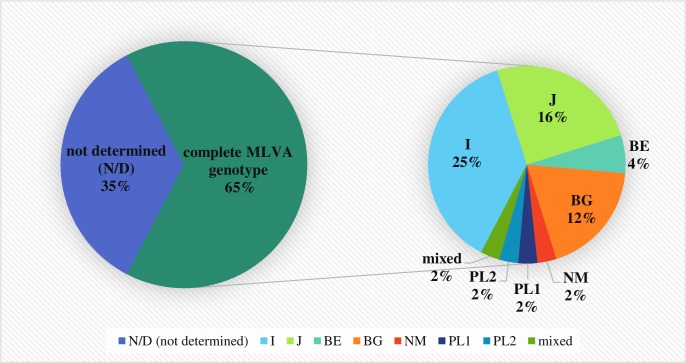
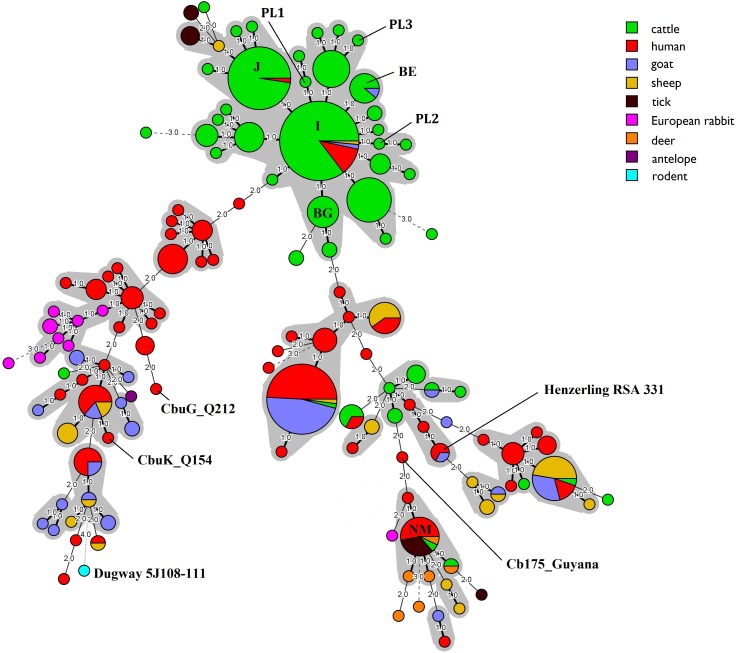
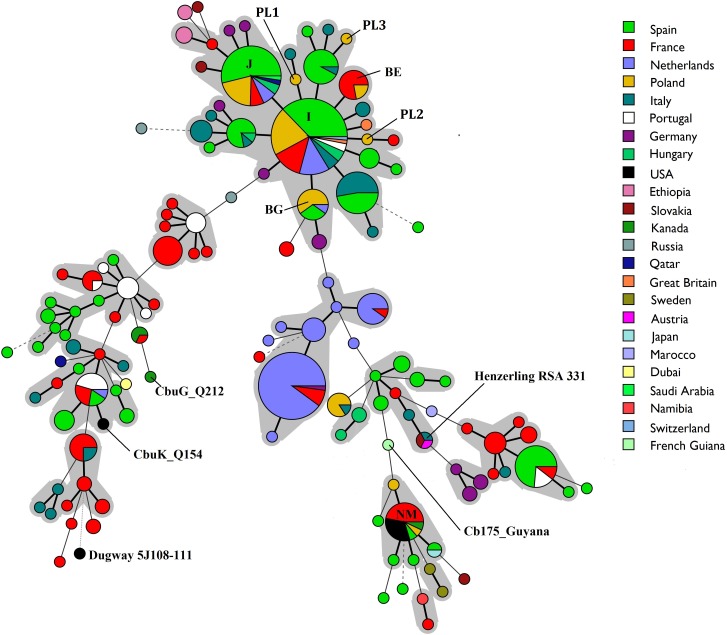
Q fever is a worldwide zoonotic disease reported in humans and many animal species including cattle. The aims of this study were to evaluate the prevalence of Coxiella (C.) burnetii shedding in Polish dairy cattle herds and to identify the pathogen's genotypes and sequence types (STs) using multiple-locus variable number tandem repeat analysis (MLVA) and multispacer sequence typing (MST) methods. The presence of C. burnetii DNA was detected using a commercial real-time PCR kit, targeting the IS1111 element. Overall, 1,439 samples from 279 herds were tested including: 897 individual milk specimens, 101 bulk tank milk samples, 409 genital tract swabs and 32 placentas. Furthermore, 30 consumer milk samples, including 10 from vending machines and 77 dairy products were also analyzed. C. burnetii shedding was confirmed in 31.54% of tested cattle herds as well as in 69.16% of consumer milk and dairy products. Among real-time PCR-positive samples, 49 specimens obtained from 49 cattle herds and 8 samples of purchased dairy products were selected for genotyping. Overall, five previously known MLVA genotypes (I, J, BG, BE, and NM) and three new ones (proposed as PL1, PL2, and PL3) were identified. Two MST sequence types were recorded: ST16 and a novel sequence (ST61). The new genotypes and sequence types need further research particularly into their pathogenicity to humans.
Q 热是一种在人类和包括牛在内的许多动物物种中报告的全球性动物传染病。本研究的目的是评估波兰奶牛群中柯克斯体(Coxiella)(C.)释放的流行率,并使用多位点可变数串联重复分析(MLVA)和多间隔序列分型(MST)方法来确定病原体的基因型和序列型(ST)。使用针对 IS1111 元件的商业实时 PCR 试剂盒检测 C. burnetii DNA 的存在。总共检测了 279 个牛群的 1439 个样本,包括:897 个个体奶样、101 个大罐奶样、409 个生殖道拭子和 32 个胎盘。此外,还分析了 30 份消费者牛奶样本,包括 10 份自动售货机中的牛奶和 77 份奶制品。证实 31.54%的受检牛群以及 69.16%的消费者牛奶和奶制品存在 C. burnetii 释放。在实时 PCR 阳性样本中,从 49 个牛群和 8 个购买的奶制品中选择了 49 个标本进行基因分型。总共鉴定了五个先前已知的 MLVA 基因型(I、J、BG、BE 和 NM)和三个新的基因型(提议为 PL1、PL2 和 PL3)。记录了两种 MST 序列类型:ST16 和一种新序列(ST61)。需要进一步研究新的基因型和序列类型,特别是它们对人类的致病性。