Department of Biochemistry & Molecular Biology and Graduate Institute of Biomedical Sciences, College of Medicine, Chang Gung University, Taoyuan 33302, Taiwan.
Liver Research Center, Chang Gung Memorial Hospital, Taoyuan 33305, Taiwan.
Int J Mol Sci. 2019 Jan 13;20(2):300. doi: 10.3390/ijms20020300.
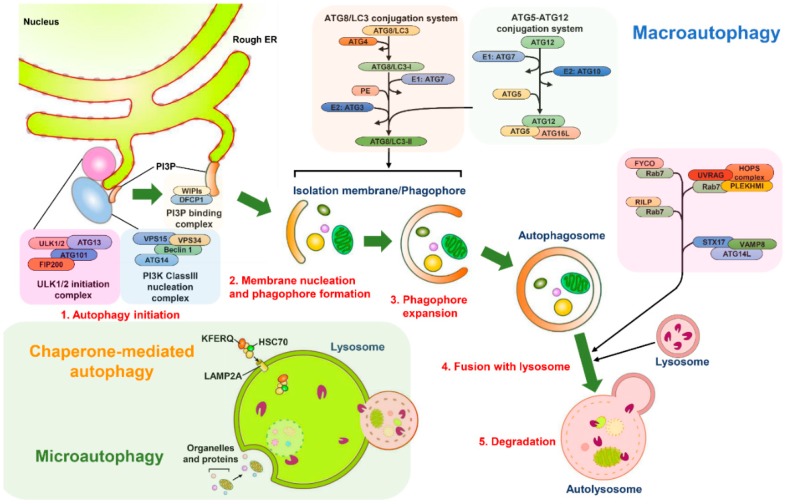
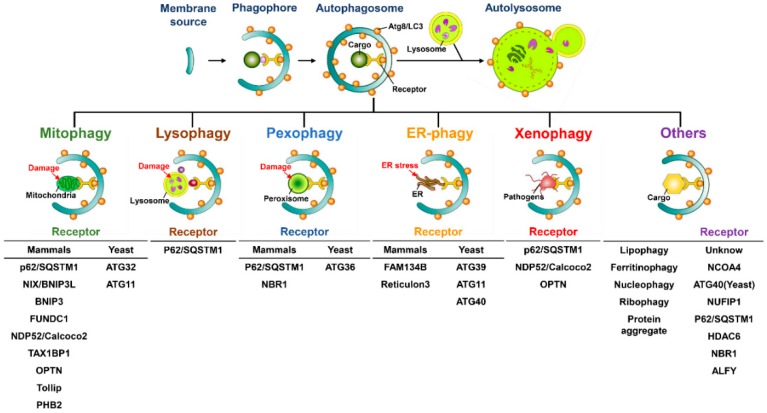
Autophagy is a catabolic process by which eukaryotic cells eliminate cytosolic materials through vacuole-mediated sequestration and subsequent delivery to lysosomes for degradation, thus maintaining cellular homeostasis and the integrity of organelles. Autophagy has emerged as playing a critical role in the regulation of liver physiology and the balancing of liver metabolism. Conversely, numerous recent studies have indicated that autophagy may disease-dependently participate in the pathogenesis of liver diseases, such as liver hepatitis, steatosis, fibrosis, cirrhosis, and hepatocellular carcinoma. This review summarizes the current knowledge on the functions of autophagy in hepatic metabolism and the contribution of autophagy to the pathophysiology of liver-related diseases. Moreover, the impacts of autophagy modulation on the amelioration of the development and progression of liver diseases are also discussed.
自噬是一种分解代谢过程,通过液泡介导的隔离和随后递送至溶酶体进行降解,真核细胞可以消除胞质物质,从而维持细胞内平衡和细胞器的完整性。自噬在调节肝脏生理和平衡肝脏代谢方面起着关键作用。相反,最近的许多研究表明,自噬可能与疾病相关地参与肝脏疾病的发病机制,如肝炎、脂肪变性、纤维化、肝硬化和肝细胞癌。本综述总结了自噬在肝代谢中的功能以及自噬对与肝相关疾病病理生理学的贡献的最新知识。此外,还讨论了自噬调节对改善肝脏疾病的发展和进展的影响。