Department of Biochemistry & Molecular Biology and Graduate Institute of Biomedical Sciences, College of Medicine, Chang Gung University, Taoyuan 33302, Taiwan.
Liver Research Center, Chang Gung Memorial Hospital, Taoyuan 33305, Taiwan.
Cells. 2020 Mar 30;9(4):831. doi: 10.3390/cells9040831.
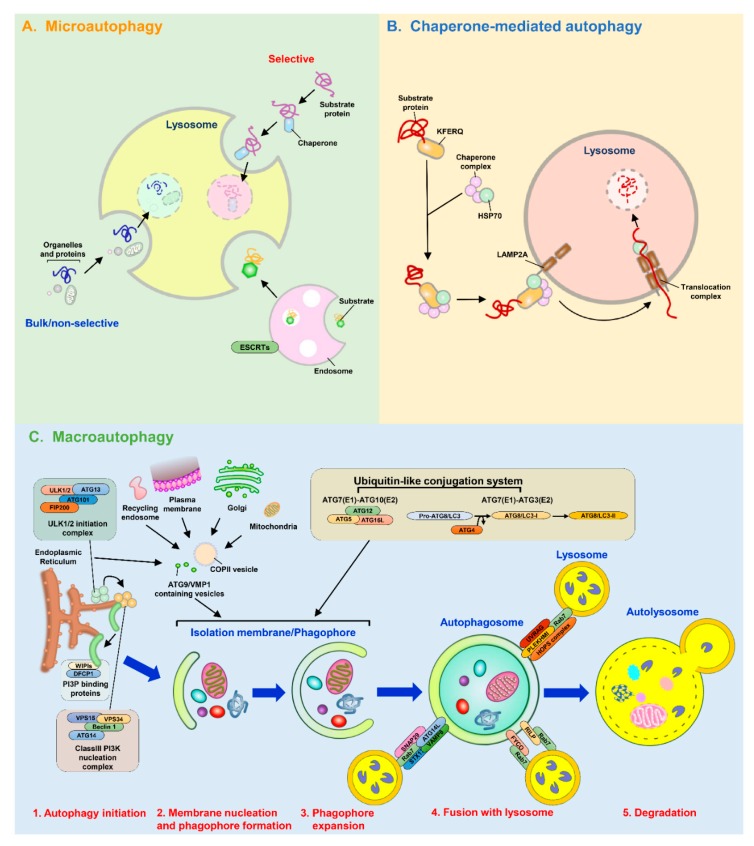
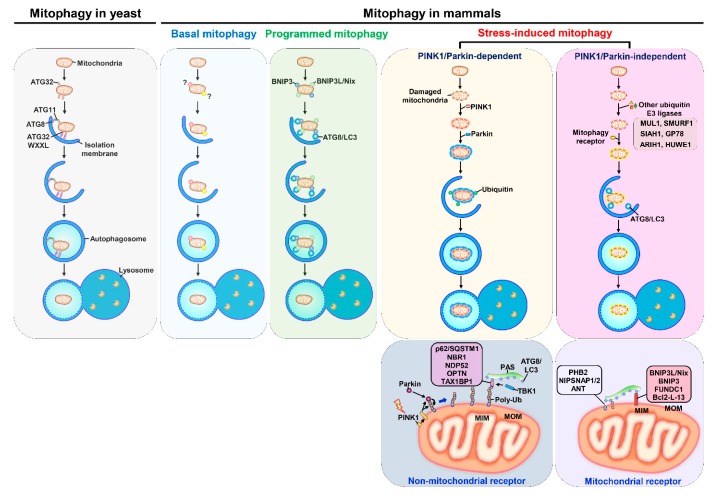
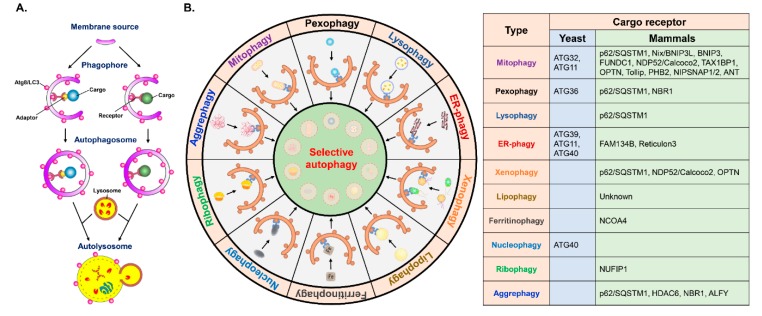
Autophagy is a catabolic process involving vacuolar sequestration of intracellular components and their targeting to lysosomes for degradation, thus supporting nutrient recycling and energy regeneration. Accumulating evidence indicates that in addition to being a bulk, nonselective degradation mechanism, autophagy may selectively eliminate damaged mitochondria to promote mitochondrial turnover, a process termed "mitophagy". Mitophagy sequesters dysfunctional mitochondria via ubiquitination and cargo receptor recognition and has emerged as an important event in the regulation of liver physiology. Recent studies have shown that mitophagy may participate in the pathogenesis of various liver diseases, such as liver injury, liver steatosis/fatty liver disease, hepatocellular carcinoma, viral hepatitis, and hepatic fibrosis. This review summarizes the current knowledge on the molecular regulations and functions of mitophagy in liver physiology and the roles of mitophagy in the development of liver-related diseases. Furthermore, the therapeutic implications of targeting hepatic mitophagy to design a new strategy to cure liver diseases are discussed.
自噬是一种分解代谢过程,涉及液泡内吞细胞内成分,并将其靶向溶酶体进行降解,从而支持营养物质回收和能量再生。越来越多的证据表明,自噬除了作为一种批量的、非选择性的降解机制外,还可能选择性地清除受损的线粒体,以促进线粒体周转,这一过程称为“线粒体自噬”。线粒体自噬通过泛素化和货物受体识别来隔离功能失调的线粒体,并已成为调节肝脏生理的一个重要事件。最近的研究表明,线粒体自噬可能参与各种肝脏疾病的发病机制,如肝损伤、肝脂肪变性/脂肪肝疾病、肝细胞癌、病毒性肝炎和肝纤维化。本综述总结了目前关于线粒体自噬在肝脏生理中的分子调控和功能的知识,以及线粒体自噬在肝脏相关疾病发展中的作用。此外,还讨论了针对肝脏线粒体自噬的治疗意义,以设计一种新的治疗肝脏疾病的策略。