CAS Key Laboratory of Mental Health, Institute of Psychology, Chinese Academy of Sciences, 100101 Beijing, China;
Department of Psychology, University of Chinese Academy of Sciences, 100049 Beijing, China.
Proc Natl Acad Sci U S A. 2019 Jan 29;116(5):1782-1791. doi: 10.1073/pnas.1812499116. Epub 2019 Jan 14.
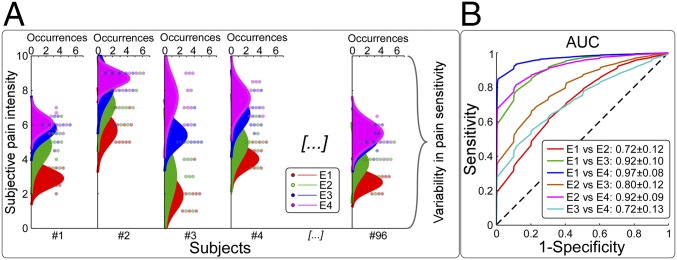
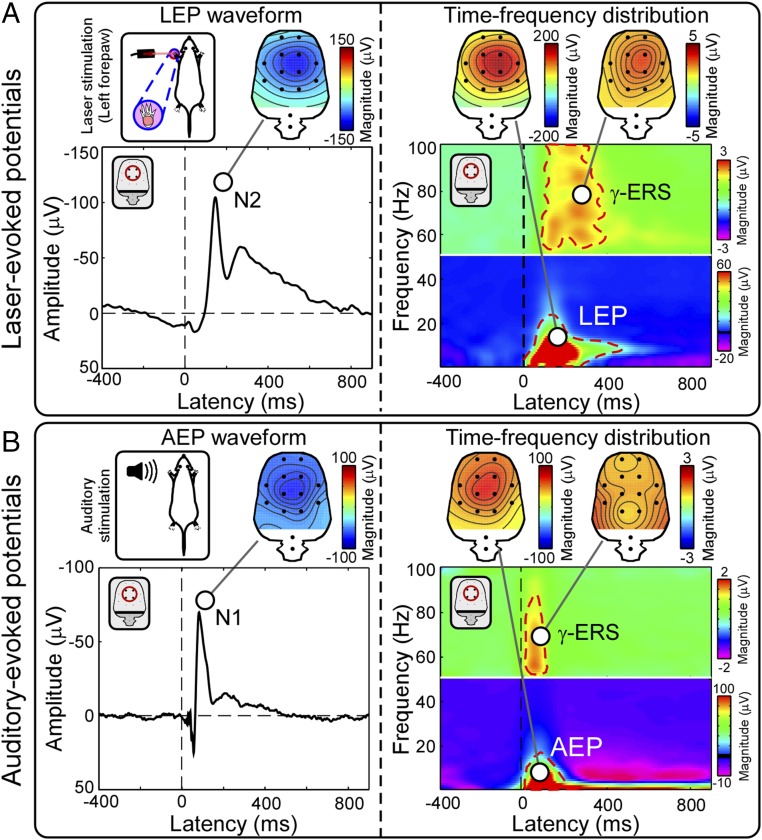
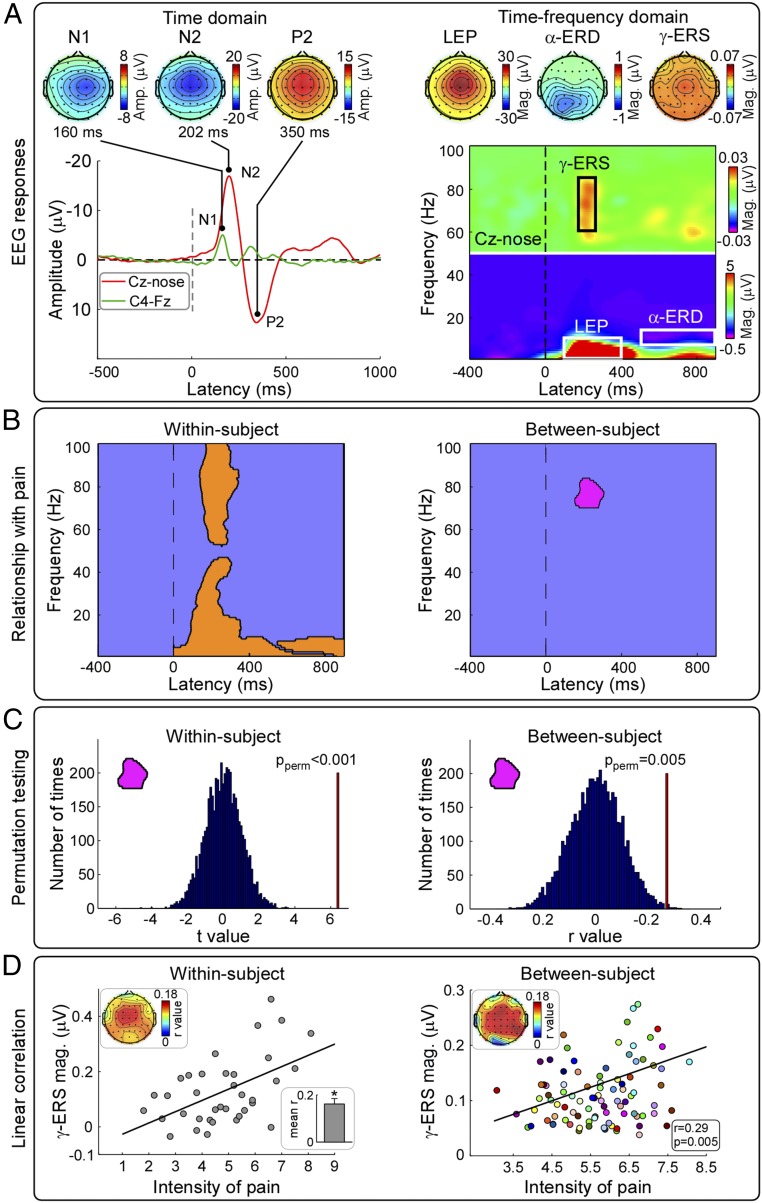
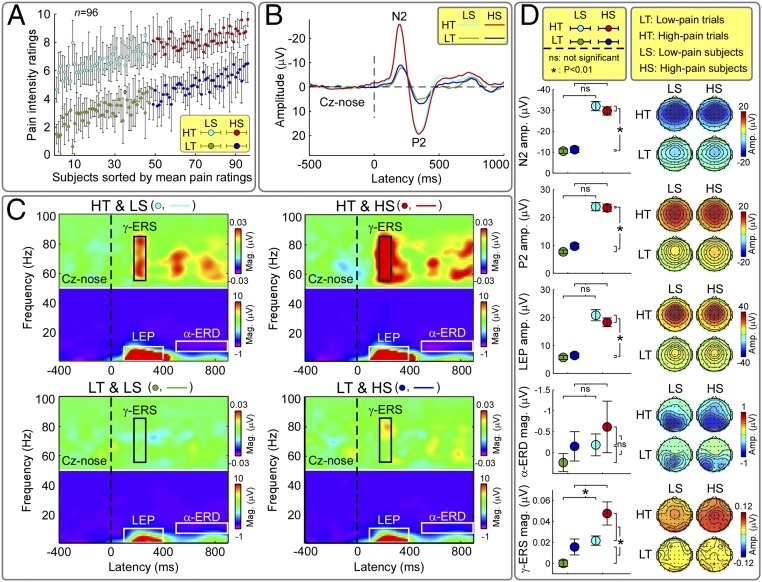
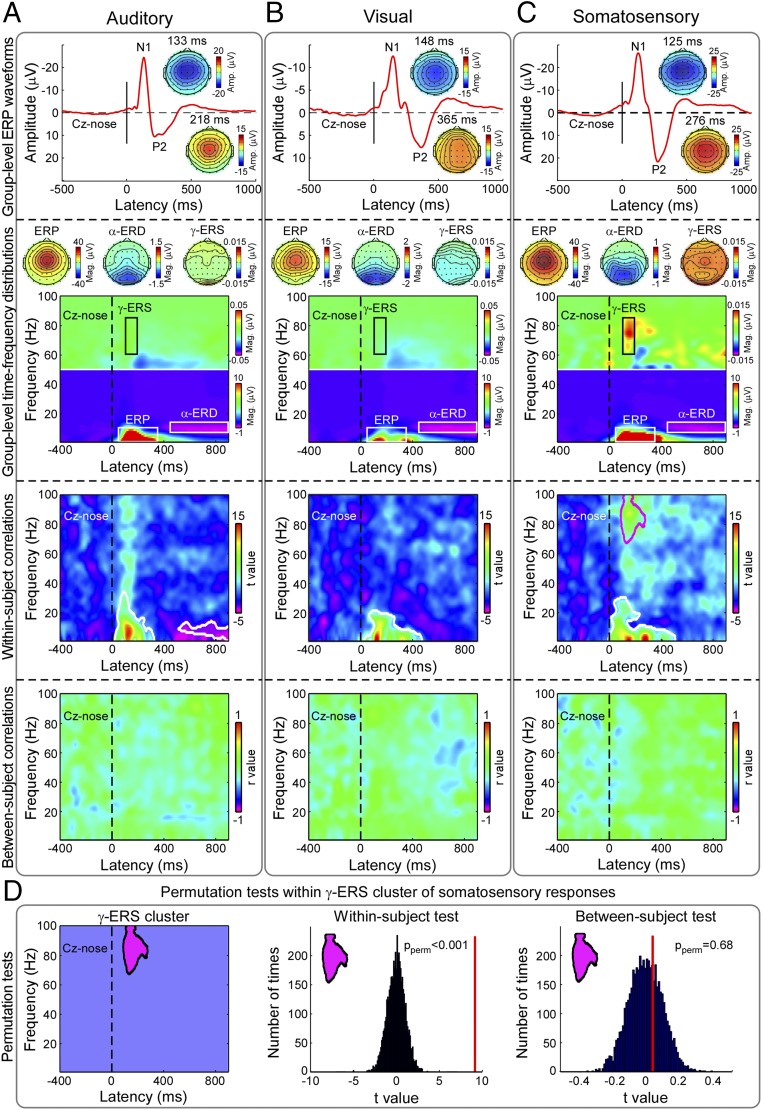
Individuals exhibit considerable and unpredictable variability in painful percepts in response to the same nociceptive stimulus. Previous work has found neural responses that, while not necessarily responsible for the painful percepts themselves, can still correlate well with intensity of pain perception within a given individual. However, there is no reliable neural response reflecting the variability in pain perception across individuals. Here, we use an electrophysiological approach in humans and rodents to demonstrate that brain oscillations in the gamma band [gamma-band event-related synchronization (γ-ERS)] sampled by central electrodes reliably predict pain sensitivity across individuals. We observed a clear dissociation between the large number of neural measures that reflected subjective pain ratings at within-subject level but not across individuals, and γ-ERS, which reliably distinguished subjective ratings within the same individual but also coded pain sensitivity across different individuals. Importantly, the ability of γ-ERS to track pain sensitivity across individuals was selective because it did not track the between-subject reported intensity of nonpainful but equally salient auditory, visual, and nonnociceptive somatosensory stimuli. These results also demonstrate that graded neural activity related to within-subject variability should be minimized to accurately investigate the relationship between nociceptive-evoked neural activities and pain sensitivity across individuals.
个体在对相同伤害性刺激的疼痛感知中表现出相当大且不可预测的可变性。先前的研究发现,虽然神经反应本身不一定是疼痛感知的原因,但仍然可以很好地与个体内部的疼痛感知强度相关。然而,目前还没有可靠的神经反应能够反映个体间疼痛感知的可变性。在这里,我们使用人类和啮齿动物的电生理方法证明,通过中央电极采样的伽马波段脑振荡[伽马波段事件相关同步(γ-ERS)]可靠地预测个体间的疼痛敏感性。我们观察到一个明显的分离,即大量反映主观疼痛评分的神经测量在个体内水平上,但不在个体间水平上,而γ-ERS 在同一个体内可靠地区分主观评分,但也在不同个体间编码疼痛敏感性。重要的是,γ-ERS 跨个体跟踪疼痛敏感性的能力是有选择性的,因为它不会跟踪非疼痛但同样明显的听觉、视觉和非伤害性躯体感觉刺激的个体间报告强度。这些结果还表明,应最小化与个体内变异性相关的分级神经活动,以准确研究伤害性诱发的神经活动与个体间疼痛敏感性之间的关系。