Department of Bioengineering, Stanford University, Stanford, CA, 94305, USA.
Department of Chemical and Systems Biology, Stanford University, Stanford, CA, 94305, USA.
Nat Commun. 2019 Jan 14;10(1):194. doi: 10.1038/s41467-018-08158-x.
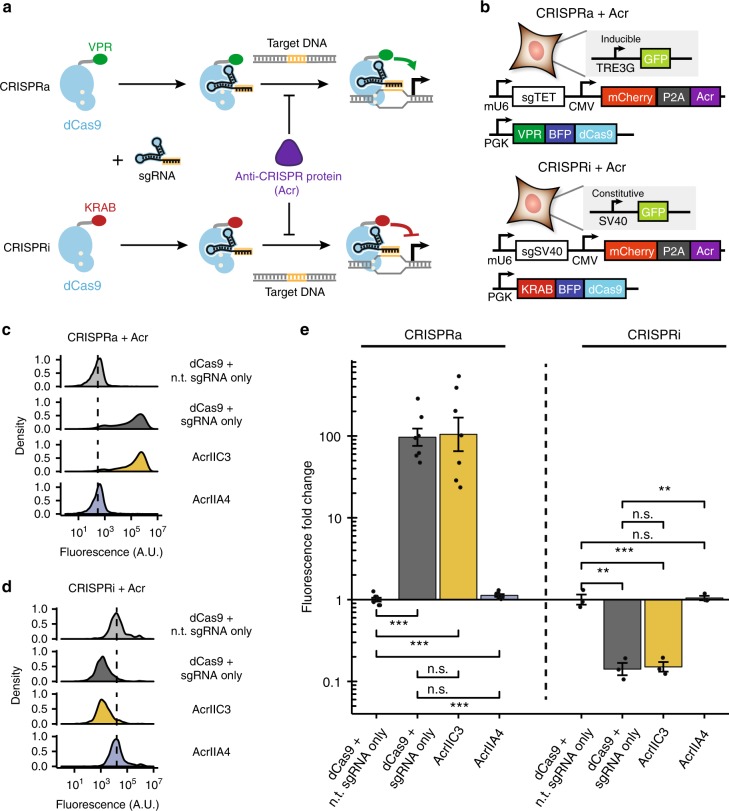
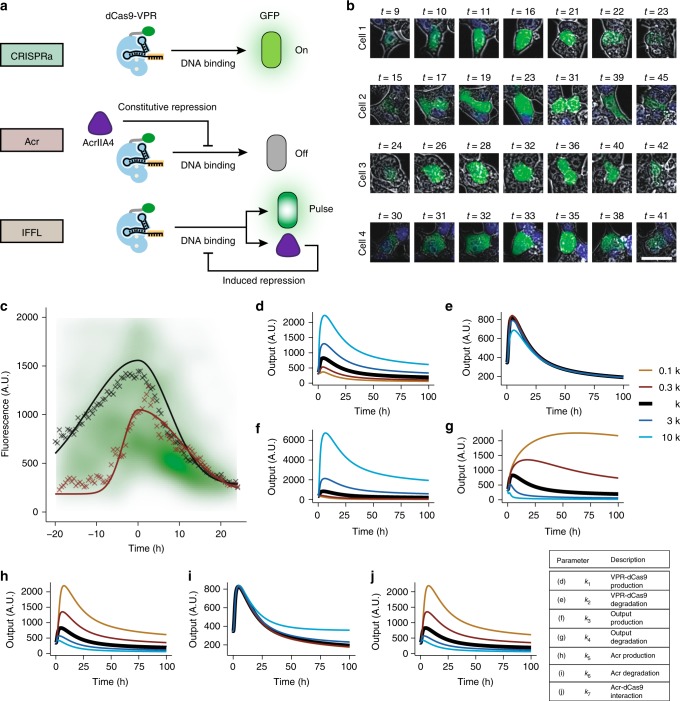
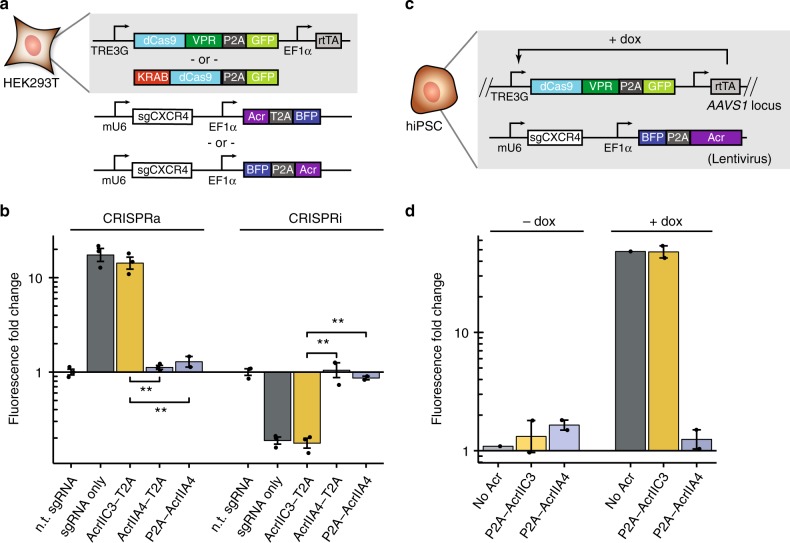
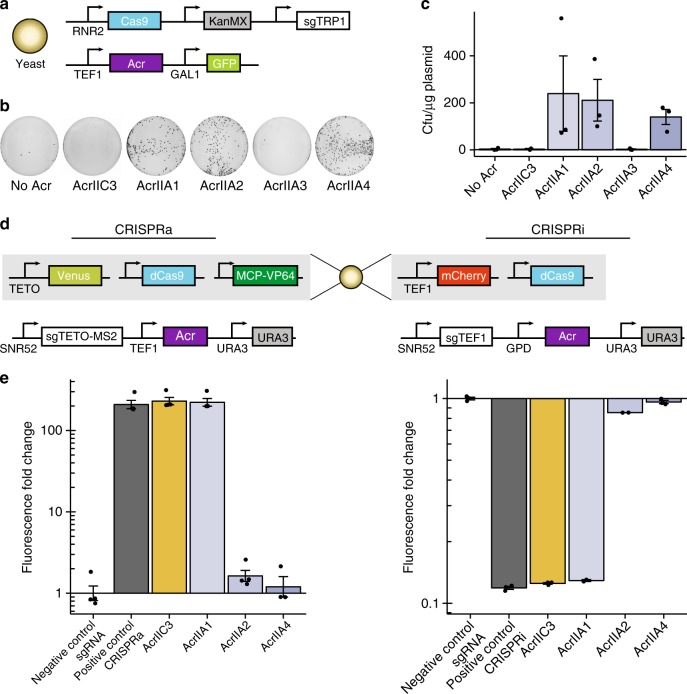
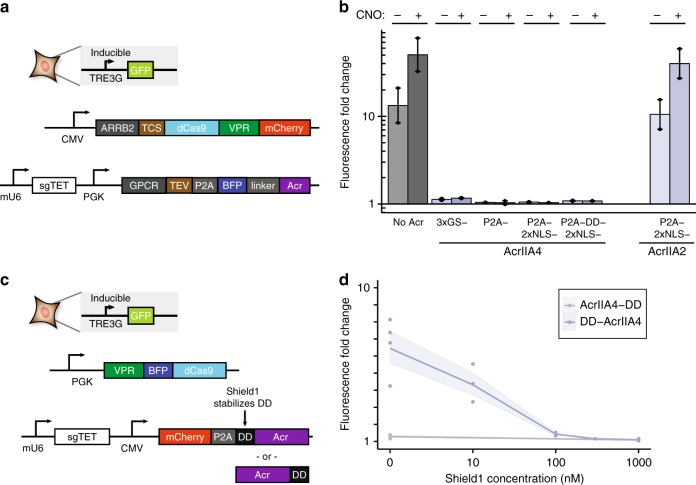
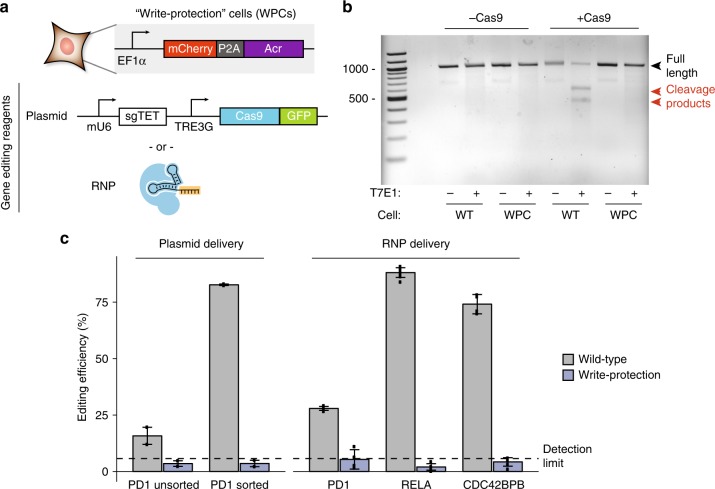
Repurposed CRISPR-Cas molecules provide a useful tool set for broad applications of genomic editing and regulation of gene expression in prokaryotes and eukaryotes. Recent discovery of phage-derived proteins, anti-CRISPRs, which serve to abrogate natural CRISPR anti-phage activity, potentially expands the ability to build synthetic CRISPR-mediated circuits. Here, we characterize a panel of anti-CRISPR molecules for expanded applications to counteract CRISPR-mediated gene activation and repression of reporter and endogenous genes in various cell types. We demonstrate that cells pre-engineered with anti-CRISPR molecules become resistant to gene editing, thus providing a means to generate "write-protected" cells that prevent future gene editing. We further show that anti-CRISPRs can be used to control CRISPR-based gene regulation circuits, including implementation of a pulse generator circuit in mammalian cells. Our work suggests that anti-CRISPR proteins should serve as widely applicable tools for synthetic systems regulating the behavior of eukaryotic cells.
重编程的 CRISPR-Cas 分子为原核生物和真核生物的基因组编辑和基因表达调控的广泛应用提供了有用的工具集。最近发现的噬菌体衍生蛋白,即抗 CRISPR 蛋白,可用来消除天然 CRISPR 抗噬菌体活性,从而有可能扩大构建合成 CRISPR 介导的回路的能力。在这里,我们对一组抗 CRISPR 分子进行了表征,以扩大其应用范围,以抵消 CRISPR 介导的报告基因和内源性基因在各种细胞类型中的激活和抑制。我们证明,预先用抗 CRISPR 分子工程化的细胞对基因编辑具有抗性,从而提供了一种生成“写保护”细胞的方法,可防止未来的基因编辑。我们进一步表明,抗 CRISPR 蛋白可用于控制基于 CRISPR 的基因调控回路,包括在哺乳动物细胞中实现脉冲发生器回路。我们的工作表明,抗 CRISPR 蛋白应该成为调节真核细胞行为的合成系统的广泛适用工具。