Gong Eun Jeong, Jung Kee Wook, Min Yang-Won, Hong Kyoung Sup, Jung Hye-Kyung, Son Hee Jung, Kim Do Yeon, Lee Jungbok, Lee Oh Young
Department of Internal Medicine, Gangneung Asan Hospital, University of Ulsan College of Medicine, Gangneung, Gangwon-do, Korea.
Department of Gastroenterology, University of Ulsan College of Medicine, Asan Medical Center, Seoul, Korea.
J Neurogastroenterol Motil. 2019 Jan 31;25(1):91-99. doi: 10.5056/jnm18133.
BACKGROUND/AIMS: The Gastroesophageal Reflux Disease Questionnaire (GerdQ) has been developed and validated as a tool for the diagnosis of gastroesophageal reflux disease (GERD) in patients with gastrointestinal symptoms. However, the GerdQ and the cutoff value for determining GERD has not been validated in Korea.
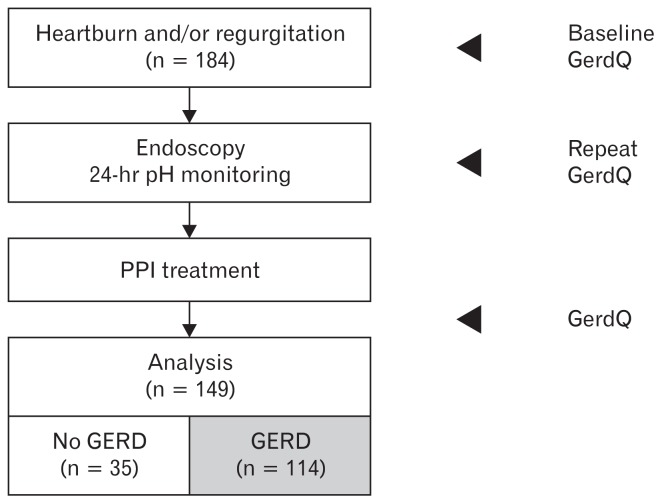
Patients with symptoms suggestive of GERD were consecutively recruited. The Korean version of GerdQ was developed through a forward-backward translation process according to the cross-cultural adaptation method. Endoscopically documented esophagitis, abnormal results on 24-hour ambulatory pH recording with symptom association monitoring, or response to proton pump inhibitor treatment were used as diagnostic references for GERD. The reproducibility and test characteristics of the Korean version of GerdQ were assessed.
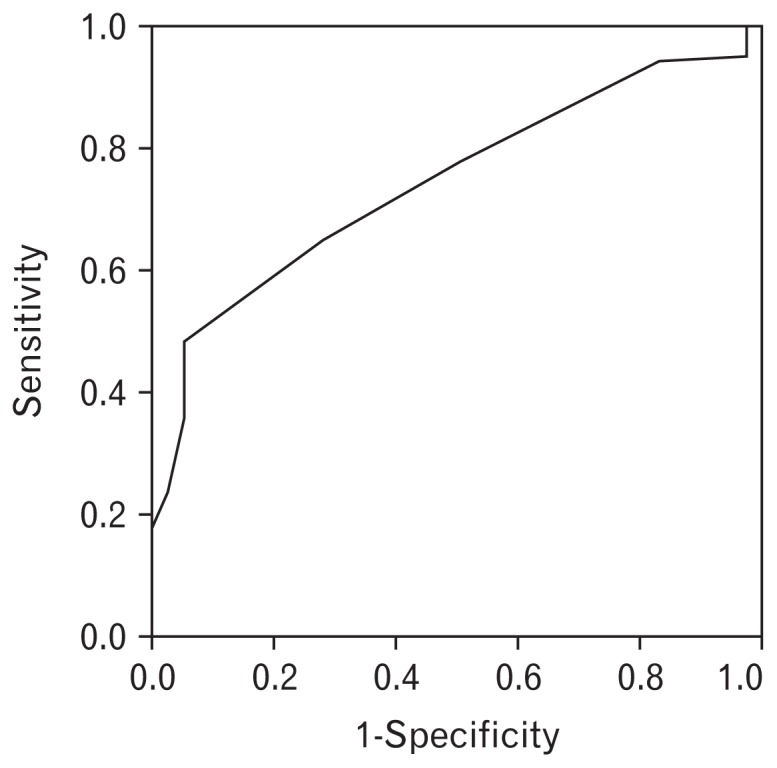
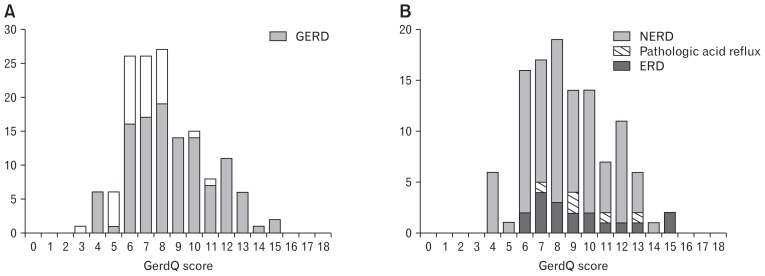
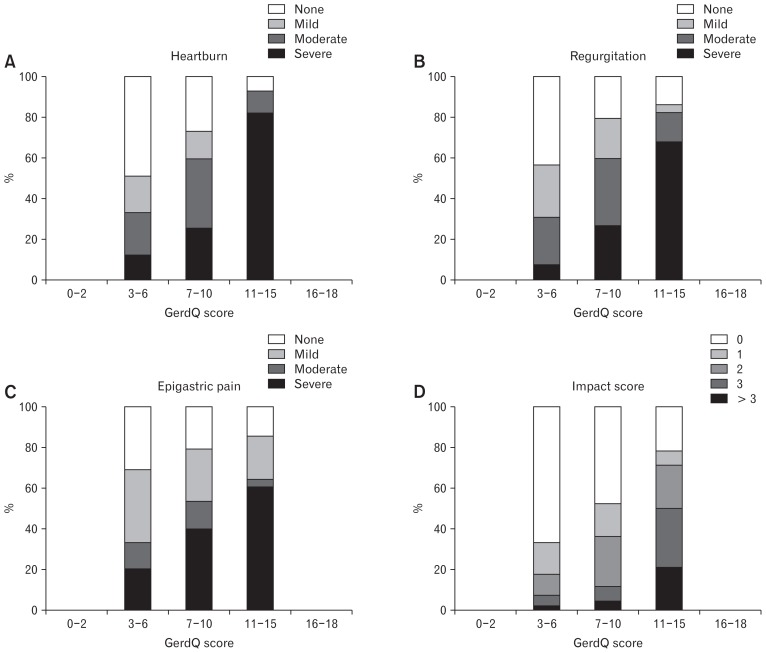
A total of 149 patients with a median age of 55 years were analyzed. The intra-class correlation coefficient of 2 subsequently measured GerdQ scores was 0.651 (95% CI, 0.518-0.748). The cutoff value of 8 was found to have the highest sensitivity (64.9%; 95% CI, 56.2-73.7) and specificity (71.4%; 95% CI, 56.5-86.4) for the diagnosis of GERD. The questionnaire had a high positive predictive value (88.1%; 95% CI, 81.2-95.0), but a low negative predictive value (38.5%; 95% CI, 26.2-50.3) for GERD. Any symptom improvement on proton pump inhibitor treatment showed a sensitivity of 93.0% (95% CI, 88.3-97.7) and a specificity of 48.6% (95% CI, 32.0-65.1) for GERD.
The Korean version of GerdQ is a useful complementary tool in the diagnosis of GERD.
背景/目的:胃食管反流病问卷(GerdQ)已被开发并验证为用于诊断有胃肠道症状患者胃食管反流病(GERD)的工具。然而,GerdQ及其用于确定GERD的临界值在韩国尚未得到验证。
连续招募有GERD症状提示的患者。根据跨文化适应方法,通过正向-反向翻译过程开发了韩语版GerdQ。内镜记录的食管炎、24小时动态pH监测伴症状关联监测的异常结果或对质子泵抑制剂治疗的反应被用作GERD的诊断参考。评估了韩语版GerdQ的可重复性和测试特征。
共分析了149例中位年龄为55岁的患者。两次后续测量的GerdQ评分的组内相关系数为0.651(95%可信区间,0.518 - 0.748)。发现临界值为8时,对GERD诊断的敏感性最高(64.9%;95%可信区间,56.2 - 73.7)和特异性最高(71.4%;95%可信区间,56.5 - 86.4)。该问卷对GERD的阳性预测值较高(88.1%;95%可信区间,81.2 - 95.0),但阴性预测值较低(38.5%;95%可信区间,26.2 - 50.3)。质子泵抑制剂治疗后任何症状改善对GERD的敏感性为93.0%(95%可信区间,88.3 - 97.7),特异性为48.6%(95%可信区间,32.0 - 65.1)。
韩语版GerdQ是GERD诊断中一种有用的辅助工具。