CAS Key Laboratory of Cryogenics, Technical Institute of Physics and Chemistry, Chinese Academy of Sciences, Beijing 100190, China.
School of Future Technology, University of Chinese Academy of Sciences, Beijing 100149, China.
Sensors (Basel). 2019 Jan 14;19(2):314. doi: 10.3390/s19020314.
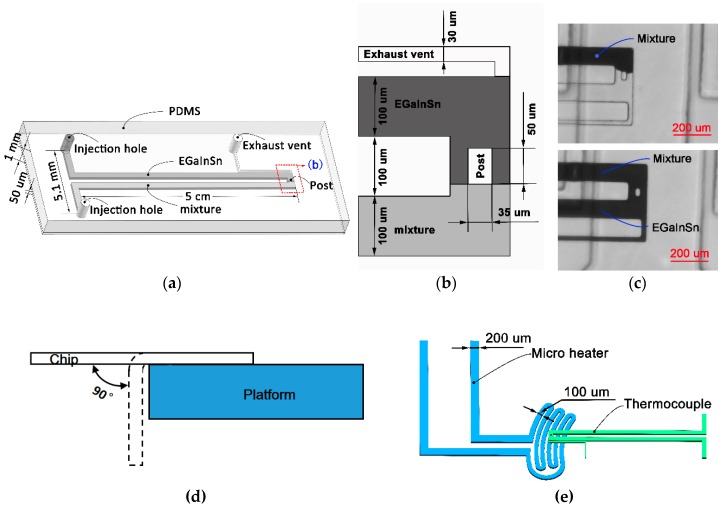
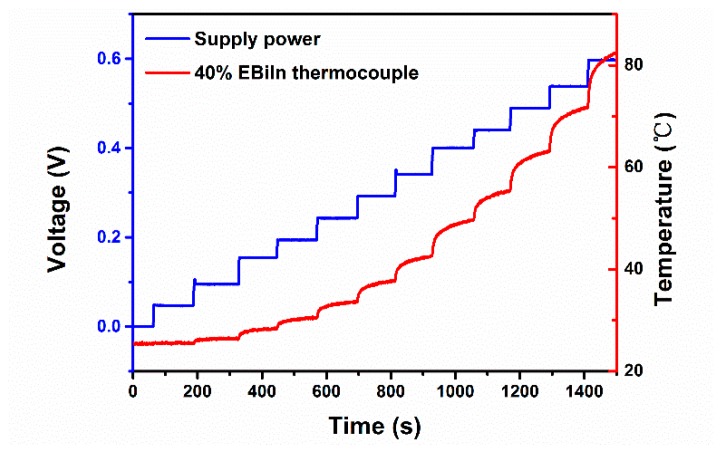
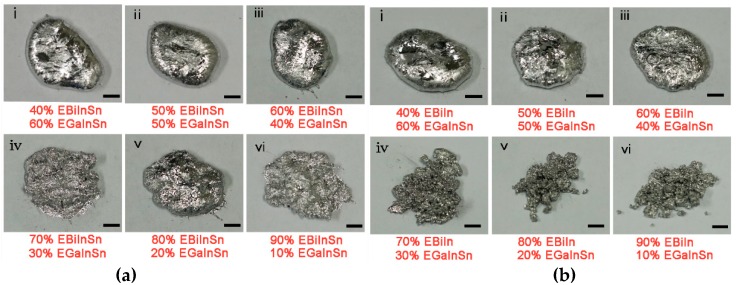
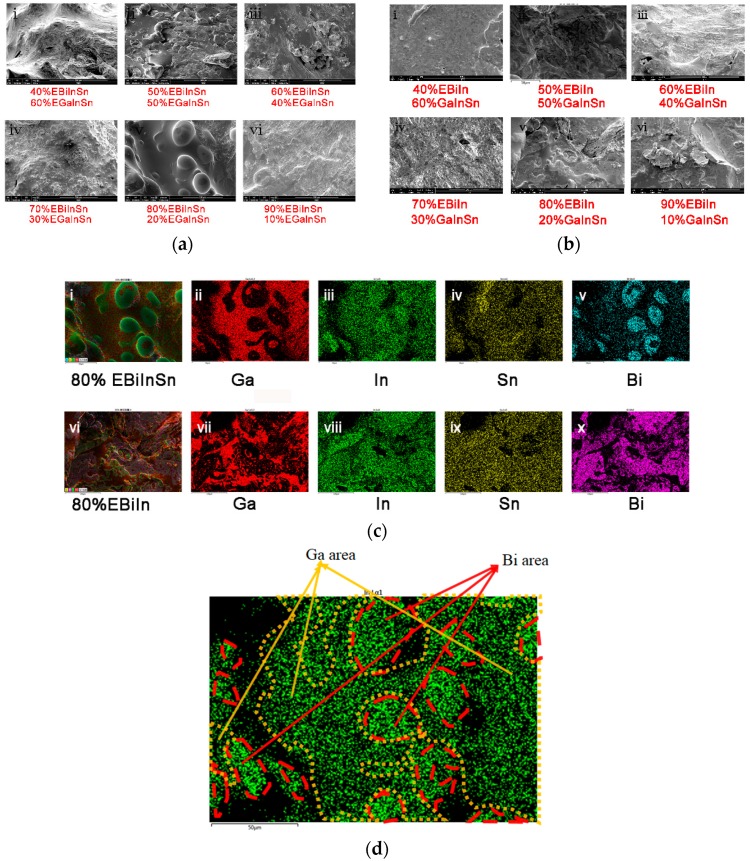
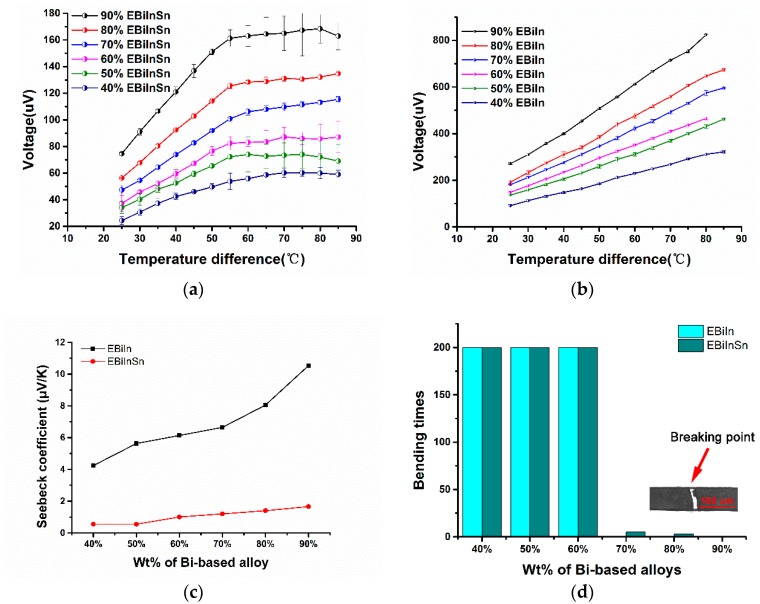
A handy, flexible micro-thermocouple using low-melting-point metal alloys is proposed in this paper. The thermocouple has the advantages of simple fabrication and convenient integration. Bismuth/gallium-based mixed alloys are used as thermocouple materials. To precisely inject the metal alloys to the location of the sensing area, a micro-polydimethylsiloxane post is designed within the sensing area to prevent outflow of the metal alloy to another thermocouple pole during the metal-alloy injection. Experimental results showed that the Seebeck coefficient of this thermocouple reached -10.54 μV/K, which was much higher than the previously reported 0.1 μV/K. The thermocouple was also be bent at 90° more than 200 times without any damage when the mass ratio of the bismuth-based alloy was <60% in the metal-alloy mixture. This technology mitigated the difficulty of depositing traditional thin⁻film thermocouples on soft substrates. Therefore, the thermocouple demonstrated its potential for use in microfluidic chips, which are usually flexible devices.
本文提出了一种使用低熔点金属合金的便捷、灵活的微型热电偶。该热电偶具有制造简单、集成方便的优点。铋/镓基混合合金被用作热电偶材料。为了将金属合金精确地注入到感测区域的位置,在感测区域内设计了一个微聚二甲基硅氧烷柱,以防止金属合金在注入过程中流向另一个热电偶极。实验结果表明,该热电偶的塞贝克系数达到-10.54 μV/K,远高于之前报道的 0.1 μV/K。当金属合金混合物中铋基合金的质量比小于 60%时,该热电偶可以弯曲 90°以上 200 多次而没有任何损坏。这项技术缓解了在软基底上沉积传统薄膜热电偶的困难。因此,该热电偶展示了在微流控芯片中的应用潜力,微流控芯片通常是柔性器件。