Musgrave Christopher Stephen Andrew, Fang Fengzhou
Centre of MicroNano Manufacturing Technology (MNMT-Dublin), University College Dublin, D14 YH57 Dublin, Ireland.
State Key Laboratory of Precision Measuring Technology and Instruments, Centre of MicroNano Manufacturing Technology (MNMT), Tianjin University, Tianjin 300072, China.
Materials (Basel). 2019 Jan 14;12(2):261. doi: 10.3390/ma12020261.
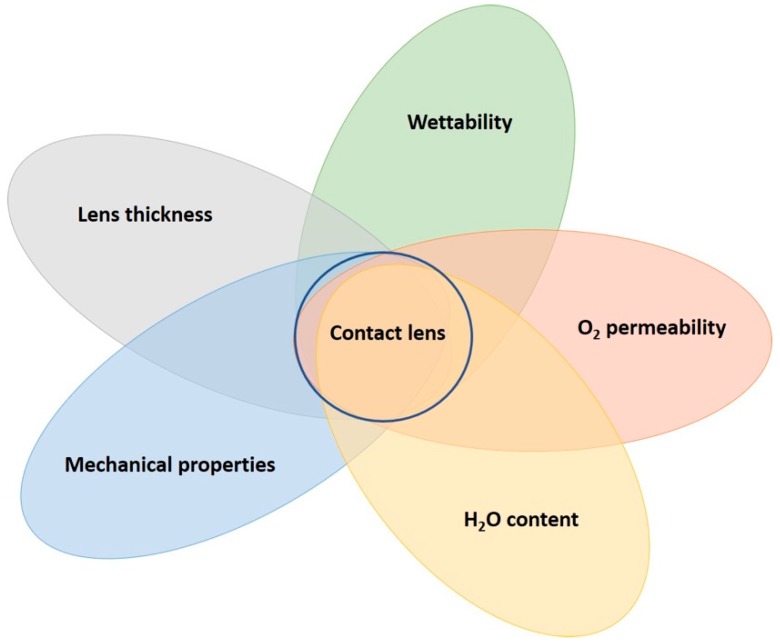
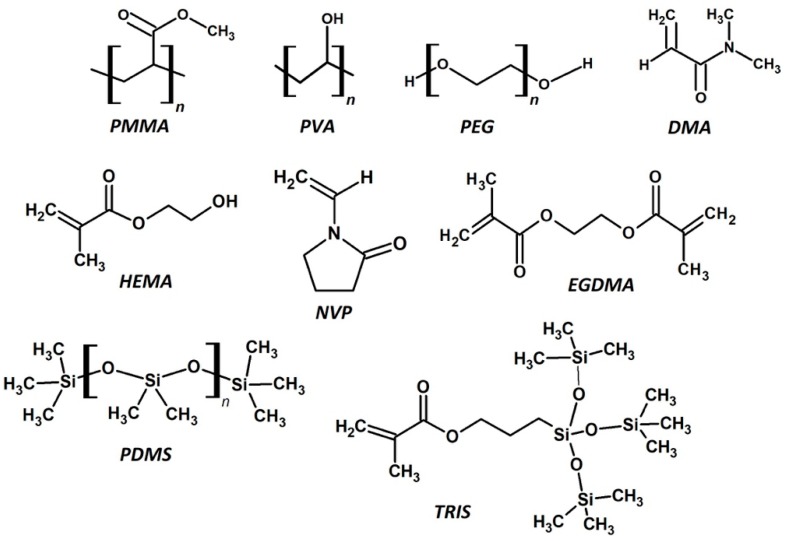
More is demanded from ophthalmic treatments using contact lenses, which are currently used by over 125 million people around the world. Improving the material of contact lenses (CLs) is a now rapidly evolving discipline. These materials are developing alongside the advances made in related biomaterials for applications such as drug delivery. Contact lens materials are typically based on polymer- or silicone-hydrogel, with additional manufacturing technologies employed to produce the final lens. These processes are simply not enough to meet the increasing demands from CLs and the ever-increasing number of contact lens (CL) users. This review provides an advanced perspective on contact lens materials, with an emphasis on materials science employed in developing new CLs. The future trends for CL materials are to graft, incapsulate, or modify the classic CL material structure to provide new or improved functionality. In this paper, we discuss some of the fundamental material properties, present an outlook from related emerging biomaterials, and provide viewpoints of precision manufacturing in CL development.
对于使用隐形眼镜的眼科治疗有了更多需求,目前全球有超过1.25亿人使用隐形眼镜。改进隐形眼镜(CL)材料是一门正在迅速发展的学科。这些材料随着相关生物材料在药物递送等应用方面取得的进展而不断发展。隐形眼镜材料通常基于聚合物或硅水凝胶,并采用额外的制造技术来生产最终的镜片。这些工艺根本不足以满足对隐形眼镜日益增长的需求以及隐形眼镜使用者数量的不断增加。本综述提供了关于隐形眼镜材料的前沿观点,重点是用于开发新型隐形眼镜的材料科学。隐形眼镜材料的未来趋势是嫁接、封装或修改经典的隐形眼镜材料结构,以提供新的或改进的功能。在本文中,我们讨论了一些基本的材料特性,展示了相关新兴生物材料的前景,并提供了隐形眼镜开发中精密制造的观点。