Hoff Geir, de Lange Thomas, Bretthauer Michael, Dahler Stein, Halvorsen Fred-Arne, Huppertz-Hauss Gert, Høie Ole, Kjellevold Øystein, Mortiz Volker, Sandvei Per, Seip Birgitte, Holme Øyvind
Telemark Hospital, Skien, Norway.
University of Oslo, Institute of Clinical Medicine, Oslo, Norway.
Endosc Int Open. 2019 Jan;7(1):E90-E98. doi: 10.1055/a-0806-7006. Epub 2019 Jan 15.
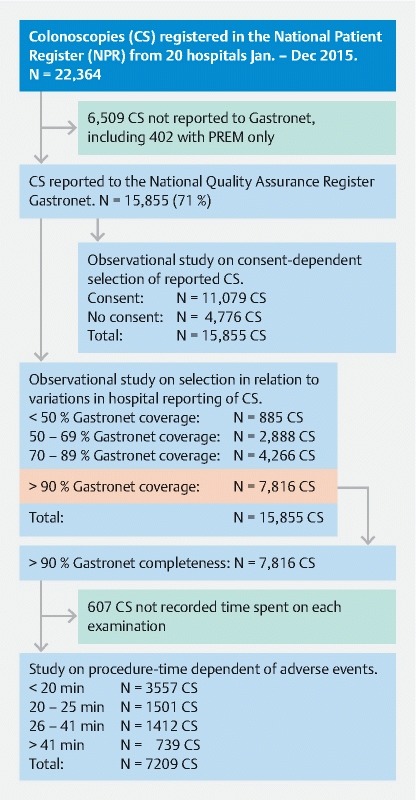
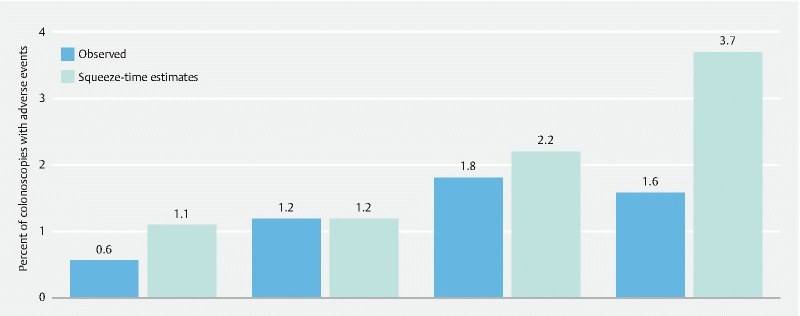
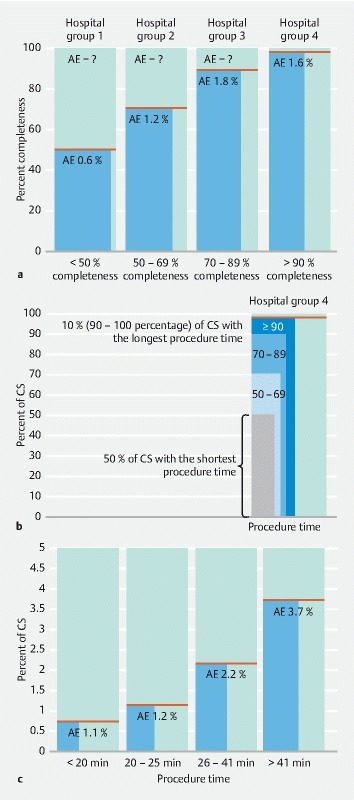
The quality of medical quality registers is poorly defined and lack of trust in data due to low completeness may be a major barrier against their use in quality improvement interventions. The aim of the current observational study was to explore how selective reporting may influence adverse events registered in the Norwegian quality register for colonoscopy (Gastronet). Gastronet's database includes data provided by endoscopists, nurses and patients. All outpatient colonoscopies reported to Gastronet in 2015 were included and compared to the total number of colonoscopies performed in Norway as retrieved from the National Patient Registry. Hospitals were categorized into four groups according to reporting completeness < 50 %, 50 % to 69 %, 70 % to 89 % and ≥ 90 %. The number of recorded adverse events (AEs) and procedure time were analyzed. Multivariate logistic regression models were fitted to explore independent factors for selection bias. A total of 22,364 colonoscopies were reported to the National Patient Register of which 15,855 (71 %) were registered in Gastronet. Feedback was received from 11,079 patients (50 %). The frequency of AEs increased from 0.6 % in completeness group < 50 % to 1.6 % in completeness group ≥ 90 % ( < 0.001). Long colonoscopy procedure time was associated with low reporting completeness. Patient feedback was associated with older age, cecal intubation success and sedation-free colonoscopy. Incomplete registration in a colonoscopy quality register is associated with underreporting of AEs. Longer procedure time, a surrogate marker for time constraint, is associated with low completeness.
医疗质量登记的质量定义不明确,由于完整性低而导致对数据缺乏信任可能是阻碍其用于质量改进干预措施的主要障碍。当前这项观察性研究的目的是探讨选择性报告如何影响挪威结肠镜检查质量登记系统(Gastronet)中登记的不良事件。Gastronet的数据库包含内镜医师、护士和患者提供的数据。纳入了2015年向Gastronet报告的所有门诊结肠镜检查病例,并与从国家患者登记系统中检索到的挪威结肠镜检查总数进行比较。根据报告完整性将医院分为四组:<50%、50%至69%、70%至89%和≥90%。分析记录的不良事件(AE)数量和操作时间。采用多变量逻辑回归模型探讨选择偏倚的独立因素。共有22364例结肠镜检查报告至国家患者登记系统,其中15855例(71%)登记在Gastronet中。收到了11079例患者(50%)的反馈。不良事件的发生率从完整性<50%组的0.6%增加到完整性≥90%组的1.6%(<0.001)。结肠镜检查操作时间长与报告完整性低相关。患者反馈与年龄较大、盲肠插管成功及非镇静结肠镜检查相关。结肠镜检查质量登记系统中的登记不完整与不良事件报告不足相关。较长的操作时间(时间限制的替代指标)与低完整性相关。