Department of Biological and Chemical Work Environment, National Institute of Occupational Health, Pb 8149 Dep., N-0033 Oslo, Norway.
Department of Industrial Process, Technology SINTEF Materials and Chemistry, PB 4760, N-7465 Trondheim, Norway.
Int J Mol Sci. 2019 Jan 16;20(2):358. doi: 10.3390/ijms20020358.
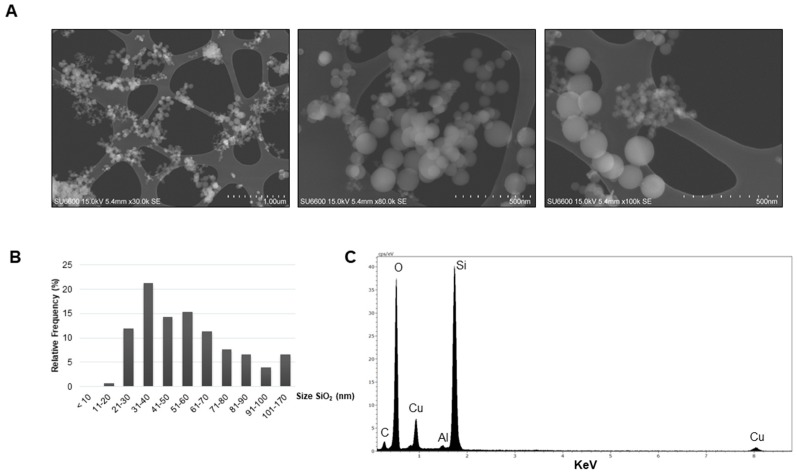
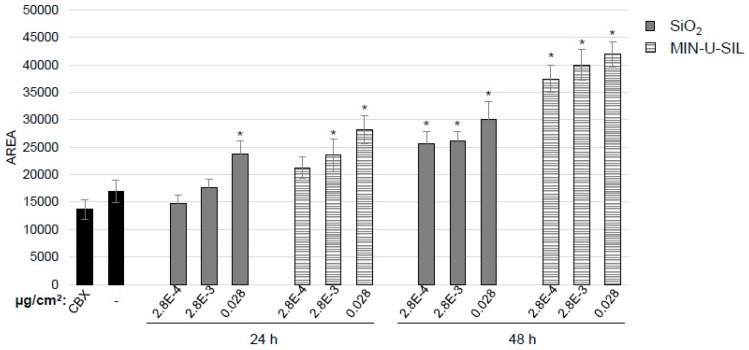
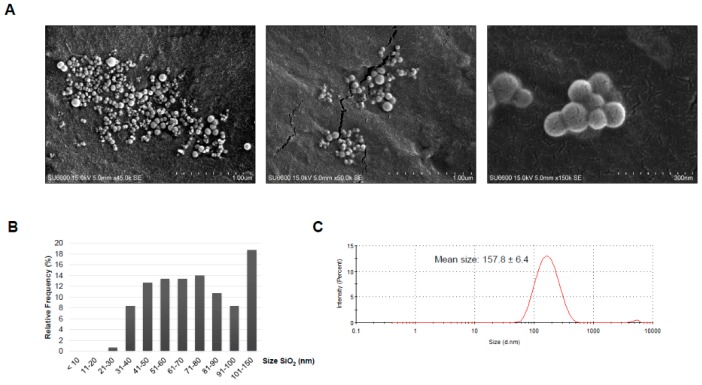
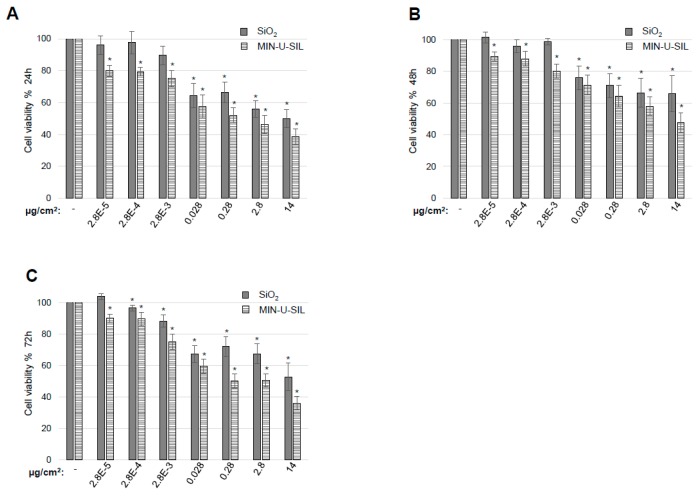
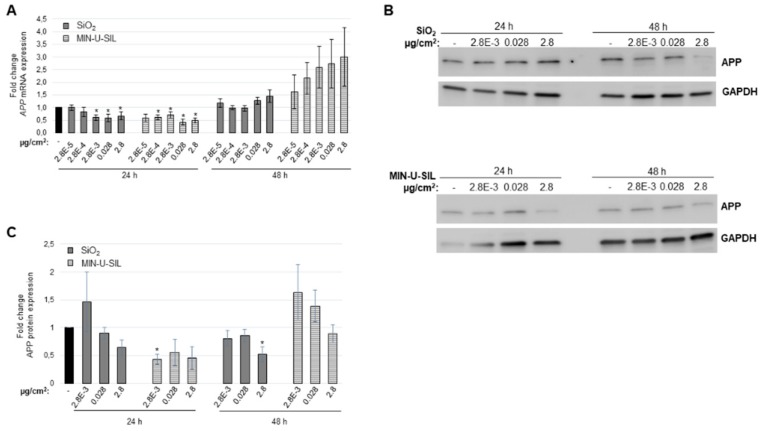
Despite the rigorous emission control measures in the ferroalloy industry, there are still emissions of dust during the production of various alloys. Dust particles were collected from laboratory scale processes where oxide particulate matter was formed from liquid silicon (metallurgical grade). The dust was produced in a dry air atmosphere to mimic industrial conditions. To investigate possible effects of ultrafine dust on the central nervous system, a human astrocytic cell line was employed to investigate inflammatory effects of particles as astrocytes play a number of active and neuron supporting roles in the brain. Toxicity on the astrocytes by amorphous silica generated in laboratory scale was compared to crystalline macro-sized silica using several doses to determine toxicological dose response curves. The cell viability experiments indicated that low particle doses of amorphous silica induced a small nonsignificant reduction in cell viability compared to crystalline silica which led to increased levels of toxicity. The gene expression of amyloid precursor protein (APP), a biomarker of neurodegenerative disease, was affected by particle exposure. Furthermore, particle exposure, in a dose-and time-dependent manner, affected the ability of the cells to communicate through gap junction channels. In conclusion, in vitro studies using low doses of particles are important to understand mechanisms of toxicity of occupational exposure to silica particles. However, these studies cannot be extrapolated to real exposure scenarios at work place, therefore, controlling and keeping the particle exposure levels low at the work place, would prevent potential negative health effects.
尽管铁合金行业采取了严格的排放控制措施,但在生产各种合金时仍会有粉尘排放。从实验室规模的过程中收集了粉尘,在该过程中,氧化物颗粒是由液态硅(冶金级)形成的。在干燥的空气气氛中产生粉尘,以模拟工业条件。为了研究超细粉尘对中枢神经系统的可能影响,采用人星形胶质细胞瘤系研究颗粒的炎症作用,因为星形胶质细胞在大脑中发挥多种活跃和支持神经元的作用。使用不同剂量的实验室规模生成的无定形二氧化硅来比较晶体大尺寸二氧化硅对星形胶质细胞的毒性,以确定毒理学剂量反应曲线。细胞活力实验表明,与晶体二氧化硅相比,无定形二氧化硅的低颗粒剂量会轻微降低细胞活力,但不会导致毒性增加。淀粉样前体蛋白(APP)的基因表达,作为神经退行性疾病的生物标志物,受到颗粒暴露的影响。此外,颗粒暴露以剂量和时间依赖的方式影响细胞通过间隙连接通道进行通信的能力。总之,使用低剂量颗粒进行的体外研究对于理解职业性暴露于二氧化硅颗粒的毒性机制很重要。但是,这些研究不能外推到工作场所的实际暴露情况,因此,控制和保持工作场所的颗粒暴露水平低,可以防止潜在的负面健康影响。