Monteleone Emanuele, Orecchia Valeria, Corrieri Paola, Schiavone Davide, Avalle Lidia, Moiso Enrico, Savino Aurora, Molineris Ivan, Provero Paolo, Poli Valeria
Department of Molecular Biotechnology and Health Sciences, Molecular Biotechnology Center, University of Turin, Via Nizza 52, 10126 Turin, Italy.
Candiolo Cancer Institute, FPO-IRCCS, 10060 Turin, Italy.
Cancers (Basel). 2019 Jan 16;11(1):101. doi: 10.3390/cancers11010101.
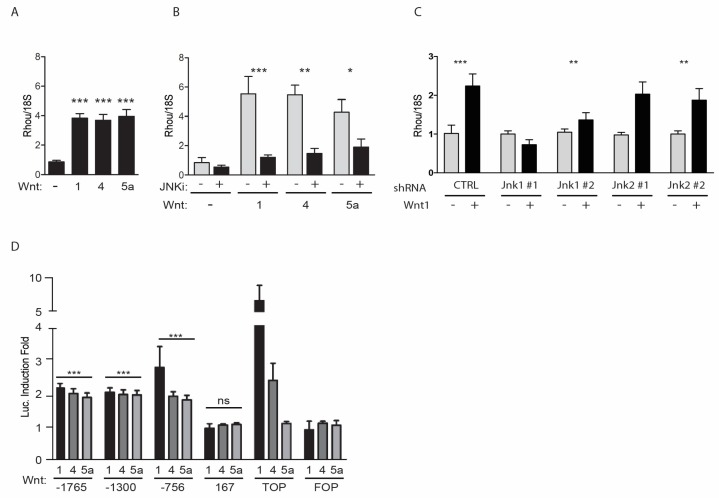
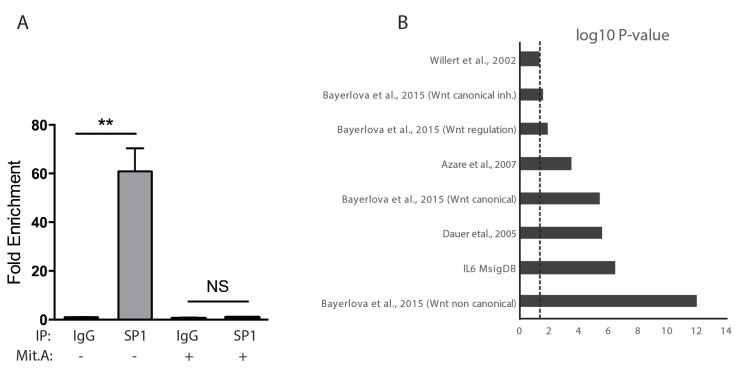
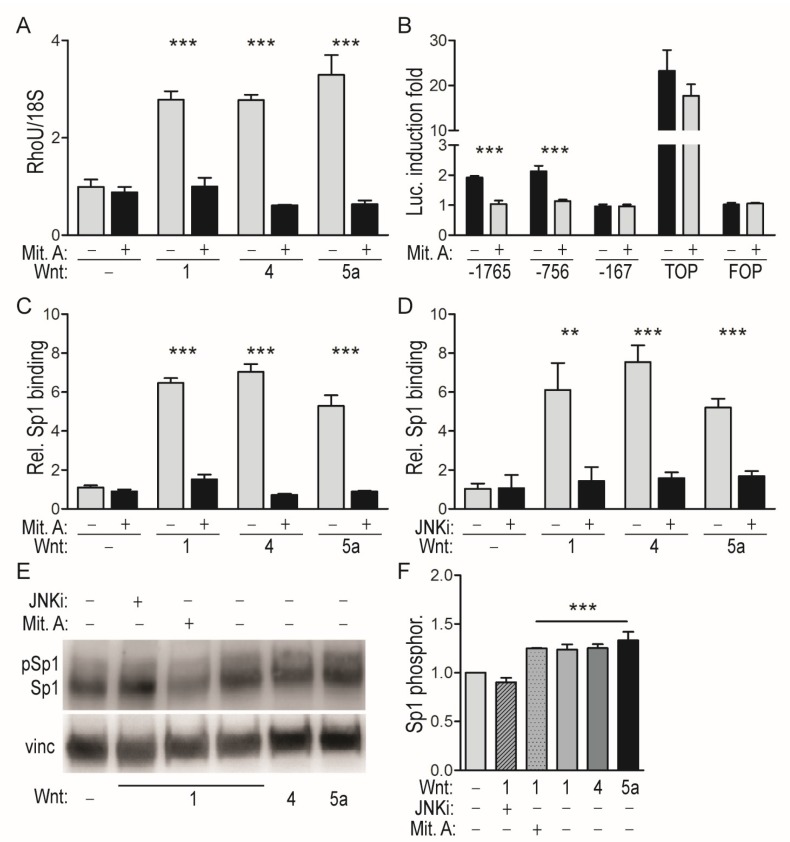
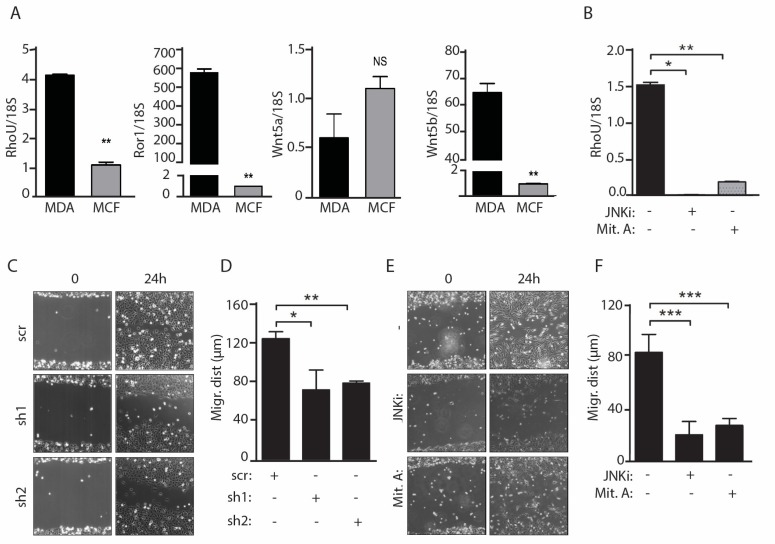
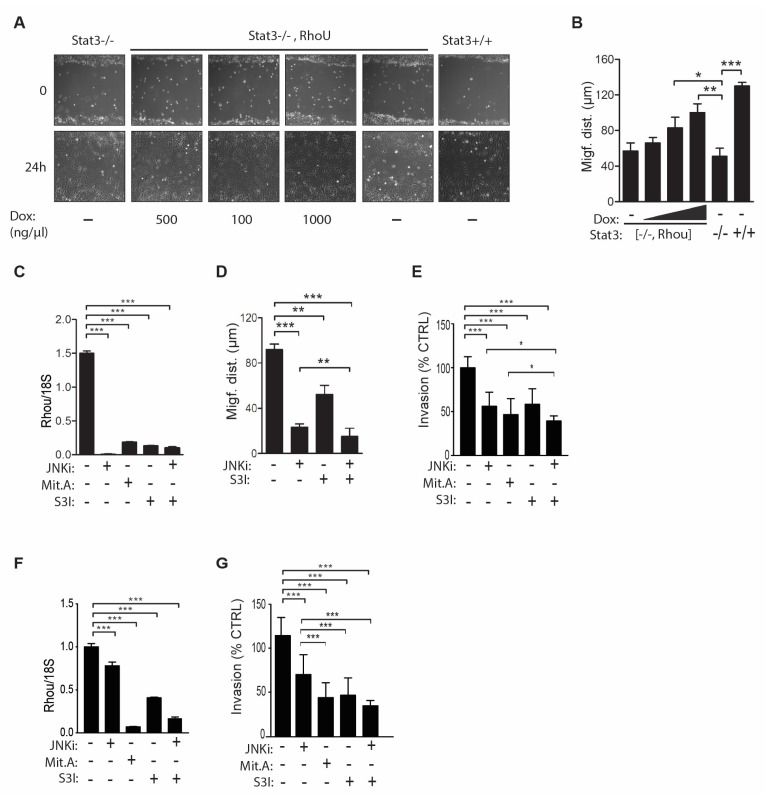
Breast cancer is a heterogeneous disease whose clinical management is very challenging. Although specific molecular features characterize breast cancer subtypes with different prognosis, the identification of specific markers predicting disease outcome within the single subtypes still lags behind. Both the non-canonical Wingless-type MMTV Integration site (WNT) and the Signal Transducer and Activator of Transcription (STAT)3 pathways are often constitutively activated in breast tumors, and both can induce the small GTPase Ras Homolog Family Member U . Here we show that transcription can be triggered by both canonical and non-canonical WNT ligands via the activation of c-JUN N-terminal kinase (JNK) and the recruitment of the Specificity Protein 1 (SP1) transcription factor to the promoter, identifying for the first time SP1 as a JNK-dependent mediator of WNT signaling. down-regulation by silencing or treatment with JNK, SP1 or STAT3 inhibitors leads to impaired migration and invasion in basal-like MDA-MB-231 and BT-549 cells, suggesting that STAT3 and SP1 can cooperate to induce high expression and enhance breast cancer cells migration. Moreover, in vivo concomitant binding of STAT3 and SP1 defines a subclass of genes belonging to the non-canonical WNT and the Interleukin (IL)-6/STAT3 pathways and contributing to breast cancer aggressiveness, suggesting the relevance of developing novel targeted therapies combining inhibitors of the STAT3 and WNT pathways or of their downstream mediators.
乳腺癌是一种异质性疾病,其临床管理极具挑战性。尽管特定分子特征可表征具有不同预后的乳腺癌亚型,但在单一亚型内预测疾病转归的特定标志物的识别仍滞后。非经典的无翅型MMTV整合位点(WNT)和信号转导及转录激活因子(STAT)3通路在乳腺肿瘤中常常组成性激活,且二者均可诱导小GTP酶Ras同源家族成员U。在此我们表明,经典和非经典WNT配体均可通过激活c-JUN氨基末端激酶(JNK)以及将特异性蛋白1(SP1)转录因子招募至启动子来触发转录,首次确定SP1为WNT信号的JNK依赖性介质。通过沉默或用JNK、SP1或STAT3抑制剂处理使其下调,会导致基底样MDA-MB-231和BT-549细胞的迁移和侵袭受损,这表明STAT3和SP1可协同诱导高表达并增强乳腺癌细胞的迁移。此外,在体内,STAT3和SP1的共结合定义了一类属于非经典WNT和白细胞介素(IL)-6/STAT3通路且促成乳腺癌侵袭性的基因亚类,这表明开发联合STAT3和WNT通路或其下游介质抑制剂新型靶向疗法的相关性。