Yang Shoubo, Gao Kaidi, Li Wenbin
Department of Neuro-Οncology, Neurosurgery Center, Beijing Tiantan Hospital, Capital Medical University, Beijing 100050, P.R. China.
Continuing Education and Training Department, Beijing Rehabilitation Hospital Affiliated to Capital Medical University, Beijing 100144, P.R. China.
Oncol Lett. 2019 Jan;17(1):1035-1041. doi: 10.3892/ol.2018.9644. Epub 2018 Oct 31.
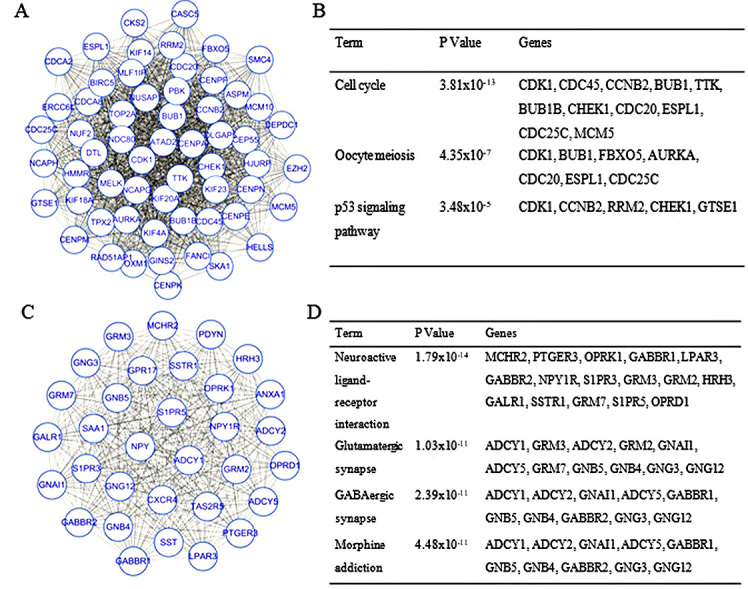
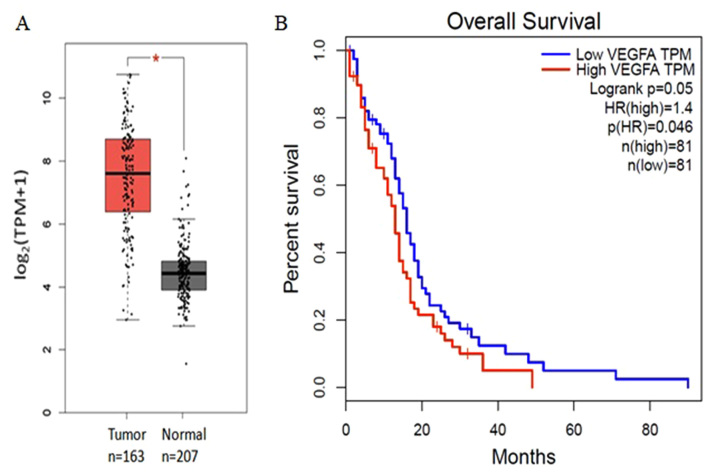
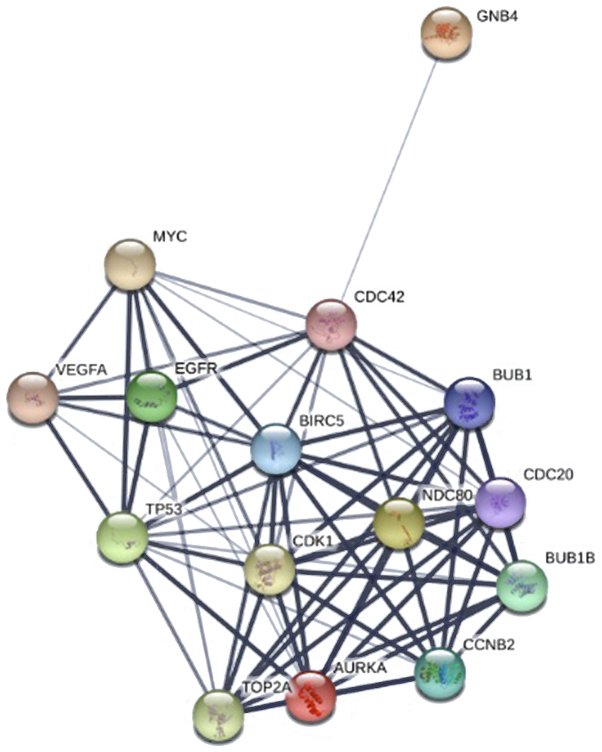
Glioblastoma (GBM) is the most common type of malignant brain tumor, and is associated with poor patient prognosis. A comprehensive understanding of the molecular mechanism underlying GBM may help to guide the identification of novel diagnoses and treatment targets. The gene expression profile of the GSE4290 GBM dataset was analyzed in order to identify differentially expressed genes (DEGs). Enriched pathways were identified through Gene Ontology and the Kyoto Encyclopedia of Genes and Genomes analyses. A protein-protein interaction network was constructed in order to identify hub genes and for module analysis. Expression and survival analyses were conducted in order to screen and validate critical genes. A total of 1,801 DEGs were recorded, including 620 upregulated and 1,181 downregulated genes. Upregulated DEGs were enriched in the terms 'mitotic cell cycle process', 'mitotic cell cycle' and 'cell cycle process'. Downregulated genes were enriched in 'transsynaptic signaling', 'anterograde transsynaptic signaling' and 'synaptic signaling'. A total of 15 hub genes, which displayed a high degree of connectivity, were selected. These genes included vascular endothelial growth factor A, cyclin-dependent kinase 1 (CDK1), cell-division cycle protein 20 (CDC20), aurora kinase A (AURKA), and budding uninhibited by benzimidazoles 1 (BUB1). The identified DEGs and hub genes may help guide investigations on the mechanisms underlying the development and progression of GBM. CDK1, CDC20, AURKA and BUB1, which are involved in cell cycle pathways, may be potential targets in the diagnosis and therapy of GBM.
胶质母细胞瘤(GBM)是最常见的恶性脑肿瘤类型,与患者预后不良相关。全面了解GBM的分子机制可能有助于指导新型诊断和治疗靶点的识别。分析了GBM数据集GSE4290的基因表达谱,以识别差异表达基因(DEG)。通过基因本体论和京都基因与基因组百科全书分析确定了富集途径。构建了蛋白质-蛋白质相互作用网络,以识别枢纽基因并进行模块分析。进行了表达和生存分析,以筛选和验证关键基因。共记录了1801个DEG,包括620个上调基因和1181个下调基因。上调的DEG在“有丝分裂细胞周期过程”、“有丝分裂细胞周期”和“细胞周期过程”等术语中富集。下调基因在“跨突触信号传导”、“顺行跨突触信号传导”和“突触信号传导”中富集。共选择了15个具有高度连通性的枢纽基因。这些基因包括血管内皮生长因子A、细胞周期蛋白依赖性激酶1(CDK1)、细胞分裂周期蛋白20(CDC20)、极光激酶A(AURKA)和苯并咪唑不抑制的芽殖1(BUB1)。所识别的DEG和枢纽基因可能有助于指导对GBM发生和进展机制的研究。参与细胞周期途径的CDK1、CDC20、AURKA和BUB1可能是GBM诊断和治疗的潜在靶点。