Center for Molecular Medicine, Division of Rheumatology, Department of Medicine, Karolinska Institutet, Karolinska University Hospital, Stockholm, Sweden.
Systemic Autoimmunity Branch, Intramural Research Program, National Institute of Arthritis and Musculoskeletal and Skin Diseases, National Institutes of Health, Bethesda, MD, United States.
Front Immunol. 2019 Jan 4;9:3033. doi: 10.3389/fimmu.2018.03033. eCollection 2018.
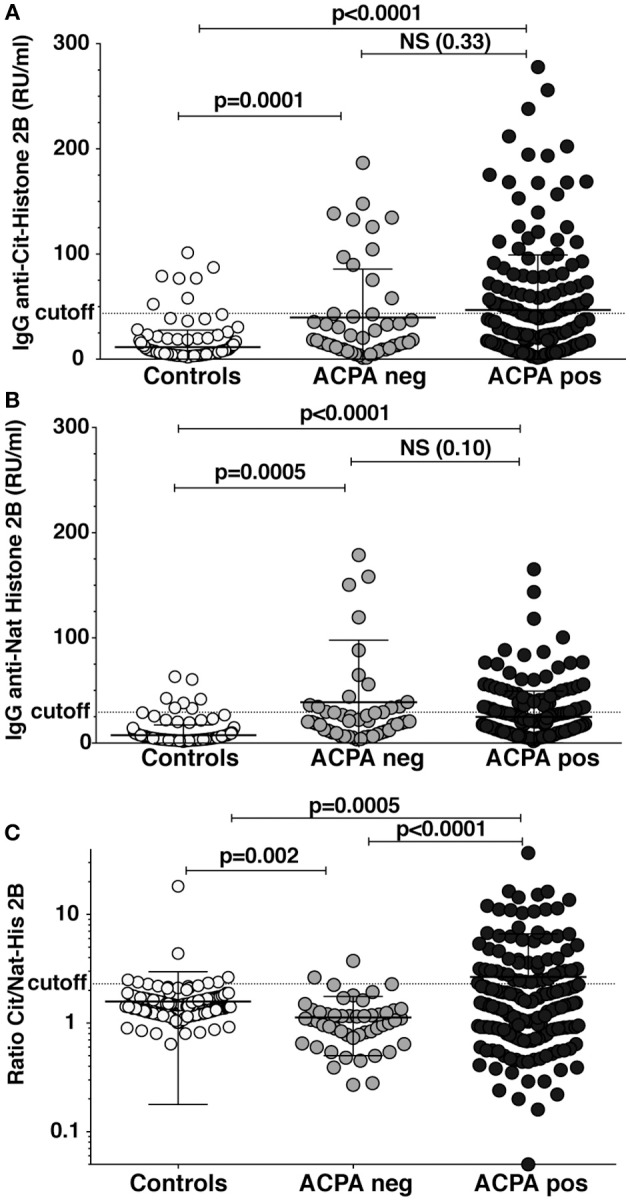
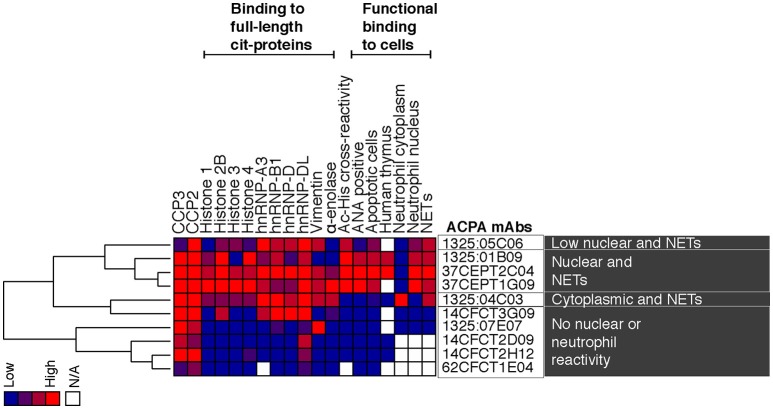
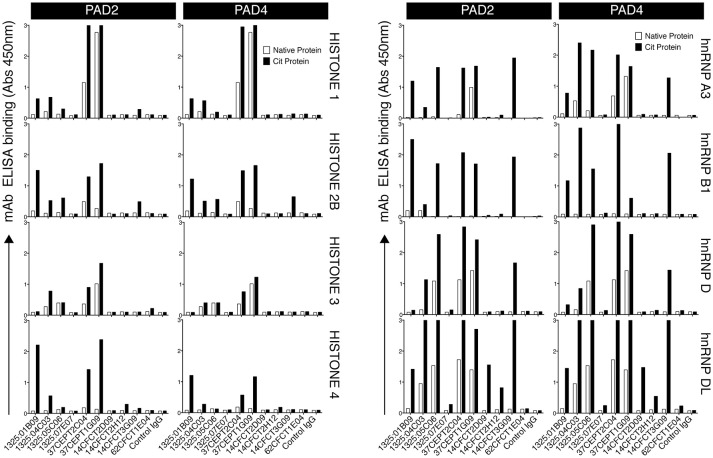
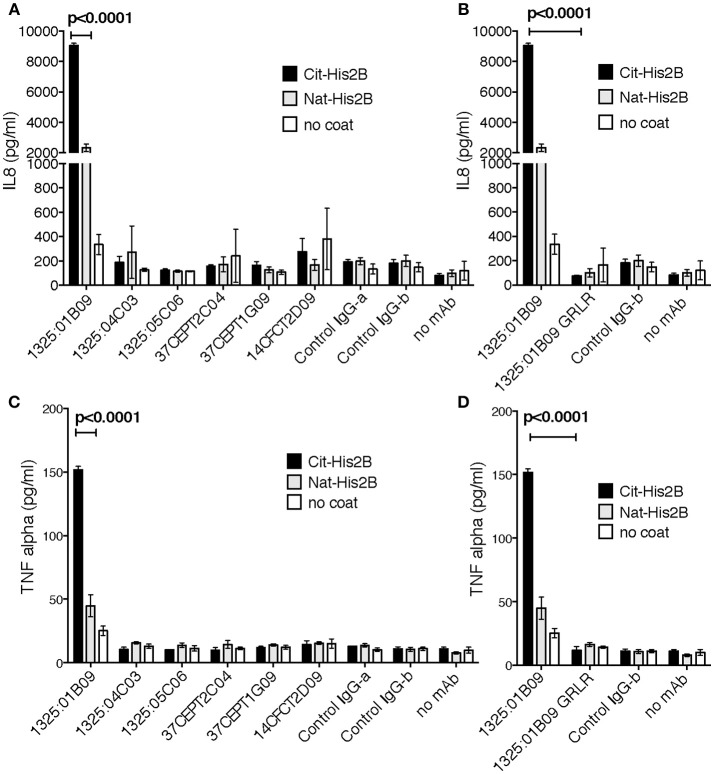
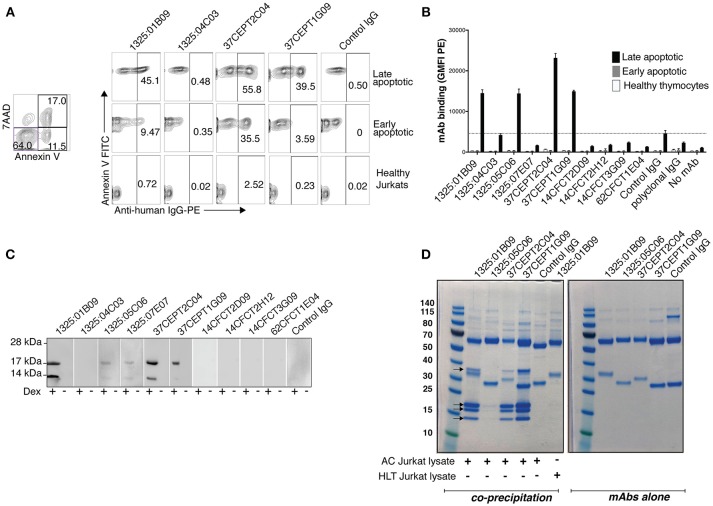
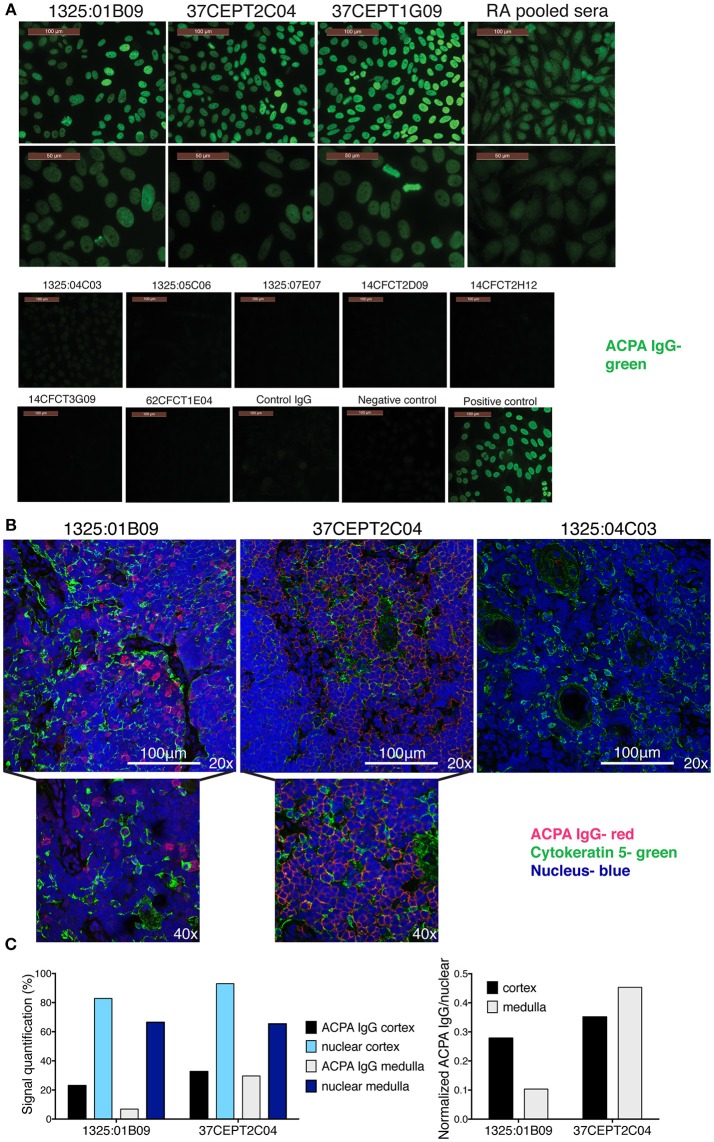
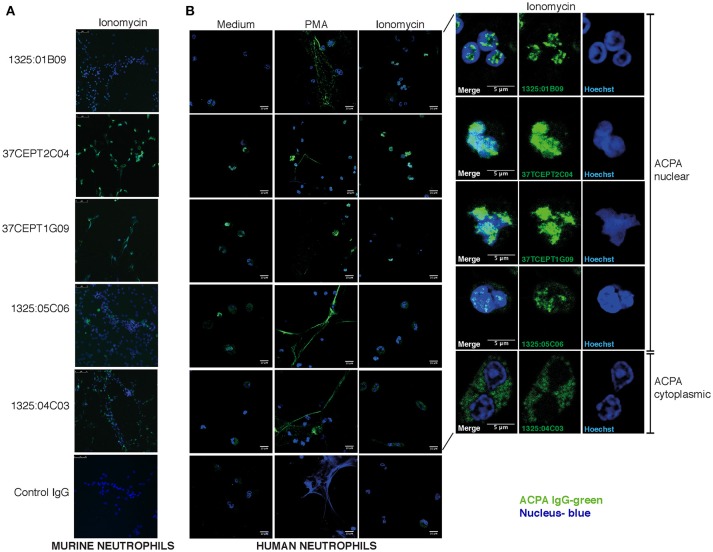
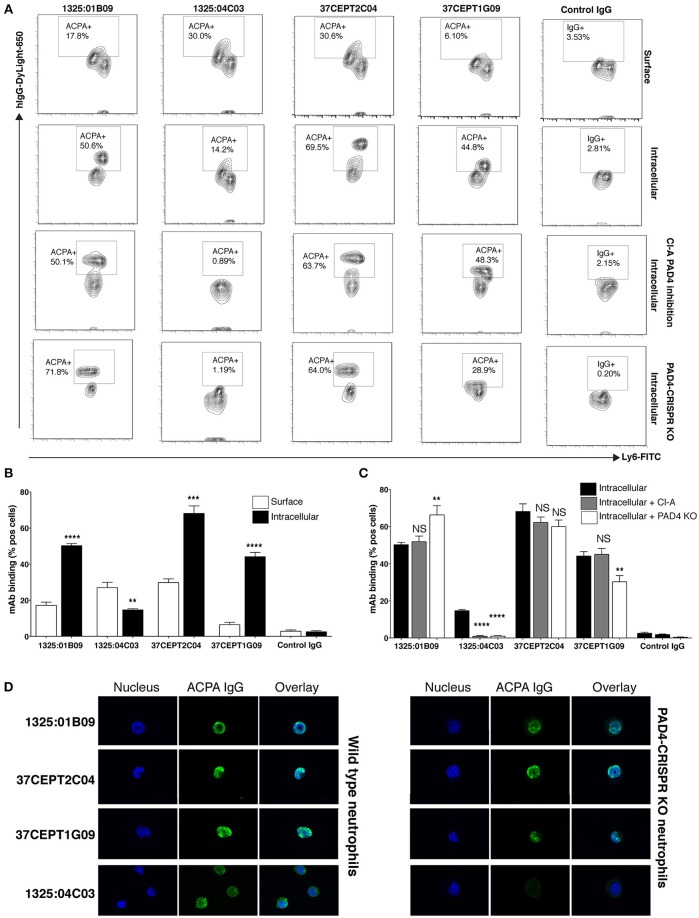
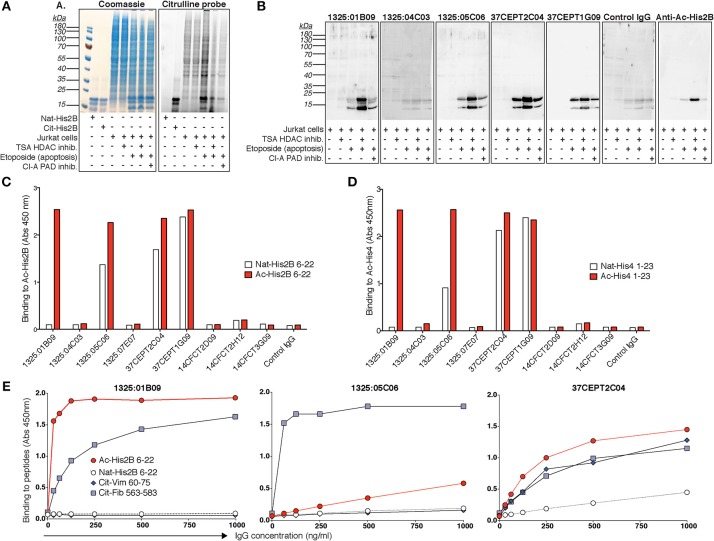
Rheumatoid arthritis (RA) associated anti-citrullinated protein autoantibodies (ACPA) target a wide range of modified proteins. Citrullination occurs during physiological processes such as apoptosis, yet little is known about the interaction of ACPA with nuclear antigens or apoptotic cells. Since uncleared apoptotic cells and neutrophil extracellular trap (NET) products have been postulated to be central sources of autoantigen and immunostimulation in autoimmune disease, we sought to characterize the anti-nuclear and anti-neutrophil reactivities of ACPA. Serology showed that a subset of anti-CCP2 seropositive RA patients had high reactivity to full-length citrullinated histones. In contrast, seronegative RA patients displayed elevated IgG reactivity to native histone compared to controls, but no citrulline-specific reactivity. Screening of 10 single B-cell derived monoclonal ACPA from RA patients revealed that four ACPA exhibited strong binding to apoptotic cells and three of these had anti-nuclear (ANA) autoantibody reactivity. Modified histones were confirmed to be the primary targets of this anti-nuclear ACPA subset following immunoprecipitation from apoptotic cell lysates. Monoclonal ACPA were also screened for reactivities against stimulated murine and human neutrophils, and all the nuclear-reactive monoclonal ACPA bound to NETs. Intriguingly, one ACPA mAb displayed a contrasting cytoplasmic perinuclear neutrophil binding and may represent a different NET-reactive ACPA subset. Notably, studies of CRISPR-Cas9 PAD4 KO cells and cells from PAD KO mice showed that the cytoplasmic NET-binding was fully dependent on PAD4, whilst nuclear- and histone-mediated NET reactivity was largely PAD-independent. Our further analysis revealed that the nuclear binding could be explained by consensus-motif driven ACPA cross-reactivity to acetylated histones. Specific acetylated histone peptides targeted by the monoclonal antibodies were identified and the anti-modified protein autoantibody (AMPA) profile of the ACPA was found to correlate with the functional activity of the antibodies. In conclusion, when investigating monoclonal ACPA, we could group ACPA into distinct subsets based on their nuclear binding-patterns and acetylation-mediated binding to apoptotic cells, neutrophils, and NETs. Differential anti-modified protein reactivities of RA-autoantibody subsets could have an important functional impact and provide insights in RA pathogenesis.
类风湿关节炎(RA)相关的抗瓜氨酸化蛋白自身抗体(ACPA)针对广泛的修饰蛋白。瓜氨酸化发生在细胞凋亡等生理过程中,但人们对 ACPA 与核抗原或凋亡细胞的相互作用知之甚少。由于未清除的凋亡细胞和中性粒细胞胞外陷阱(NET)产物被认为是自身免疫疾病中自身抗原和免疫刺激的主要来源,因此我们试图描述 ACPA 的抗核和抗中性粒细胞反应性。血清学研究表明,一部分抗 CCP2 阳性 RA 患者对全长瓜氨酸化组蛋白具有高反应性。相比之下,血清阴性 RA 患者与对照组相比,对天然组蛋白的 IgG 反应性升高,但没有瓜氨酸特异性反应性。对来自 RA 患者的 10 个单克隆 B 细胞衍生的 ACPA 进行筛选发现,有 4 个 ACPA 对凋亡细胞具有强烈的结合能力,其中 3 个具有抗核(ANA)自身抗体反应性。通过从凋亡细胞裂解物中进行免疫沉淀,确认修饰组蛋白是该抗核 ACPA 亚群的主要靶标。还对单克隆 ACPA 对刺激的鼠和人中性粒细胞的反应性进行了筛选,所有核反应性单克隆 ACPA 都与 NET 结合。有趣的是,一种 ACPA mAb 显示出细胞质核周中性粒细胞结合的对比,可能代表不同的 NET 反应性 ACPA 亚群。值得注意的是,对 CRISPR-Cas9 PAD4 KO 细胞和 PAD KO 小鼠细胞的研究表明,细胞质 NET 结合完全依赖于 PAD4,而核和组蛋白介导的 NET 反应性在很大程度上不依赖 PAD4。我们的进一步分析表明,核结合可以通过 ACPA 对乙酰化组蛋白的共识基序驱动的交叉反应来解释。鉴定了针对单克隆抗体的特定乙酰化组蛋白肽,并且发现 ACPA 的抗修饰蛋白自身抗体(AMPA)谱与抗体的功能活性相关。总之,在研究单克隆 ACPA 时,我们可以根据其核结合模式和与凋亡细胞、中性粒细胞和 NET 的乙酰化介导结合将 ACPA 分为不同的亚群。RA 自身抗体亚群的不同抗修饰蛋白反应性可能具有重要的功能影响,并为 RA 发病机制提供新的见解。