Sato Marcello Otake, Adsakwattana Poom, Fontanilla Ian Kendrich C, Kobayashi Jun, Sato Megumi, Pongvongsa Tiengkhan, Fornillos Raffy Jay C, Waikagul Jitra
Department of Tropical Medicine and Parasitology, Dokkyo Medical University, Mibu, Japan.
Department of Helminthology, Faculty of Tropical Medicine, Mahidol University, Bangkok, Thailand.
Parasite Epidemiol Control. 2018 Dec 21;4:e00083. doi: 10.1016/j.parepi.2018.e00083. eCollection 2019 Feb.
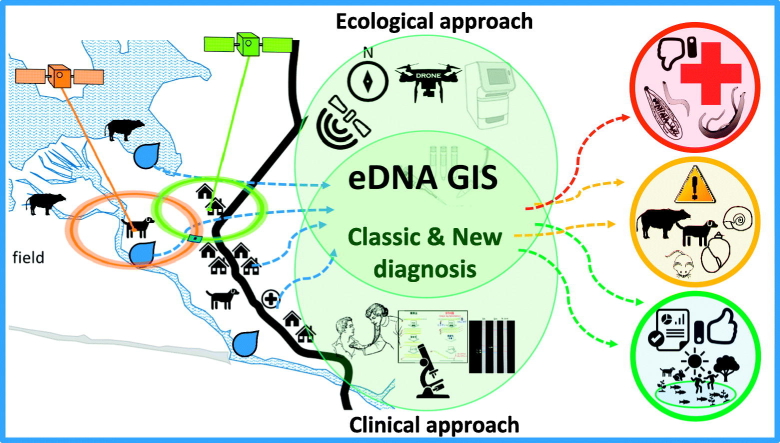
The time is passing, and the worms are still a major struggle for local people in Asian countries, especially the less empowered and in a situation of social vulnerability. We are working in the field in Laos, Thailand, and the Philippines where the usual control programs based only on human treatment are partially effective. Areas with mass drug administration could diminish, but not eliminate STHs of endemic areas. The persistence of helminthic NTDs in the environment and animal hosts makes the eradication a very difficult task. Great changes in the landscapes of endemic areas, such as construction of dams, can change the fauna and the lifestyle of local people. Those changes can improve infrastructure, but it can also lead to social vulnerability. The challenge, then, is to conceive new and directed control programs for helminthiasis based on multi- and transdisciplinary approaches diminishing the health gap in a globalized world. In this short review, we summarize the actual scenario concerning the main helminths in Southeast Asia and how an environmental DNA approach and the use of GIS could contribute to surveillance and control programs.
时间在流逝,蠕虫问题仍然是亚洲国家当地居民面临的一大难题,尤其是那些权力较小且处于社会脆弱处境的人群。我们正在老挝、泰国和菲律宾开展实地工作,在这些地方,仅基于人体治疗的常规控制项目只能起到部分效果。进行群体药物 administration 的地区可以减少,但无法消除流行地区的土源性蠕虫感染。蠕虫类被忽视热带病在环境和动物宿主中的持续存在使得根除工作成为一项非常艰巨的任务。流行地区景观的巨大变化,如修建水坝,会改变当地的动物群落和人们的生活方式。这些变化可以改善基础设施,但也可能导致社会脆弱性。因此,挑战在于构思基于多学科和跨学科方法的针对蠕虫病的新的定向控制项目,以缩小全球化世界中的健康差距。在这篇简短的综述中,我们总结了东南亚主要蠕虫的实际情况,以及环境 DNA 方法和地理信息系统的使用如何有助于监测和控制项目。