Laboratory of Physiological Chemistry, Faculty of Pharmacy, Takasaki University of Health and Welfare, 60 Nakaorui-machi, Takasaki, Gunma 370-0033, Japan.
MiZ Co., Ltd., 2-19-15 Ofuna, Kamakura, Kanagawa 247-0056, Japan.
Int J Mol Sci. 2019 Jan 21;20(2):456. doi: 10.3390/ijms20020456.
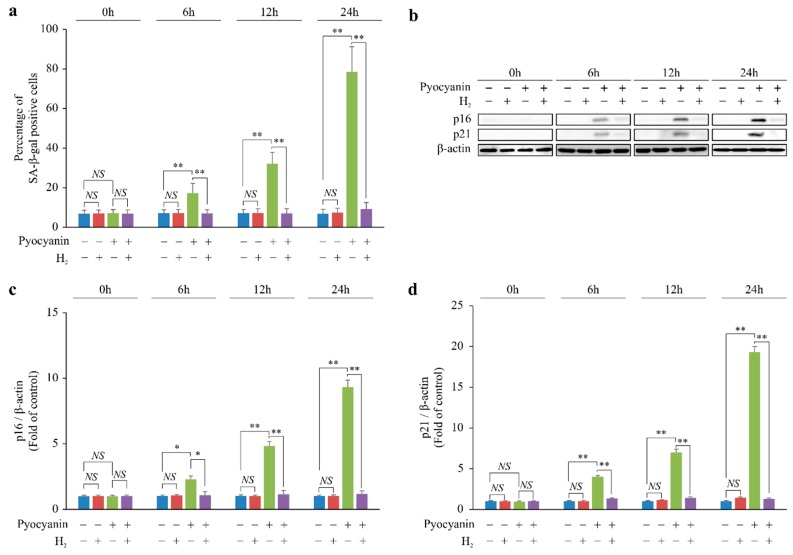
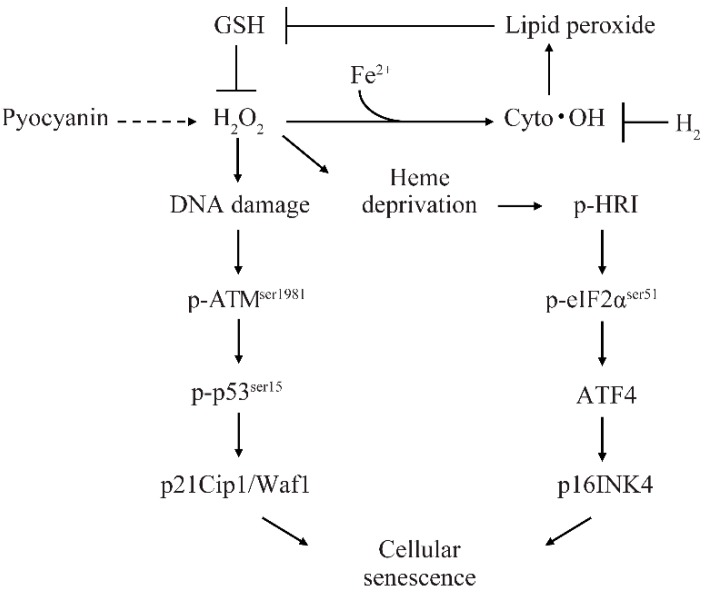
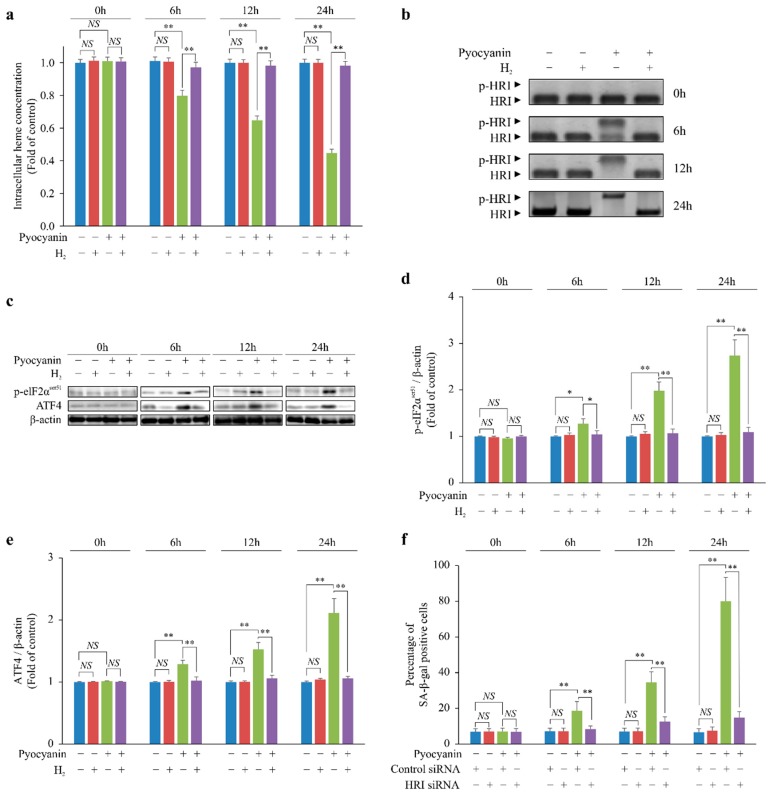
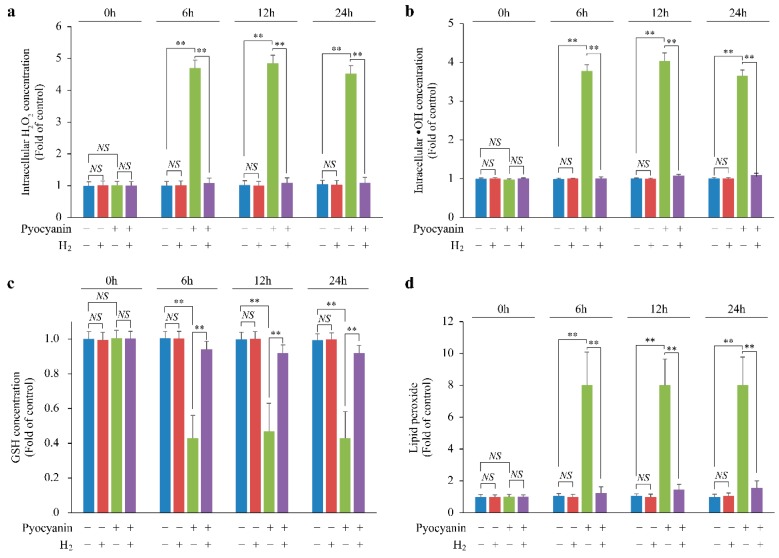
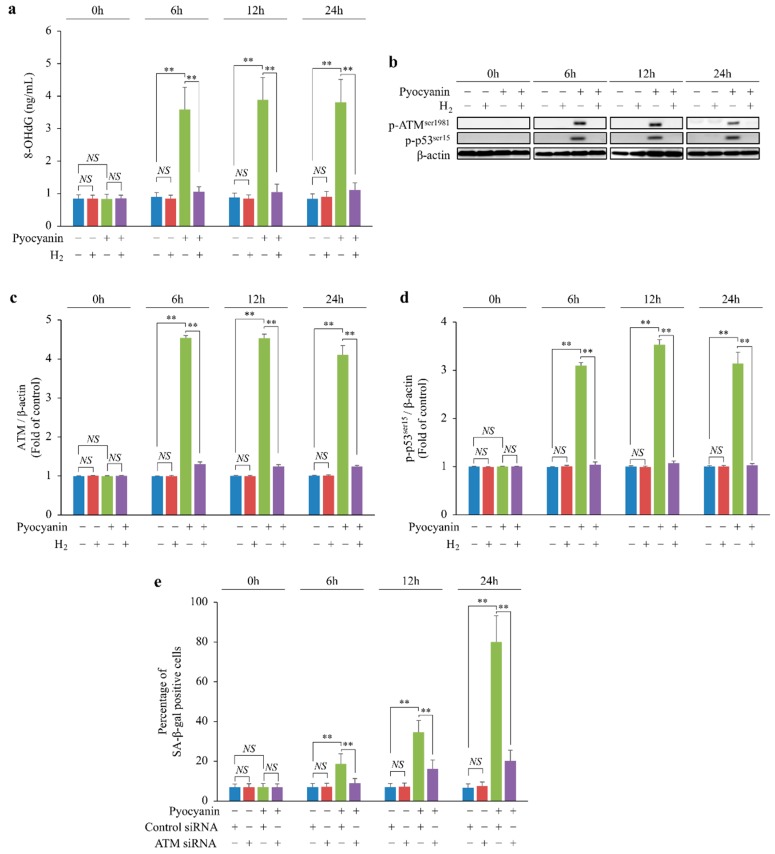
Bacteria inhabiting the human gut metabolize microbiota-accessible carbohydrates (MAC) contained in plant fibers and subsequently release metabolic products. Gut bacteria produce hydrogen (H₂), which scavenges the hydroxyl radical (•OH). Because H₂ diffuses within the cell, it is hypothesized that H₂ scavenges cytoplasmic •OH (cyto •OH) and suppresses cellular senescence. However, the mechanisms of cyto •OH-induced cellular senescence and the physiological role of gut bacteria-secreted H₂ have not been elucidated. Based on the pyocyanin-stimulated cyto •OH-induced cellular senescence model, the mechanism by which cyto •OH causes cellular senescence was investigated by adding a supersaturated concentration of H₂ into the cell culture medium. Cyto •OH-generated lipid peroxide caused glutathione (GSH) and heme shortage, increased hydrogen peroxide (H₂O₂), and induced cellular senescence via the phosphorylation of ataxia telangiectasia mutated kinase serine 1981 (p-ATM)/p53 serine 15 (p-p53)/p21 and phosphorylation of heme-regulated inhibitor (p-HRI)/phospho-eukaryotic translation initiation factor 2 subunit alpha serine 51 (p-eIF2α)/activating transcription factor 4 (ATF4)/p16 pathways. Further, H₂ suppressed increased H₂O₂ by suppressing cyto •OH-mediated lipid peroxide formation and cellular senescence induction via two pathways. H₂ produced by gut bacteria diffuses throughout the body to scavenge cyto •OH in cells. Therefore, it is highly likely that gut bacteria-produced H₂ is involved in intracellular maintenance of the redox state, thereby suppressing cellular senescence and individual aging. Hence, H₂ produced by intestinal bacteria may be involved in the suppression of aging.
肠道细菌代谢植物纤维中存在的微生物可利用碳水化合物 (MAC),并随后释放代谢产物。肠道细菌产生氢气 (H₂),它可以清除羟基自由基 (•OH)。由于 H₂ 在细胞内扩散,因此假设 H₂ 可以清除细胞质中的 •OH (cyto •OH),并抑制细胞衰老。然而,尚未阐明 cyto •OH 诱导的细胞衰老的机制以及肠道细菌分泌的 H₂ 的生理作用。基于绿脓菌素刺激的 cyto •OH 诱导的细胞衰老模型,通过向细胞培养液中添加过饱和浓度的 H₂ 来研究 cyto •OH 引起细胞衰老的机制。cyto •OH 产生的脂质过氧化物导致谷胱甘肽 (GSH) 和血红素短缺,增加了过氧化氢 (H₂O₂),并通过共济失调毛细血管扩张突变激酶丝氨酸 1981 磷酸化 (p-ATM)/p53 丝氨酸 15 (p-p53)/p21 和血红素调节抑制剂磷酸化 (p-HRI)/磷酸化真核起始因子 2 亚基 α 丝氨酸 51 (p-eIF2α)/激活转录因子 4 (ATF4)/p16 途径诱导细胞衰老。此外,H₂ 通过抑制 cyto •OH 介导的脂质过氧化物形成和细胞衰老诱导,通过两条途径抑制增加的 H₂O₂。肠道细菌产生的 H₂ 扩散到全身以清除细胞中的 cyto •OH。因此,极有可能是肠道细菌产生的 H₂ 参与了细胞内氧化还原状态的维持,从而抑制了细胞衰老和个体衰老。因此,肠道细菌产生的 H₂ 可能参与了衰老的抑制。