Biomacromoleules Research Team, RIKEN Center for Sustainable Resource Science, 2-1 Hirosawa, Wako-shi, Saitama, 351-0198, Japan.
Center for Bioscience Research and Education, Utsunomiya University, Tochigi, 321-8505, Japan.
Sci Rep. 2019 Jan 22;9(1):271. doi: 10.1038/s41598-018-36466-1.
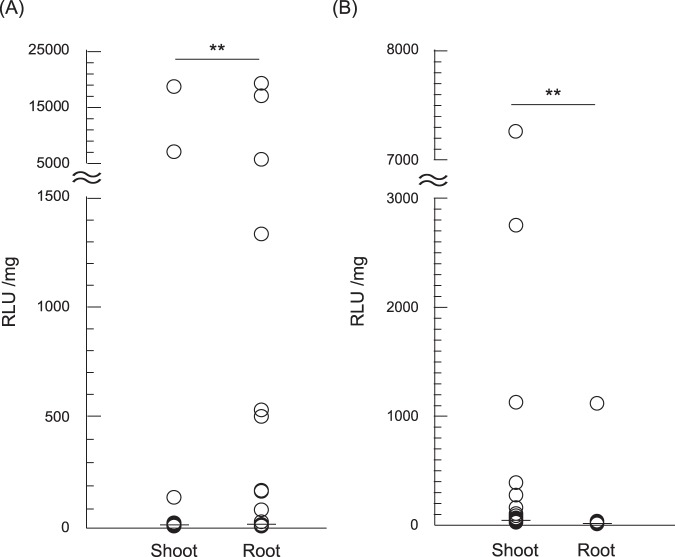
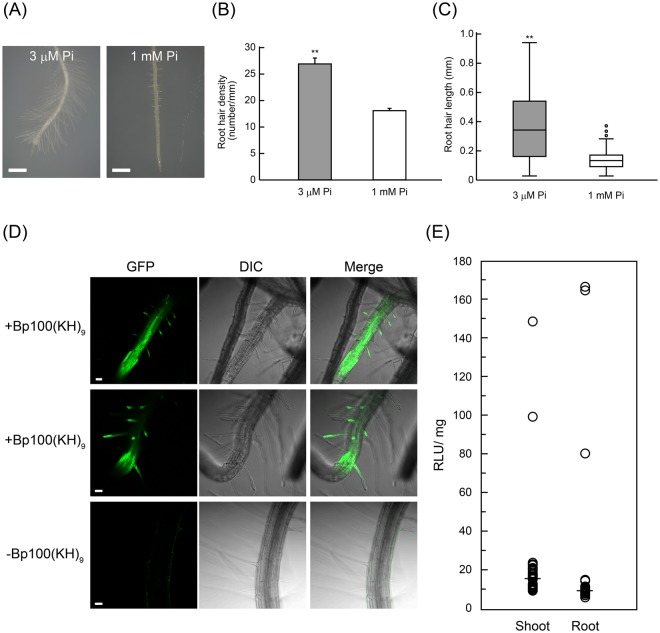
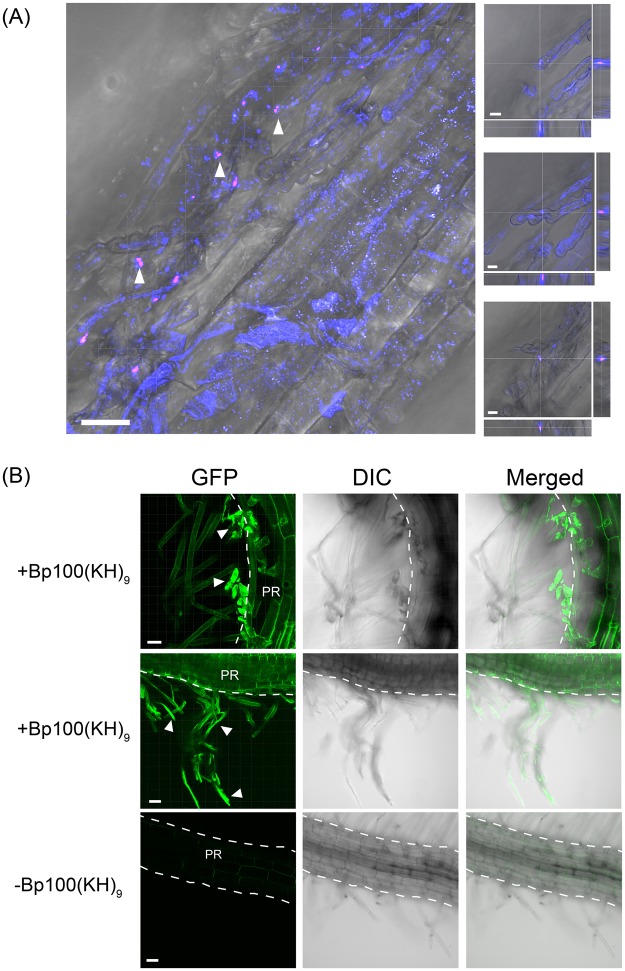
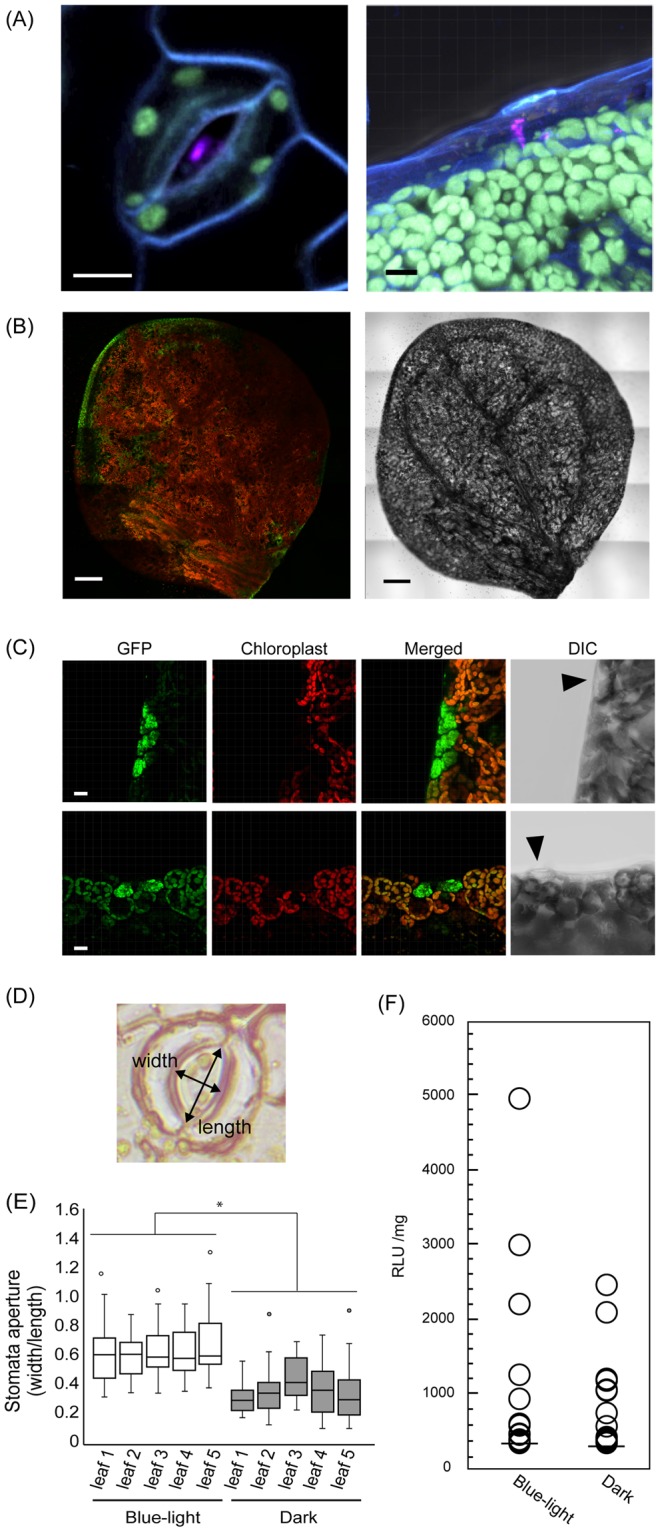
Non-viral gene carriers have been extensively investigated as alternatives to viral vectors for gene delivery systems into animal and plant cells. A non-viral gene carrier containing a cell-penetrating peptide and a cationic sequence was previously developed for use in intact plants and plant cells; however, the permeation pathway of the gene carrier into plant cells is yet to be elucidated, which would facilitate the improvement of the gene delivery efficiency. Here, we identified the vacuum/compression infiltration-mediated permeation pathway of a non-viral gene carrier into plant tissues and cells using a complex of plasmid DNA and a peptide-based gene carrier. This complex was taken up via the hydathodes in Arabidopsis thaliana, and from root hairs in Nicotiana benthamiana. Remarkably, these structurally weak tissues are also routes of bacterial invasion in nature, suggesting that peptide-pDNA complexes invade intact plants through similar pathways as bacterial pathogens.
非病毒基因载体作为基因传递系统的替代物,已经在动物和植物细胞中得到了广泛的研究。以前已经开发出一种含有穿透肽和阳离子序列的非病毒基因载体,用于完整的植物和植物细胞;然而,基因载体进入植物细胞的渗透途径尚待阐明,这将有助于提高基因传递效率。在这里,我们使用质粒 DNA 和基于肽的基因载体的复合物,鉴定了非病毒基因载体进入植物组织和细胞的真空/压缩渗透介导的渗透途径。该复合物通过拟南芥的水孔和烟草原生质体被吸收。值得注意的是,这些结构较弱的组织也是细菌入侵的自然途径,这表明肽-pDNA 复合物通过与细菌病原体类似的途径入侵完整的植物。