Jhala Dhwani, Rather Hilal, Kedaria Dhaval, Shah Juhi, Singh Sanjay, Vasita Rajesh
Biomaterials and Biomimetics Laboratory, School of Life Sciences, Central University of Gujarat, Gandhinagar, 382030, Gujarat, India.
Biological & Life Sciences, School of Arts and Sciences, Ahmedabad University, Central Campus, Navrangpura, Ahmedabad, 380009, Gujarat, India.
Bioact Mater. 2018 Dec 31;4(1):79-86. doi: 10.1016/j.bioactmat.2018.12.004. eCollection 2019 Mar.
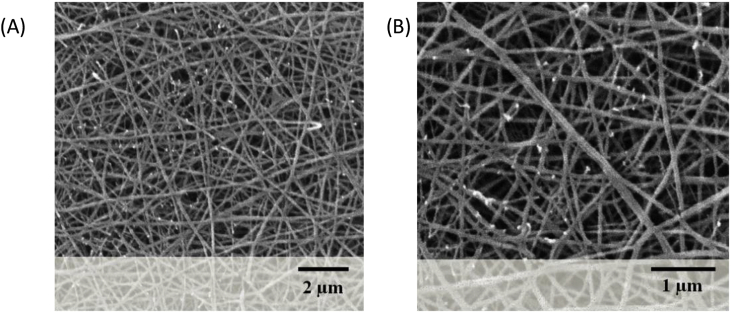
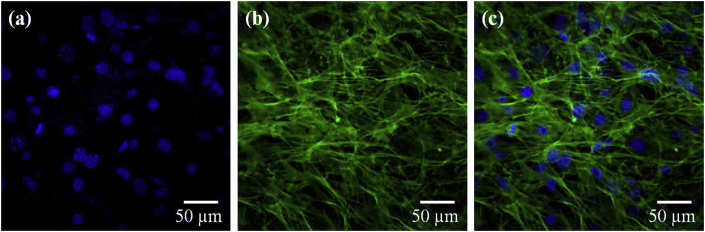
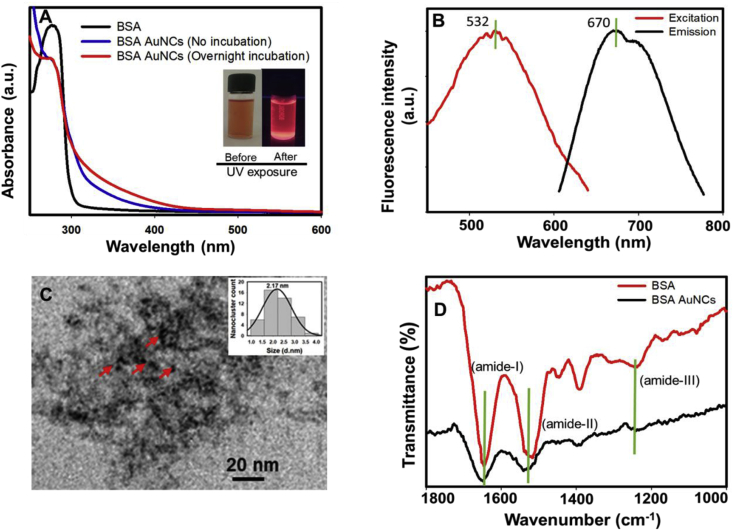
Biomimetic cell culture substrates are developed as an alternative to the conventional substrates. They provide necessary biochemical and biophysical cues to the cells from their surrounding environment for their optimal growth, behaviour and physiology. Changes in physiology of cells growing on biomimetic substrate can essentially affect results of biological experiments such as drug cytotoxicity, nanoparticle internalization or signalling pathways. As majority of ECM proteins are fibrous in nature, nanofibrous scaffolds have more biomimicking properties. Therefore, in this study, we developed ECM mimicking polycaprolactone-chitosan nanofiber substrate and evaluated its effect on cell morphology, proliferation, cell cycle and ECM production. Further, cellular uptake of BSA-AuNCs has been assessed on conventional and biomimetic substrate in order to demonstrate the effect of these events on cellular properties. It was observed that the cells that were grown for 15 days on the nanofibers, had majority of cells in the proliferative phase of cell cycle compared to TCPS. Moreover, these cells showed extensive collagen and fibronectin production. Due to these conditions C3H10T1/2 cells displayed higher cell internalization of BSA-AuNCs. Overall, this study indicates that the nano-topographical and biochemical environment could alter the cell proliferative behaviour and ECM production, which affects the cell internalization of BSA-AuNCs. Also, PCL-chitosan nanofibrous substrate could be a better alternative to TCPS for cell culture studies.
仿生细胞培养底物作为传统底物的替代品而被开发出来。它们为细胞提供来自周围环境的必要生化和生物物理信号,以实现其最佳生长、行为和生理功能。在仿生底物上生长的细胞生理变化会从本质上影响生物学实验的结果,如药物细胞毒性、纳米颗粒内化或信号通路。由于大多数细胞外基质(ECM)蛋白本质上是纤维状的,纳米纤维支架具有更多的仿生特性。因此,在本研究中,我们开发了模仿ECM的聚己内酯-壳聚糖纳米纤维底物,并评估了其对细胞形态、增殖、细胞周期和ECM产生的影响。此外,为了证明这些事件对细胞特性的影响,我们评估了牛血清白蛋白-金纳米簇(BSA-AuNCs)在传统底物和仿生底物上的细胞摄取情况。结果发现,与组织培养聚苯乙烯(TCPS)相比,在纳米纤维上生长15天的细胞,大多数处于细胞周期的增殖期。此外,这些细胞显示出大量的胶原蛋白和纤连蛋白产生。由于这些条件,C3H10T1/2细胞对BSA-AuNCs表现出更高的细胞内化。总体而言,本研究表明,纳米拓扑和生化环境可以改变细胞增殖行为和ECM产生,这会影响BSA-AuNCs的细胞内化。此外,聚己内酯-壳聚糖纳米纤维底物可能是用于细胞培养研究的比TCPS更好的替代品。