Department of Bacteriology, University of Wisconsin-Madison, Madison, Wisconsin, USA.
Department of Geoscience, University of Wisconsin-Madison, Madison, Wisconsin, USA.
mSphere. 2019 Jan 23;4(1):e00436-18. doi: 10.1128/mSphere.00436-18.
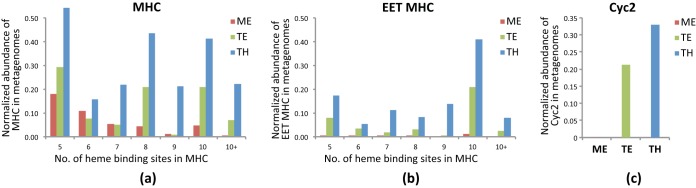
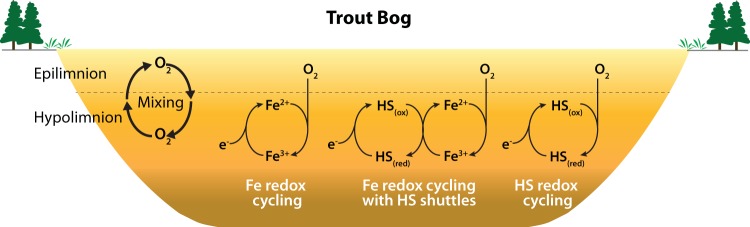
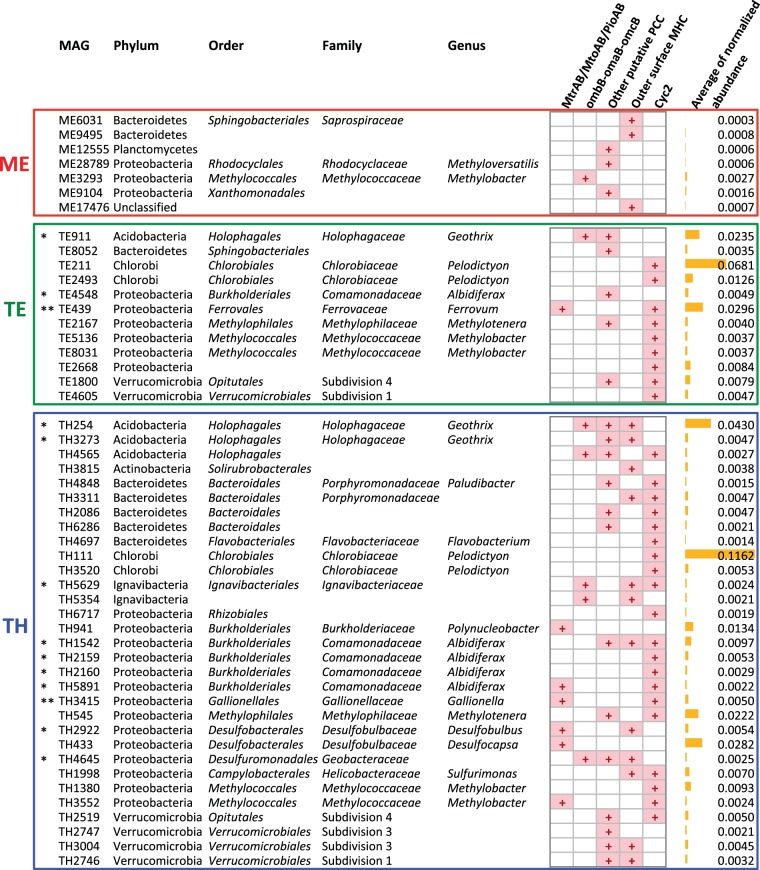
Humic lakes and ponds receive large amounts of terrestrial carbon and are important components of the global carbon cycle, yet how their redox cycling influences the carbon budget is not fully understood. Here we compared metagenomes obtained from a humic bog and a clear-water eutrophic lake and found a much larger number of genes that might be involved in extracellular electron transfer (EET) for iron redox reactions and humic substance (HS) reduction in the bog than in the clear-water lake, consistent with the much higher iron and HS levels in the bog. These genes were particularly rich in the bog's anoxic hypolimnion and were found in diverse bacterial lineages, some of which are relatives of known iron oxidizers or iron-HS reducers. We hypothesize that HS may be a previously overlooked electron acceptor and that EET-enabled redox cycling may be important in pelagic respiration and greenhouse gas budget in humic-rich freshwater lakes.
腐殖质湖和池塘接收大量的陆地碳,是全球碳循环的重要组成部分,但它们的氧化还原循环如何影响碳预算还不完全清楚。在这里,我们比较了从腐殖质沼泽和清澈富营养湖泊中获得的宏基因组,发现沼泽中可能参与铁氧化还原反应和腐殖质(HS)还原的细胞外电子转移(EET)的基因数量要比清澈的湖泊多得多,这与沼泽中更高的铁和 HS 水平是一致的。这些基因在沼泽的缺氧底层特别丰富,存在于多种细菌谱系中,其中一些是已知的铁氧化剂或铁-HS 还原剂的近亲。我们假设 HS 可能是以前被忽视的电子受体,并且 EET 支持的氧化还原循环可能在富含有机质的淡水湖中浮游呼吸和温室气体预算中很重要。