Plant Physiology, Department of Organisms and Systems Biology and University Institute of Biotechnology (IUBA), University of Oviedo, Oviedo, Spain.
Department of Biology and CESAM, University of Aveiro, Aveiro, Portugal.
Sci Rep. 2019 Jan 23;9(1):350. doi: 10.1038/s41598-018-35625-8.
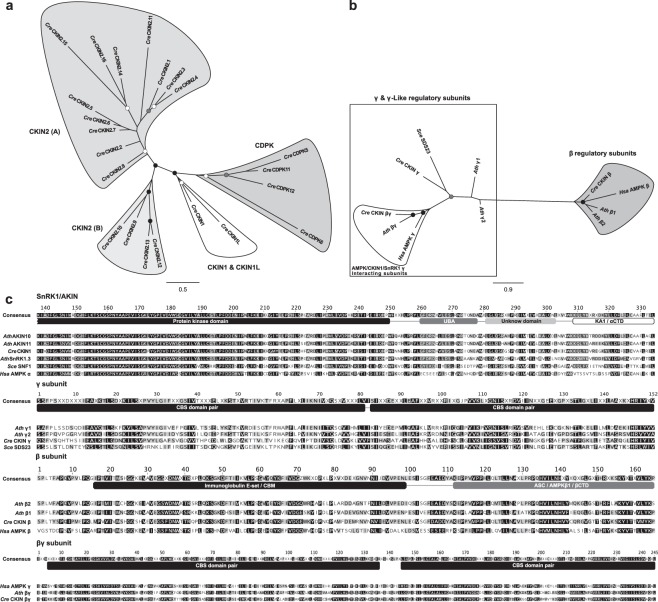
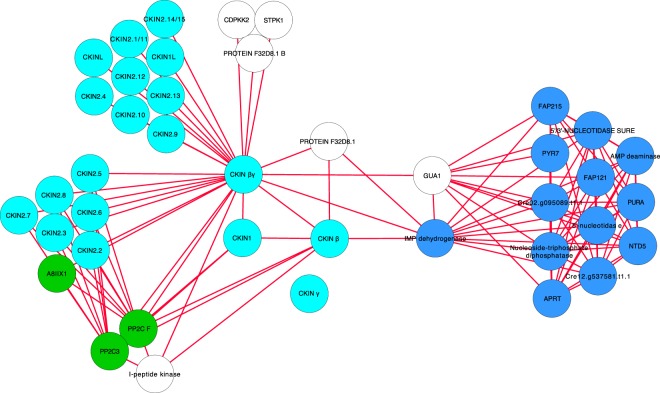
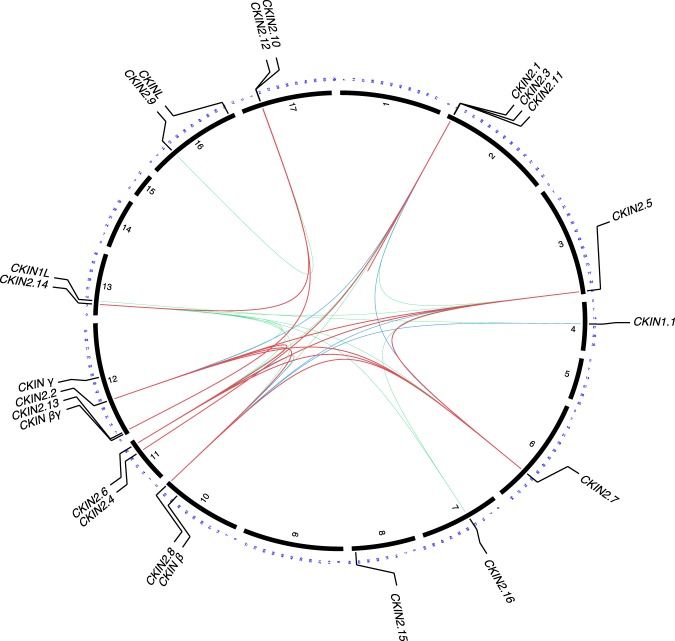
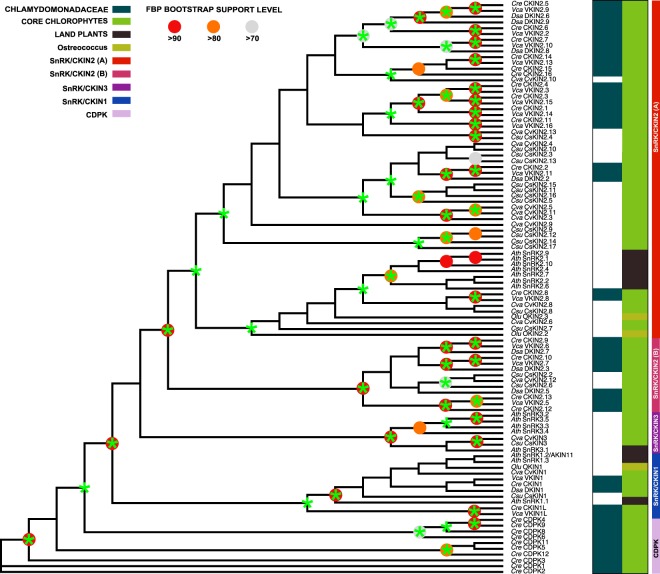
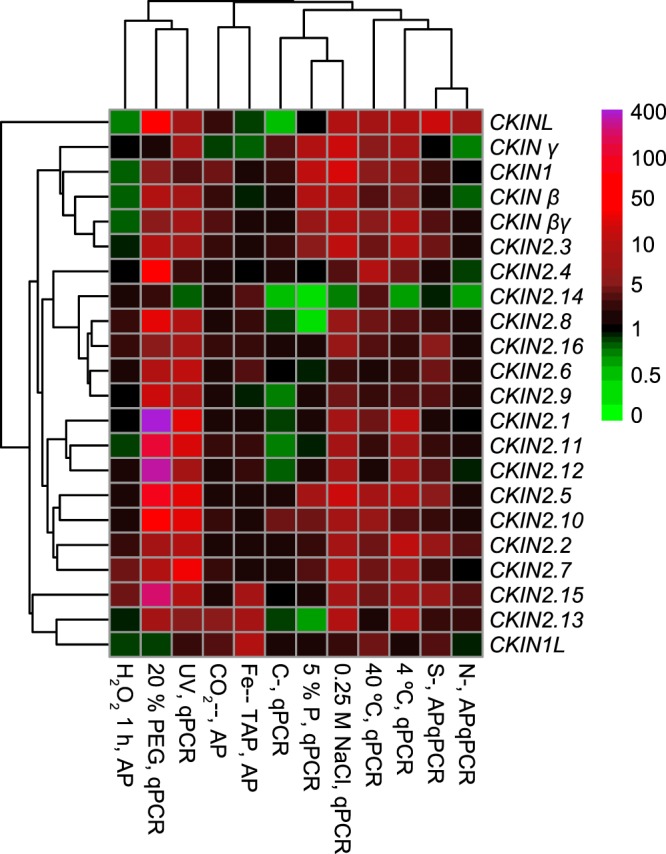
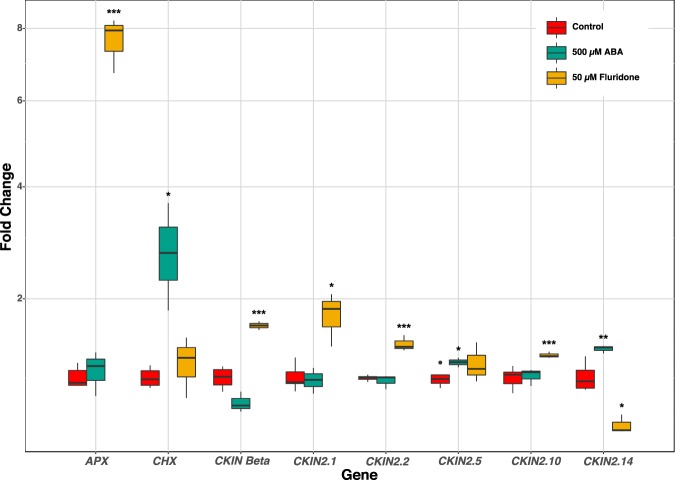
The SnRK (Snf1-Related protein Kinase) gene family plays an important role in energy sensing and stress-adaptive responses in plant systems. In this study, Chlamydomonas CKIN family (SnRK in Arabidopsis) was defined after a genome-wide analysis of all sequenced Chlorophytes. Twenty-two sequences were defined as plant SnRK orthologs in Chlamydomonas and classified into two subfamilies: CKIN1 and CKIN2. While CKIN1 subfamily is reduced to one conserved member and a close protein (CKIN1L), a large CKIN2 subfamily clusters both plant-like and algae specific CKIN2s. The responsiveness of these genes to abiotic stress situations was tested by RT-qPCR. Results showed that almost all elements were sensitive to osmotic stress while showing different degrees of sensibility to other abiotic stresses, as occurs in land plants, revealing their specialization and the family pleiotropy for some elements. The regulatory pathway of this family may differ from land plants since these sequences shows unique regulatory features and some of them are sensitive to ABA, despite conserved ABA receptors (PYR/PYL/RCAR) and regulatory domains are not present in this species. Core Chlorophytes and land plant showed divergent stress signalling, but SnRKs/CKINs share the same role in cell survival and stress response and adaption including the accumulation of specific biomolecules. This fact places the CKIN family as well-suited target for bioengineering-based studies in microalgae (accumulation of sugars, lipids, secondary metabolites), while promising new findings in stress biology and specially in the evolution of ABA-signalling mechanisms.
SnRK(Snf1-相关蛋白激酶)基因家族在植物系统的能量感应和应激适应性反应中发挥着重要作用。在这项研究中,经过对所有已测序的绿藻进行全基因组分析,定义了衣藻 CKIN 家族(拟南芥中的 SnRK)。在衣藻中定义了 22 个序列为植物 SnRK 直系同源物,并分为两个亚家族:CKIN1 和 CKIN2。虽然 CKIN1 亚家族减少到一个保守成员和一个密切相关的蛋白(CKIN1L),但一个大型的 CKIN2 亚家族聚类了植物样和藻类特异性的 CKIN2。通过 RT-qPCR 测试这些基因对非生物胁迫情况的反应。结果表明,几乎所有的元素都对渗透胁迫敏感,而对其他非生物胁迫表现出不同程度的敏感性,这与陆生植物的情况相同,揭示了它们的专业化和家族对某些元素的多效性。该家族的调控途径可能与陆生植物不同,因为这些序列显示出独特的调控特征,其中一些对 ABA 敏感,尽管在该物种中不存在保守的 ABA 受体(PYR/PYL/RCAR)和调节域。核心绿藻和陆生植物表现出不同的应激信号,但 SnRKs/CKINs 在细胞存活和应激反应以及适应方面具有相同的作用,包括特定生物分子的积累。这一事实表明,CKIN 家族非常适合基于生物工程的微藻研究(糖、脂类、次生代谢物的积累),同时在应激生物学,特别是 ABA 信号转导机制的进化方面也有新的发现。