• 文献检索
  • 文档翻译
  • 深度研究
  • 学术资讯
  • Suppr Zotero 插件Zotero 插件
  • 邀请有礼
  • 套餐&价格
  • 历史记录
应用&插件
Suppr Zotero 插件Zotero 插件浏览器插件Mac 客户端Windows 客户端微信小程序
定价
高级版会员购买积分包购买API积分包
服务
文献检索文档翻译深度研究API 文档MCP 服务
关于我们
关于 Suppr公司介绍联系我们用户协议隐私条款
关注我们

Suppr 超能文献

核心技术专利:CN118964589B侵权必究
粤ICP备2023148730 号-1Suppr @ 2026

文献检索

告别复杂PubMed语法,用中文像聊天一样搜索,搜遍4000万医学文献。AI智能推荐,让科研检索更轻松。

立即免费搜索

文件翻译

保留排版,准确专业,支持PDF/Word/PPT等文件格式,支持 12+语言互译。

免费翻译文档

深度研究

AI帮你快速写综述,25分钟生成高质量综述,智能提取关键信息,辅助科研写作。

立即免费体验

急性呼吸窘迫综合征的生物标志物与个性化医疗前景

Biomarkers for Acute Respiratory Distress syndrome and prospects for personalised medicine.

作者信息

Spadaro Savino, Park Mirae, Turrini Cecilia, Tunstall Tanushree, Thwaites Ryan, Mauri Tommaso, Ragazzi Riccardo, Ruggeri Paolo, Hansel Trevor T, Caramori Gaetano, Volta Carlo Alberto

机构信息

1Department of Morphology, Surgery and Experimental Medicine, Intensive Care Section, University of Ferrara, 44121 Ferrara, Italy.

2Faculty of Medicine, National Heart and Lung Institute, Imperial College London, London, UK.

出版信息

J Inflamm (Lond). 2019 Jan 15;16:1. doi: 10.1186/s12950-018-0202-y. eCollection 2019.

DOI:10.1186/s12950-018-0202-y
PMID:30675131
原文链接:https://pmc.ncbi.nlm.nih.gov/articles/PMC6332898/
Abstract

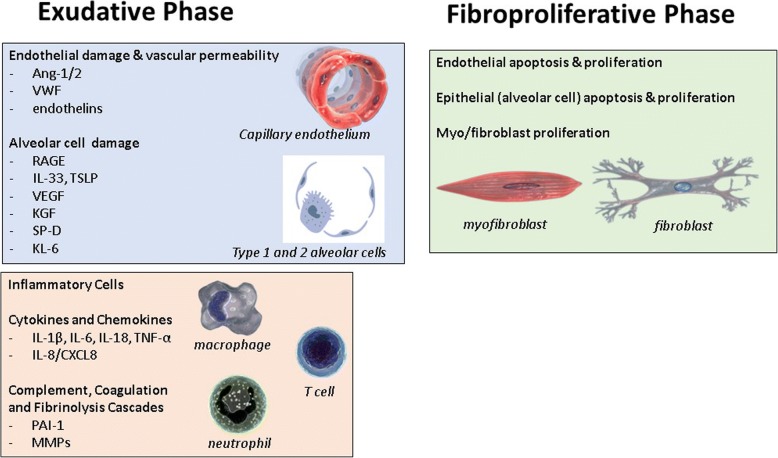
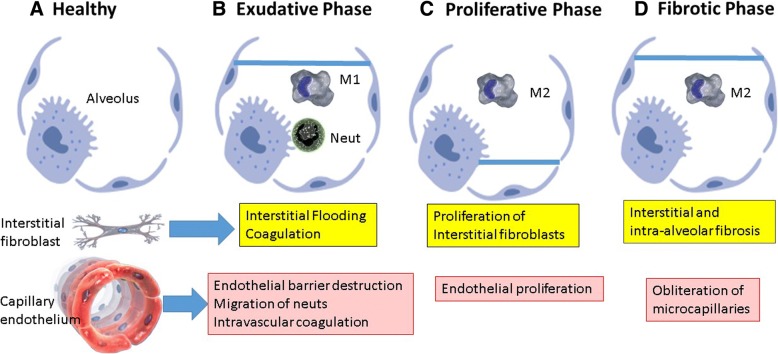
Acute lung injury (ALI) affects over 10% of patients hospitalised in critical care, with acute respiratory distress syndrome (ARDS) being the most severe form of ALI and having a mortality rate in the region of 40%. There has been slow but incremental progress in identification of biomarkers that contribute to the pathophysiology of ARDS, have utility in diagnosis and monitoring, and that are potential therapeutic targets (Calfee CS, Delucchi K, Parsons PE, Thompson BT, Ware LB, Matthay MA, Thompson T, Ware LB, Matthay MA, Lancet Respir Med 2014, 2:611--620). However, a major issue is that ARDS is such a heterogeneous, multi-factorial, end-stage condition that the strategies for "lumping and splitting" are critical (Prescott HC, Calfee CS, Thompson BT, Angus DC, Liu VX, Am J Respir Crit Care Med 2016, 194:147--155). Nevertheless, sequencing of the human genome, the availability of improved methods for analysis of transcription to mRNA (gene expression), and development of sensitive immunoassays has allowed the application of network biology to ARDS, with these biomarkers offering potential for personalised or precision medicine (Sweeney TE, Khatri P, Toward precision medicine Crit Care Med; 2017 45:934-939). Biomarker panels have potential applications in molecular phenotyping for identifying patients at risk of developing ARDS, diagnosis of ARDS, risk stratification and monitoring. Two subphenotypes of ARDS have been identified on the basis of blood biomarkers: hypo-inflammatory and hyper-inflammatory. The hyper-inflammatory subphenotype is associated with shock, metabolic acidosis and worst clinical outcomes. Biomarkers of particular interest have included interleukins (IL-6 and IL-8), interferon gamma (IFN-γ), surfactant proteins (SPD and SPB), von Willebrand factor antigen, angiopoietin 1/2 and plasminogen activator inhibitor-1 (PAI-1). In terms of gene expression (mRNA) in blood there have been found to be increases in neutrophil-related genes in sepsis-induced and influenza-induced ARDS, but whole blood expression does not give a robust diagnostic test for ARDS. Despite improvements in management of ARDS on the critical care unit, this complex disease continues to be a major life-threatening event. Clinical trials of β-agonists, statins, surfactants and keratinocyte growth factor (KGF) have been disappointing. In addition, monoclonal antibodies (anti-TNF) and TNFR fusion protein have also been unconvincing. However, there have been major advances in methods of mechanical ventilation, a neuromuscular blocker (cisatracurium besilate) has shown some benefit, and stem cell therapy is being developed. In the future, by understanding the role of biomarkers in the pathophysiology of ARDS and lung injury, it is hoped that this will provide rational therapeutic targets and ultimately improve clinical care (Seymour CW, Gomez H, Chang CH, Clermont G, Kellum JA, Kennedy J, Yende S, Angus DC, Crit Care 2017, 21:257).

摘要

急性肺损伤(ALI)影响着超过10%入住重症监护病房的患者,急性呼吸窘迫综合征(ARDS)是ALI最严重的形式,死亡率约为40%。在有助于ARDS病理生理学、具有诊断和监测效用且为潜在治疗靶点的生物标志物的识别方面,虽进展缓慢但在逐步推进(卡尔菲CS、德卢奇K、帕森斯PE、汤普森BT、韦尔LB、马泰MA、汤普森T、韦尔LB、马泰MA,《柳叶刀呼吸医学》2014年,2:611 - 620)。然而,一个主要问题是ARDS是一种如此异质性、多因素的终末期病症,以至于“合并与细分”策略至关重要(普雷斯科特HC、卡尔菲CS、汤普森BT、安格斯DC、刘VX,《美国呼吸与重症医学杂志》2016年,194:147 - 155)。尽管如此,人类基因组测序、转录至mRNA(基因表达)分析的改进方法的可用性以及灵敏免疫测定的发展,已使网络生物学应用于ARDS,这些生物标志物为个性化或精准医学提供了潜力(斯威尼TE、卡特里P,迈向精准医学,《重症医学》;2017年45:934 - 939)。生物标志物组合在分子表型分析中具有潜在应用,可用于识别有发生ARDS风险的患者、ARDS的诊断、风险分层及监测。基于血液生物标志物已识别出ARDS的两种亚表型:低炎症型和高炎症型。高炎症亚表型与休克、代谢性酸中毒及最差临床结局相关。特别受关注的生物标志物包括白细胞介素(IL - 6和IL - 8)、干扰素γ(IFN - γ)、表面活性蛋白(SPD和SPB)、血管性血友病因子抗原、血管生成素1/2和纤溶酶原激活物抑制剂 - 1(PAI - 1)。就血液中的基因表达(mRNA)而言,在脓毒症诱导和流感诱导的ARDS中已发现中性粒细胞相关基因增加,但全血表达对ARDS并不能提供可靠的诊断检测。尽管重症监护病房对ARDS的管理有所改善,但这种复杂疾病仍然是一个重大的危及生命的事件。β - 激动剂、他汀类药物、表面活性剂和角质形成细胞生长因子(KGF)的临床试验令人失望。此外,单克隆抗体(抗TNF)和TNFR融合蛋白也未令人信服。然而,机械通气方法有了重大进展,一种神经肌肉阻滞剂(苯磺顺阿曲库铵)已显示出一些益处,并且干细胞疗法正在研发中。未来,通过了解生物标志物在ARDS和肺损伤病理生理学中的作用,希望这将提供合理的治疗靶点并最终改善临床护理(西摩CW、戈麦斯H、张CH、克莱蒙特G、凯卢姆JA、肯尼迪J、延德S、安格斯DC,《重症护理》2017年,21:257)
https://cdn.ncbi.nlm.nih.gov/pmc/blobs/a2f3/6332898/ac3f9b543ba6/12950_2018_202_Fig2_HTML.jpg
https://cdn.ncbi.nlm.nih.gov/pmc/blobs/a2f3/6332898/715d366b3904/12950_2018_202_Fig1_HTML.jpg
https://cdn.ncbi.nlm.nih.gov/pmc/blobs/a2f3/6332898/ac3f9b543ba6/12950_2018_202_Fig2_HTML.jpg
https://cdn.ncbi.nlm.nih.gov/pmc/blobs/a2f3/6332898/715d366b3904/12950_2018_202_Fig1_HTML.jpg
https://cdn.ncbi.nlm.nih.gov/pmc/blobs/a2f3/6332898/ac3f9b543ba6/12950_2018_202_Fig2_HTML.jpg

相似文献

1
Biomarkers for Acute Respiratory Distress syndrome and prospects for personalised medicine.急性呼吸窘迫综合征的生物标志物与个性化医疗前景
J Inflamm (Lond). 2019 Jan 15;16:1. doi: 10.1186/s12950-018-0202-y. eCollection 2019.
2
Are circulating endothelial cells the next target for transcriptome-level pathway analysis in ARDS?循环内皮细胞是否是 ARDS 转录组水平通路分析的下一个靶点?
Am J Physiol Lung Cell Mol Physiol. 2023 Apr 1;324(4):L393-L399. doi: 10.1152/ajplung.00353.2022. Epub 2023 Feb 7.
3
Strain-dependent lung transcriptomic differences in cigarette smoke and LPS models of lung injury in mice.小鼠香烟烟雾和 LPS 肺损伤模型中的肺部转录组差异与应变相关。
Physiol Genomics. 2023 Jun 1;55(6):259-274. doi: 10.1152/physiolgenomics.00152.2022. Epub 2023 May 15.
4
Evolution of treatments for patients with acute lung injury.急性肺损伤患者治疗方法的演变。
Expert Opin Investig Drugs. 2005 May;14(5):633-45. doi: 10.1517/13543784.14.5.633.
5
Keratinocyte growth factor expression is suppressed in early acute lung injury/acute respiratory distress syndrome by smad and c-Abl pathways.在早期急性肺损伤/急性呼吸窘迫综合征中,角质形成细胞生长因子的表达通过Smad和c-Abl信号通路受到抑制。
Crit Care Med. 2009 May;37(5):1678-84. doi: 10.1097/CCM.0b013e31819fc81a.
6
Acute respiratory distress syndrome and acute lung injury.急性呼吸窘迫综合征和急性肺损伤。
Postgrad Med J. 2011 Sep;87(1031):612-22. doi: 10.1136/pgmj.2011.118398. Epub 2011 Jun 4.
7
Acute Respiratory Distress Syndrome: Advances in Diagnosis and Treatment.急性呼吸窘迫综合征:诊断与治疗的进展。
JAMA. 2018 Feb 20;319(7):698-710. doi: 10.1001/jama.2017.21907.
8
A bibliometric analysis of acute respiratory distress syndrome (ARDS) research from 2010 to 2019.2010年至2019年急性呼吸窘迫综合征(ARDS)研究的文献计量分析。
Ann Palliat Med. 2021 Apr;10(4):3750-3762. doi: 10.21037/apm-20-2050. Epub 2021 Mar 16.
9
Prognostic determinants of acute respiratory distress syndrome in adults: impact on clinical trial design.成人急性呼吸窘迫综合征的预后决定因素:对临床试验设计的影响。
Crit Care Med. 2005 Mar;33(3 Suppl):S217-22. doi: 10.1097/01.ccm.0000155788.39101.7e.
10
Incidence, Outcomes, and Predictors of Subphenotypes of Acute Kidney Injury among Acute Respiratory Distress Syndrome Patients: A Prospective Observational Study.急性呼吸窘迫综合征患者急性肾损伤亚表型的发病率、结局及预测因素:一项前瞻性观察研究
Indian J Crit Care Med. 2023 Oct;27(10):724-731. doi: 10.5005/jp-journals-10071-24553.

引用本文的文献

1
Risk factors and predictive thresholds for postoperative pleural effusion in children with neuroblastoma: a retrospective cohort study.神经母细胞瘤患儿术后胸腔积液的危险因素及预测阈值:一项回顾性队列研究
World J Surg Oncol. 2025 Jul 16;23(1):282. doi: 10.1186/s12957-025-03936-6.
2
Oxidative stress in ARDS: mechanisms and therapeutic potential.急性呼吸窘迫综合征中的氧化应激:机制与治疗潜力
Front Pharmacol. 2025 Jun 26;16:1603287. doi: 10.3389/fphar.2025.1603287. eCollection 2025.
3
Sepsis in patients with severe TBI: a retrospective CT scoring study.

本文引用的文献

1
Clinical, technological, and economic issues associated with developing new lung surfactant therapeutics.与开发新型肺表面活性剂治疗药物相关的临床、技术和经济问题。
Biotechnol Adv. 2018 Jul-Aug;36(4):1185-1193. doi: 10.1016/j.biotechadv.2018.03.017. Epub 2018 Mar 26.
2
Endothelial biomarkers in human sepsis: pathogenesis and prognosis for ARDS.人类脓毒症中的内皮生物标志物:急性呼吸窘迫综合征的发病机制与预后
Pulm Circ. 2018 Apr-Jun;8(2):2045894018769876. doi: 10.1177/2045894018769876. Epub 2018 Mar 26.
3
Recent advances in understanding acute respiratory distress syndrome.
重度创伤性脑损伤患者的脓毒症:一项回顾性CT评分研究
Int J Emerg Med. 2025 Jun 23;18(1):111. doi: 10.1186/s12245-025-00911-6.
4
Prediction of lung overdistension during mechanical ventilation using micro-RNA and gene expression.使用微小RNA和基因表达预测机械通气期间的肺过度扩张。
Intensive Care Med Exp. 2025 Jun 7;13(1):60. doi: 10.1186/s40635-025-00768-2.
5
Characterization of lactylation-based phenotypes and molecular biomarkers in sepsis-associated acute respiratory distress syndrome.脓毒症相关急性呼吸窘迫综合征中基于乳酰化的表型和分子生物标志物的特征分析
Sci Rep. 2025 Apr 22;15(1):13831. doi: 10.1038/s41598-025-96969-6.
6
Increased circulating levels of SP-D and IL-10 are associated with the development of disease severity and pulmonary fibrosis in patients with COVID-19.SP-D和IL-10循环水平升高与COVID-19患者疾病严重程度及肺纤维化的发展相关。
Front Immunol. 2025 Mar 14;16:1553283. doi: 10.3389/fimmu.2025.1553283. eCollection 2025.
7
N-Acetylcysteine in the Treatment of Acute Lung Injury: Perspectives and Limitations.N-乙酰半胱氨酸治疗急性肺损伤:前景与局限
Int J Mol Sci. 2025 Mar 15;26(6):2657. doi: 10.3390/ijms26062657.
8
sRAGE as a Prognostic Biomarker in ARDS: Insights from a Clinical Cohort Study.可溶性晚期糖基化终末产物受体作为急性呼吸窘迫综合征的预后生物标志物:来自一项临床队列研究的见解
Medicina (Kaunas). 2025 Jan 27;61(2):229. doi: 10.3390/medicina61020229.
9
Role of C5aR2 in prognosis of patients with acute respiratory distress syndrome through negative modulation of C5a: A prospective observational study.C5aR2通过对C5a的负调控在急性呼吸窘迫综合征患者预后中的作用:一项前瞻性观察研究。
Heliyon. 2025 Jan 23;11(3):e42146. doi: 10.1016/j.heliyon.2025.e42146. eCollection 2025 Feb 15.
10
Challenges in Transitioning from Controlled to Assisted Ventilation in Acute Respiratory Distress Syndrome (ARDS) Management.急性呼吸窘迫综合征(ARDS)管理中从控制通气转换为辅助通气的挑战。
J Clin Med. 2024 Dec 2;13(23):7333. doi: 10.3390/jcm13237333.
急性呼吸窘迫综合征认识的最新进展
F1000Res. 2018 Mar 5;7. doi: 10.12688/f1000research.11148.1. eCollection 2018.
4
Unsupervised Analysis of Transcriptomics in Bacterial Sepsis Across Multiple Datasets Reveals Three Robust Clusters.在多个数据集的细菌脓毒症转录组学的无监督分析中揭示了三个稳健的聚类。
Crit Care Med. 2018 Jun;46(6):915-925. doi: 10.1097/CCM.0000000000003084.
5
Cellular therapies and stem cell applications in trauma.创伤中的细胞治疗和干细胞应用。
Am J Surg. 2018 May;215(5):963-972. doi: 10.1016/j.amjsurg.2018.02.003. Epub 2018 Feb 9.
6
Stability of ARDS subphenotypes over time in two randomised controlled trials.在两项随机对照试验中,ARDS 亚表型随时间的稳定性。
Thorax. 2018 May;73(5):439-445. doi: 10.1136/thoraxjnl-2017-211090. Epub 2018 Feb 24.
7
Acute Respiratory Distress Syndrome: Advances in Diagnosis and Treatment.急性呼吸窘迫综合征:诊断与治疗的进展。
JAMA. 2018 Feb 20;319(7):698-710. doi: 10.1001/jama.2017.21907.
8
MicroRNAs as biomarkers of acute lung injury.微小RNA作为急性肺损伤的生物标志物
Ann Transl Med. 2018 Jan;6(2):34. doi: 10.21037/atm.2018.01.10.
9
Diagnosis of acute respiratory distress syndrome by exhaled breath analysis.通过呼气分析诊断急性呼吸窘迫综合征。
Ann Transl Med. 2018 Jan;6(2):33. doi: 10.21037/atm.2018.01.17.
10
Multicohort Analysis of Whole-Blood Gene Expression Data Does Not Form a Robust Diagnostic for Acute Respiratory Distress Syndrome.多队列全血基因表达数据分析不能为急性呼吸窘迫综合征提供可靠的诊断。
Crit Care Med. 2018 Feb;46(2):244-251. doi: 10.1097/CCM.0000000000002839.