Princeton Neuroscience Institute, Princeton University.
Department of Cognitive, Linguistic, and Psychological Sciences, Brown Institute for Brain Science, Brown University.
Psychol Rev. 2019 Mar;126(2):292-311. doi: 10.1037/rev0000120. Epub 2019 Jan 24.
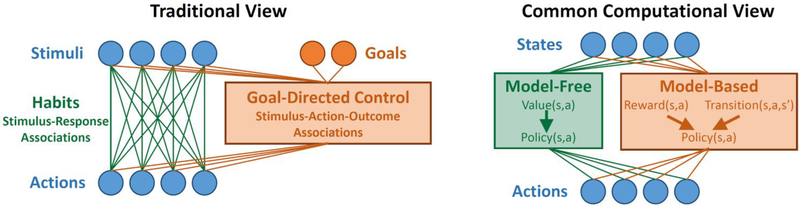
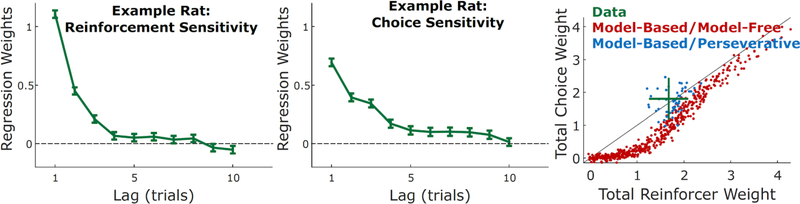
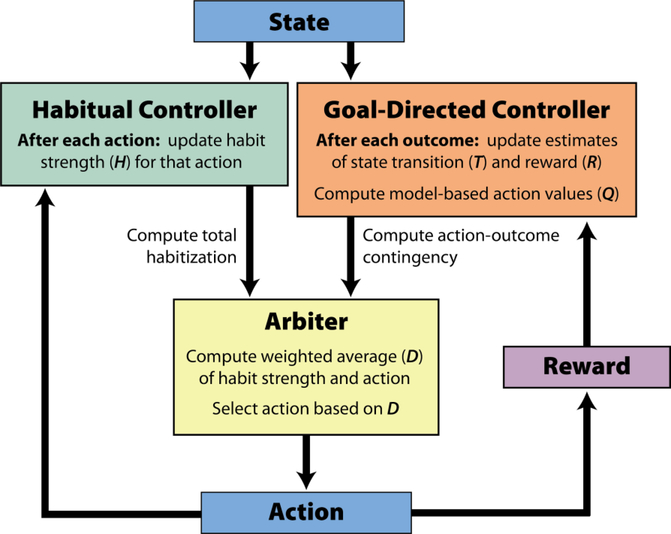
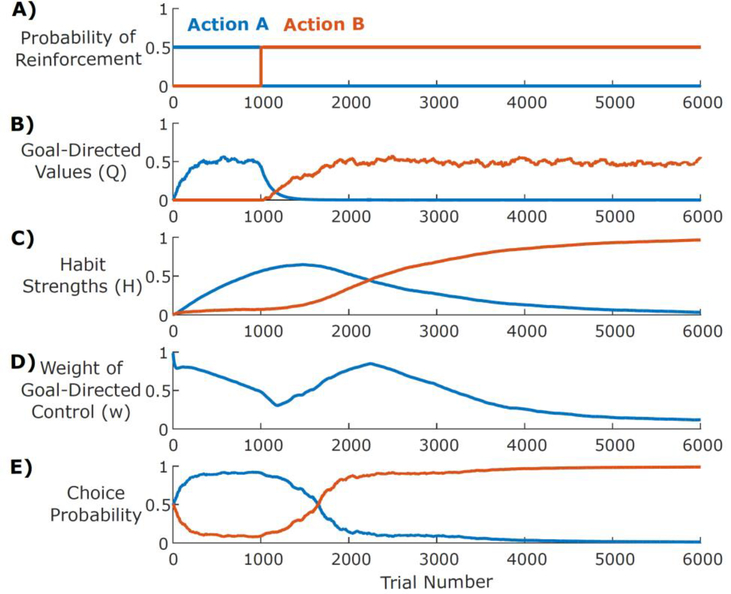
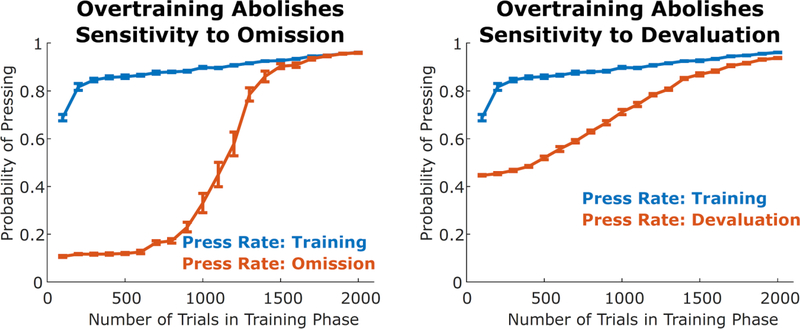
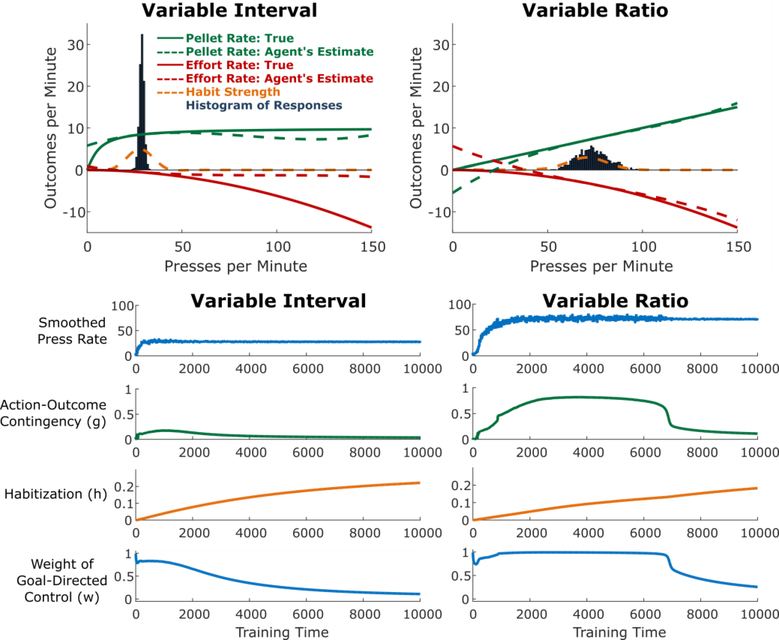
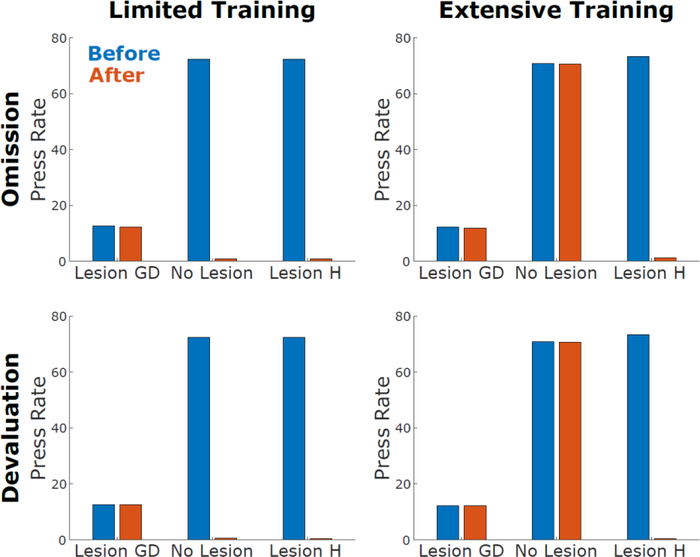
Habits form a crucial component of behavior. In recent years, key computational models have conceptualized habits as arising from model-free reinforcement learning mechanisms, which typically select between available actions based on the future value expected to result from each. Traditionally, however, habits have been understood as behaviors that can be triggered directly by a stimulus, without requiring the animal to evaluate expected outcomes. Here, we develop a computational model instantiating this traditional view, in which habits develop through the direct strengthening of recently taken actions rather than through the encoding of outcomes. We demonstrate that this model accounts for key behavioral manifestations of habits, including insensitivity to outcome devaluation and contingency degradation, as well as the effects of reinforcement schedule on the rate of habit formation. The model also explains the prevalent observation of perseveration in repeated-choice tasks as an additional behavioral manifestation of the habit system. We suggest that mapping habitual behaviors onto value-free mechanisms provides a parsimonious account of existing behavioral and neural data. This mapping may provide a new foundation for building robust and comprehensive models of the interaction of habits with other, more goal-directed types of behaviors and help to better guide research into the neural mechanisms underlying control of instrumental behavior more generally. (PsycINFO Database Record (c) 2019 APA, all rights reserved).
习惯是行为的一个重要组成部分。近年来,关键的计算模型将习惯概念化为源于无模型强化学习机制,这些机制通常根据每个动作预期的未来价值在可用动作之间进行选择。然而,传统上,习惯被理解为可以直接由刺激触发的行为,而不需要动物评估预期的结果。在这里,我们开发了一个计算模型,实例化了这种传统观点,其中习惯是通过最近采取的行动的直接强化而不是通过结果的编码来发展的。我们证明,该模型解释了习惯的关键行为表现,包括对结果贬值和条件性降低的不敏感性,以及强化时间表对习惯形成速度的影响。该模型还解释了在重复选择任务中普遍存在的坚持现象,这是习惯系统的另一种行为表现。我们认为,将习惯性行为映射到无价值机制上,为现有的行为和神经数据提供了一种简洁的解释。这种映射可能为习惯与其他更有目标导向的行为类型的相互作用建立稳健而全面的模型提供新的基础,并有助于更好地指导更普遍的工具行为控制的神经机制的研究。(PsycINFO 数据库记录(c)2019 APA,保留所有权利)。