Miller Kevin J, Botvinick Matthew M, Brody Carlos D
Princeton Neuroscience Institute, Princeton University, Princeton, New Jersey, USA.
Gatsby Computational Neuroscience Unit, University College London, London, UK.
Nat Neurosci. 2017 Sep;20(9):1269-1276. doi: 10.1038/nn.4613. Epub 2017 Jul 31.
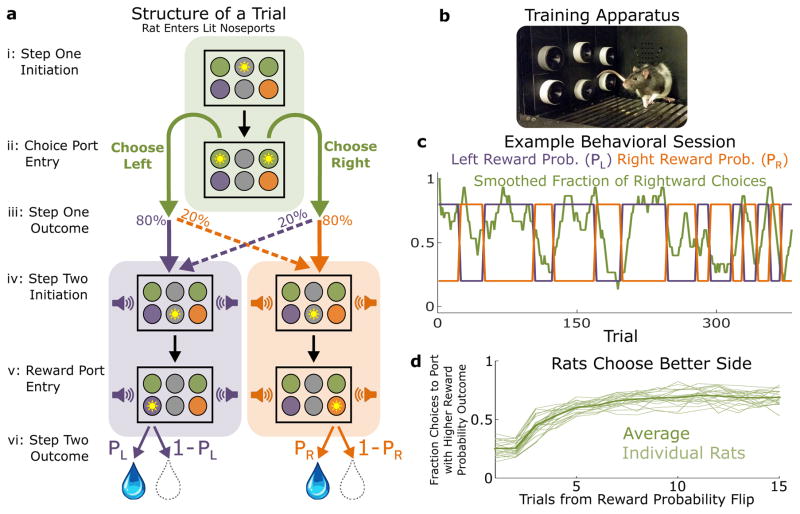
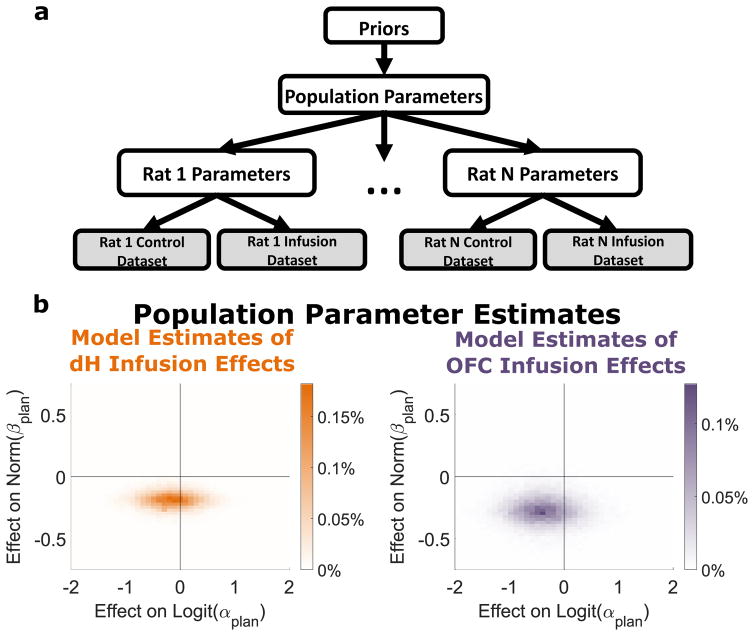
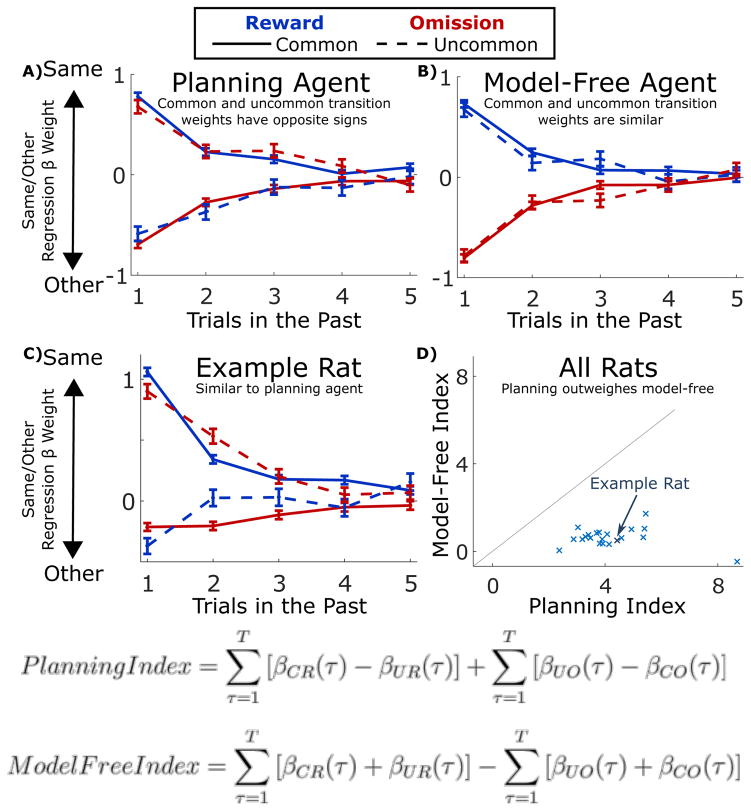
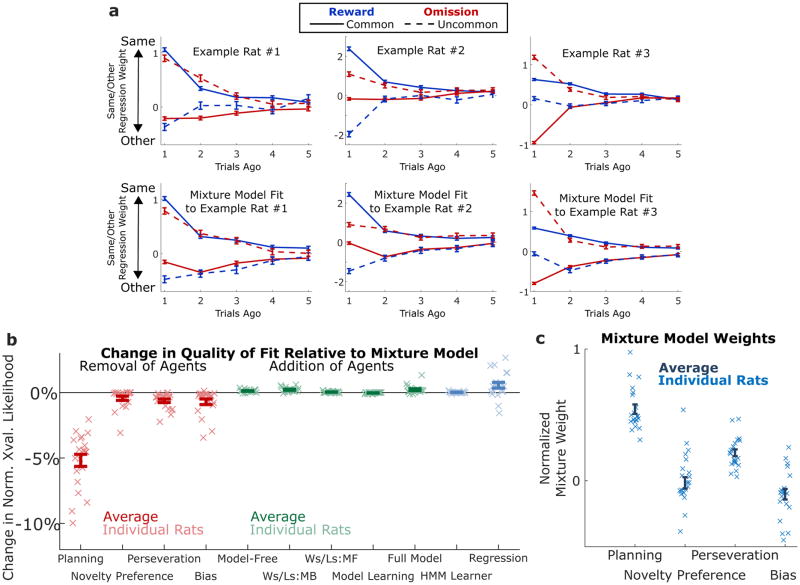
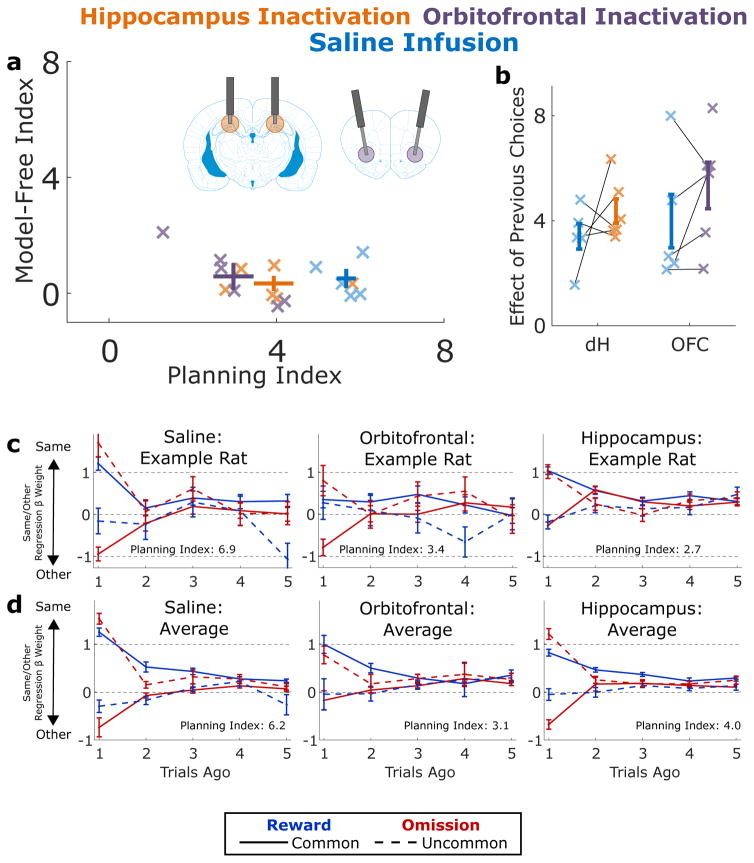
Planning can be defined as action selection that leverages an internal model of the outcomes likely to follow each possible action. Its neural mechanisms remain poorly understood. Here we adapt recent advances from human research for rats, presenting for the first time an animal task that produces many trials of planned behavior per session, making multitrial rodent experimental tools available to study planning. We use part of this toolkit to address a perennially controversial issue in planning: the role of the dorsal hippocampus. Although prospective hippocampal representations have been proposed to support planning, intact planning in animals with damaged hippocampi has been repeatedly observed. Combining formal algorithmic behavioral analysis with muscimol inactivation, we provide causal evidence directly linking dorsal hippocampus with planning behavior. Our results and methods open the door to new and more detailed investigations of the neural mechanisms of planning in the hippocampus and throughout the brain.
规划可以被定义为一种行动选择,它利用了一个内部模型,该模型能够预测每种可能行动可能产生的结果。其神经机制仍然知之甚少。在这里,我们将人类研究的最新进展应用于大鼠,首次提出了一种动物任务,每次实验能产生多次计划行为的试验,从而使多试验啮齿动物实验工具可用于研究规划。我们使用这个工具包的一部分来解决规划中一个长期存在争议的问题:背侧海马体的作用。尽管有人提出前瞻性海马体表征有助于规划,但人们反复观察到海马体受损的动物仍具有完整的规划能力。我们将形式化算法行为分析与蝇蕈醇失活相结合,提供了直接将背侧海马体与规划行为联系起来的因果证据。我们的研究结果和方法为海马体及整个大脑中规划的神经机制开展新的、更详细的研究打开了大门。