Tamkovich Svetlana N, Yunusova Natalia V, Tugutova Elena, Somov Anton K, Proskura Ksenia V, Kolomiets Larisa A, Stakheeva Marina N, Grigor’eva Alina E, Laktionov Pavel P, Kondakova Irina V
Institute of Chemical Biology and Fundamental Medicine, SB RAS, Novosibirsk, Russia.
Novosibirsk State University, Novosibirsk, Russia. Email:
Asian Pac J Cancer Prev. 2019 Jan 25;20(1):255-262. doi: 10.31557/APJCP.2019.20.1.255.
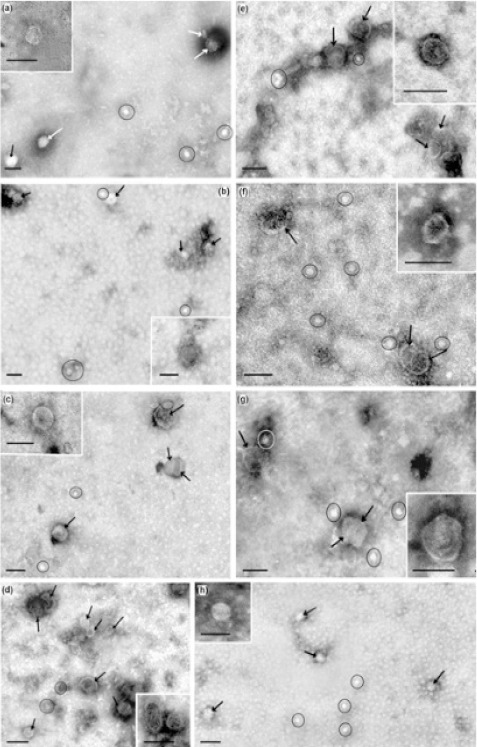
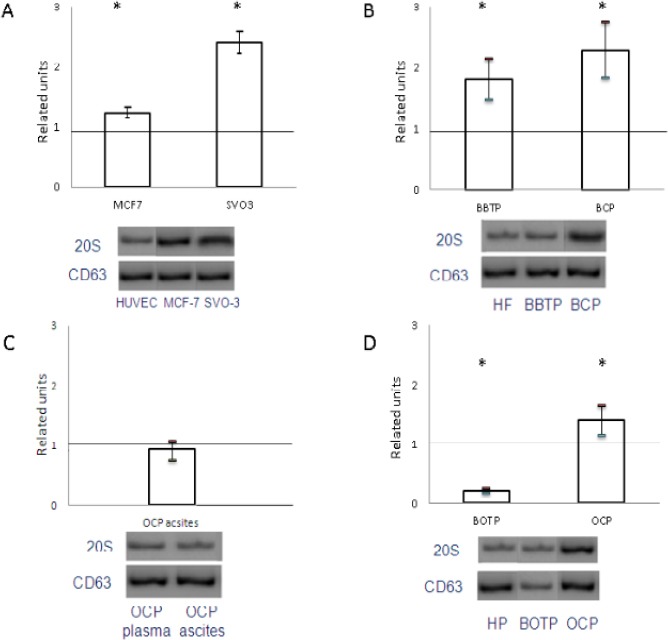
Background: As is known, exosomes play an important role in promoting progression of cancers by increasing its invasive potential. The aim of this study was to evaluate the levels of tetraspanine-associated (ADAM-10) and tetraspanine-nonassociated proteases (20S proteasomes) in exosomes from culture medium, plasma exosomes of patients with breast tumors and plasma and ascites of ovarian tumor patients. Methods: MCF-7 and SVO-3 culture mediums and blood samples from healthy females (n = 30, HFs), patients with diffuse dyshormonal dysplasia of the breast (n=28, BBTPs), breast cancer patients (n=32, BCPs), borderline ovarian tumor patients (n=20, BOTPs) and blood and ascites samples ovarian cancer patients (n=35, OCPs) were included in the study. Exosomes from plasma, ascites and culture mediums were isolated and characterized in according to Extracellular Vesicles Society. The expression levels of 20S proteasome and ADAM-10 in exosomes were determined using flow cytometry and western blot analysis, correspondingly. Results: The subpopulation composition of the exosomes from MCF-7 culture medium and from blood plasma of HFs and breast diseases patients is similar, however CD9/CD24 subpopulation significantly increased at cell supernatant. The similar results was obtained for exosomes from SVO-3 medium and blood plasma and ascites of ovary tumor patients, but CD9/CD24 subpopulation significantly decreased at cells and illness samples, however CD63/CD24 exosomes increased significantly from cell supernatant. 20S proteasome level is significantly increased in exosomes from MCF-7 and SVO-3 culture medium, breast tumor patients and OCPs plasma in comparison to HUVEC culture medium and HFs plasma samples. At CD9-positive exosomes from BCPs plasma and MCF-7 was reveal a high expression of ADAM-10 and low expression is from BBDPs plasma and ovarian tumor patients plasma/ ascites samples. Exosomes from ascites OCP had high expression of ADAM-10 in the CD24-positive subpopulation. Conclusion: Breast and ovarian cancer development is connected with functioning of immune proteasome forms in plasma and ascites exosomes, while increased ADAM10 expression at CD9-positive exosome was associated with breast cancer and at CD24-positive subpopulation – with ovarian cancer. Obtained data confirm role of exosomal proteases in tumor progression.
众所周知,外泌体通过增加癌症的侵袭潜力在促进癌症进展中发挥重要作用。本研究的目的是评估来自培养基、乳腺肿瘤患者血浆外泌体以及卵巢肿瘤患者血浆和腹水中的四跨膜蛋白相关蛋白酶(ADAM-10)和四跨膜蛋白非相关蛋白酶(20S蛋白酶体)的水平。方法:本研究纳入了MCF-7和SVO-3培养基以及来自健康女性(n = 30,HFs)、乳腺弥漫性激素发育异常患者(n = 28,BBTPs)、乳腺癌患者(n = 32,BCPs)、卵巢交界性肿瘤患者(n = 20,BOTPs)的血液样本以及卵巢癌患者(n = 35,OCPs)的血液和腹水样本。根据细胞外囊泡协会的方法分离并鉴定血浆、腹水和培养基中的外泌体。相应地,使用流式细胞术和蛋白质免疫印迹分析测定外泌体中20S蛋白酶体和ADAM-10的表达水平。结果:来自MCF-7培养基以及HFs和乳腺疾病患者血浆的外泌体亚群组成相似,但细胞上清液中的CD9/CD24亚群显著增加。来自SVO-3培养基以及卵巢肿瘤患者血浆和腹水的外泌体也得到了类似结果,但细胞和疾病样本中的CD9/CD24亚群显著减少,而细胞上清液中的CD63/CD24外泌体显著增加。与HUVEC培养基和HFs血浆样本相比,来自MCF-7和SVO-3培养基、乳腺肿瘤患者和OCPs血浆的外泌体中20S蛋白酶体水平显著升高。在BCPs血浆和MCF-7的CD9阳性外泌体中发现ADAM-10高表达,而在BBDPs血浆以及卵巢肿瘤患者血浆/腹水样本中低表达。腹水OCP的外泌体在CD24阳性亚群中ADAM-10高表达。结论:乳腺癌和卵巢癌的发展与血浆和腹水外泌体中免疫蛋白酶体形式的功能有关,而CD9阳性外泌体中ADAM10表达增加与乳腺癌相关,在CD24阳性亚群中与卵巢癌相关。获得的数据证实了外泌体蛋白酶在肿瘤进展中的作用。