Clinical Dermatology, IRCCS Istituto Ortopedico Galeazzi, Department of Biomedical, Surgical and Dental Sciences, University of Milan, 20161 Milan, Italy.
Young Dermatologists Italian Network (YDIN), GISED, 24122 Bergamo, Italy.
Nutrients. 2019 Jan 27;11(2):277. doi: 10.3390/nu11020277.
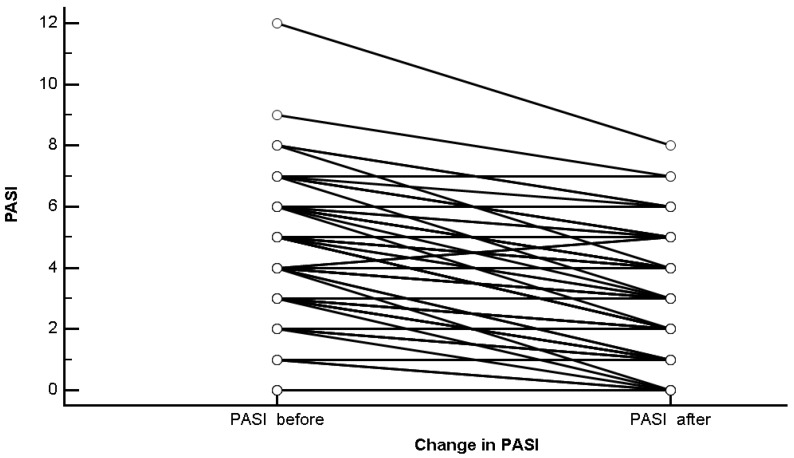
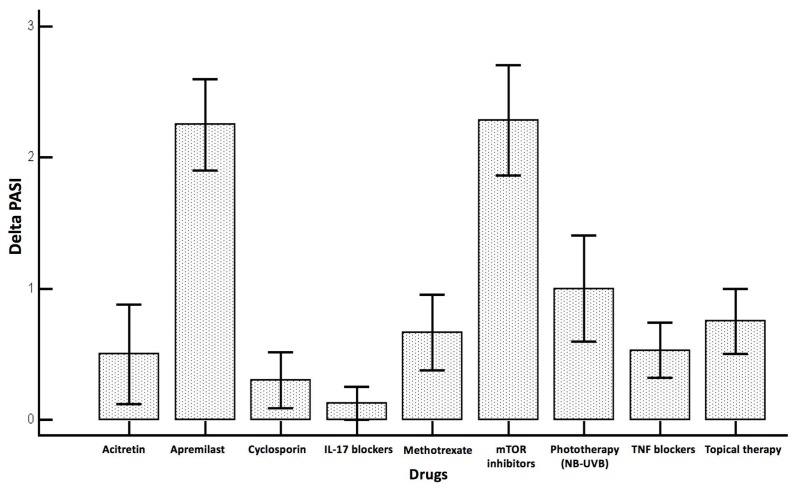
Fasting during the month of Ramadan consists of alternate abstinence and re-feeding periods (circadian or intermittent fasting). Nothing is currently known on the impact of this kind of fasting on psoriasis. A sample of 108 moderate-to-severe plaque psoriasis patients (aged 42.84 ± 13.61 years, 62 males, 46 females) volunteered to take part in the study. A significant decrease in the "Psoriasis Area and Severity Index" (PASI) score after the Ramadan fasting (mean difference = -0.89 ± 1.21, < 0.0001) was found. At the multivariate regression, the use of cyclosporine ( = 0.0003), interleukin-17 or IL-17 blockers ( < 0.0001), and tumor necrosis factor or TNF blockers ( = 0.0107) was independently associated with a low PASI score, while the use of apremilast ( = 0.0009), and phototherapy ( = 0.0015) was associated with a high PASI score before the Ramadan fasting. Similarly, the consumption of cyclosporine ( < 0.0001), IL-17 blockers ( < 0.0001), mammalian target of rapamycin or mTOR inhibitors ( = 0.0081), and TNF blockers ( = 0.0017) predicted a low PASI score after the Ramadan fasting. By contrast, narrow band ultraviolet light B or NB-UVB ( = 0.0015) was associated with a high PASI score after Ramadan fasting. Disease duration ( = 0.0078), use of apremilast ( = 0.0005), and of mTOR inhibitors ( = 0.0034) were independent predictors of the reduction in the PASI score after the Ramadan fasting. These findings reflect the influence of dieting strategy, the biological clock, and circadian rhythm on the treatment of plaque psoriasis.
在斋月期间禁食包括交替禁食和再喂养期(昼夜或间歇性禁食)。目前尚不清楚这种禁食方式对银屑病的影响。一项 108 名中度至重度斑块状银屑病患者(年龄 42.84±13.61 岁,男性 62 名,女性 46 名)的样本自愿参加了这项研究。在斋月禁食后,“银屑病面积和严重程度指数”(PASI)评分显著下降(平均差值=-0.89±1.21,<0.0001)。在多元回归中,环孢素的使用(=0.0003)、白细胞介素-17 或 IL-17 阻滞剂(<0.0001)、肿瘤坏死因子或 TNF 阻滞剂(=0.0107)与低 PASI 评分独立相关,而阿普米司特的使用(=0.0009)和光疗(=0.0015)与斋月禁食前高 PASI 评分相关。同样,环孢素的使用(<0.0001)、IL-17 阻滞剂(<0.0001)、雷帕霉素或 mTOR 抑制剂(=0.0081)、TNF 阻滞剂(=0.0017)预测了斋月禁食后的低 PASI 评分。相比之下,窄带紫外线 B 或 NB-UVB(=0.0015)与斋月禁食后的高 PASI 评分相关。疾病持续时间(=0.0078)、阿普米司特的使用(=0.0005)和 mTOR 抑制剂的使用(=0.0034)是斋月禁食后 PASI 评分降低的独立预测因素。这些发现反映了饮食策略、生物钟和昼夜节律对斑块状银屑病治疗的影响。