a Department of Preventive and Restorative Dental Sciences , University of California , San Francisco , CA , USA.
Subst Use Misuse. 2019;54(7):1154-1166. doi: 10.1080/10826084.2018.1564330. Epub 2019 Jan 29.
Use of smokeless tobacco (ST, moist snuff and chewing tobacco) is elevated among male rural youth, particularly participants in certain sports, including baseball.
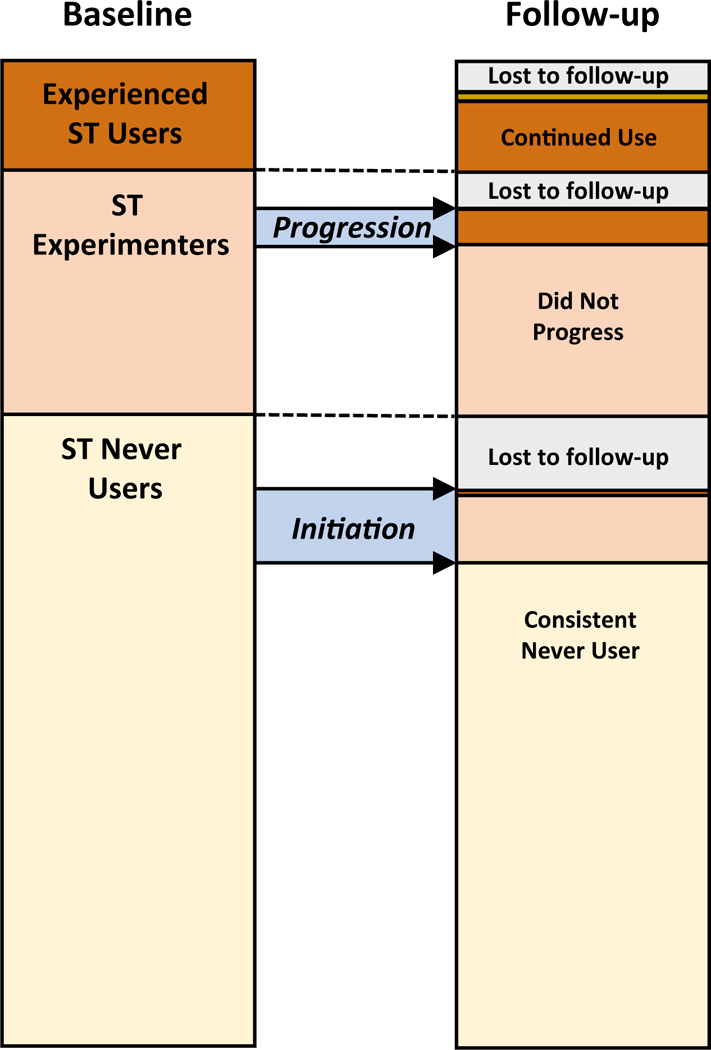
This study aimed to assess factors associated with adolescent male athletes' ST-related behaviors over time, including: baseline use, initiation, and progression in use intensity in a school-based longitudinal cohort.
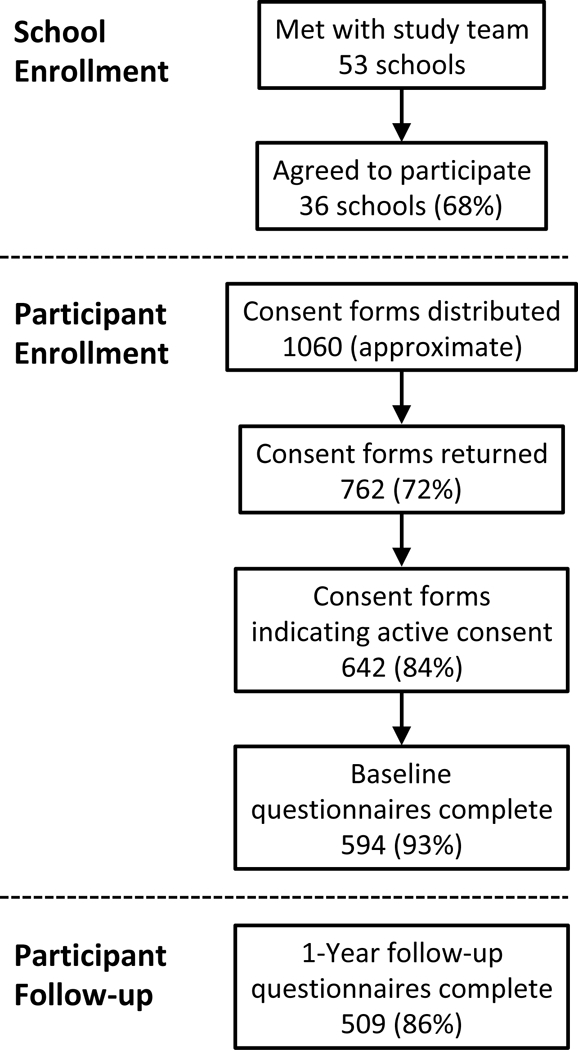
Baseline and one-year follow-up questionnaires assessed sociodemographic characteristics, environmental factors, and tobacco-related perceptions and behaviors among 9- to12th-grade interscholastic baseball players in 36 rural California schools. Population characteristics were compared among ST use categories (never, experimental, and experienced users). Multivariable models using generalized estimating equations were estimated for outcomes among baseline ST never-users (ST susceptibility and future initiation) and experimenters (ST expectations and progression in ST use).
Of 594 participants, over half (57%) had ever tried a tobacco product and the most common products tried were ST (36%) and electronic cigarettes (36%). Being older, perceiving less ST harm, being Non-Hispanic White, using alcohol or other tobacco products, having family or friends who use ST, and being receptive to advertising were associated with greater baseline ST use. Baseline alcohol consumption, lower perceived ST harm, peer use, and susceptibility and expectations were predictive of ST initiation and/or progression at one-year follow-up. Conclusion/Importance: Certain environmental, socio-demographic, cognitive, and behavioral factors predict ST susceptibility and later initiation and progression in use. Interventions addressing these factors have potential to prevent ST uptake and continued use within this high-risk adolescent population.
无烟烟草制品(ST,湿鼻烟和咀嚼烟草)的使用在男性农村青年中较高,尤其是某些运动项目,包括棒球。
本研究旨在评估与青少年男性运动员 ST 相关行为随时间变化的相关因素,包括:在基于学校的纵向队列中,基线使用、开始使用和使用强度的进展。
基线和一年后的随访问卷评估了社会人口统计学特征、环境因素以及与烟草相关的观念和行为,参与者为 36 所加利福尼亚农村学校的 9 至 12 年级校际棒球队运动员。在 ST 使用类别(从未使用、尝试使用和经验使用者)之间比较了人口特征。使用广义估计方程对基线 ST 从未使用者(ST 易感性和未来开始使用)和尝试使用者(ST 期望和 ST 使用强度的进展)的结果进行了多变量模型估计。
在 594 名参与者中,超过一半(57%)曾经尝试过一种烟草产品,最常见的尝试产品是 ST(36%)和电子烟(36%)。年龄较大、认为 ST 危害较小、是非西班牙裔白人、使用酒精或其他烟草产品、有使用 ST 的家人或朋友、对广告持开放态度与基线 ST 使用量较大相关。基线饮酒量、较低的 ST 危害感知、同伴使用以及易感性和期望与一年后的 ST 开始使用和/或进展相关。结论/重要性:某些环境、社会人口统计学、认知和行为因素预测了 ST 的易感性,以及随后的开始使用和使用强度的进展。针对这些因素的干预措施有可能防止高危青少年群体中 ST 的摄入和持续使用。