Pence Brandt D, Yarbro Johnathan R
School of Health Studies, Memphis, TN 38152 USA.
2Center for Nutraceutical and Dietary Supplement Research, University of Memphis, Memphis, TN 38152 USA.
Immun Ageing. 2019 Jan 26;16:3. doi: 10.1186/s12979-019-0143-1. eCollection 2019.
Inflammaging is a condition of chronic low-grade inflammation due to the aging process and is associated with a variety of chronic diseases. Monocytes are innate immune cells which contribute to inflammation and are dysregulated during aging, demonstrated reduced phagocytosis, increased inflammation, and alterations in subset proportions. Metabolism is known to determine immune cell function, with quiescent and anti-inflammatory cells primarily relying on fatty acid oxidation, while activated and inflammatory cells primarily rely on glycolysis. We have previously shown an age-related decrease in mitochondrial respiratory capacity in monocytes, so we hypothesized here that a compensatory shift toward glycolysis would occur which would also exacerbate inflammation.
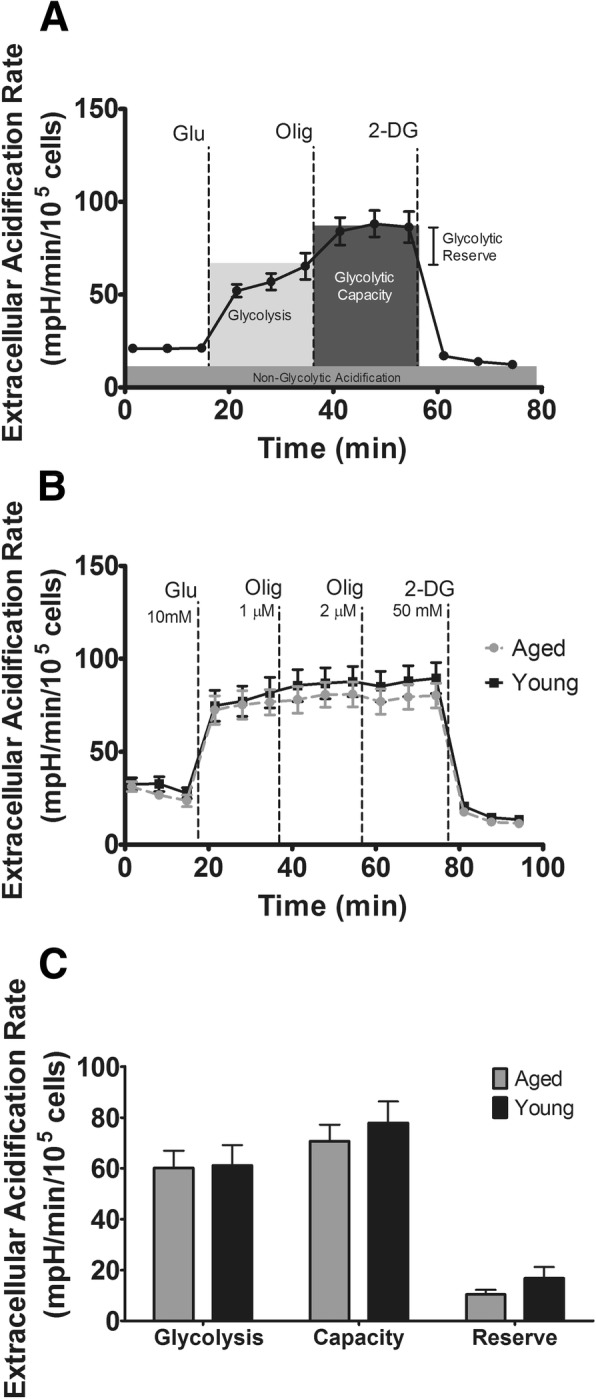
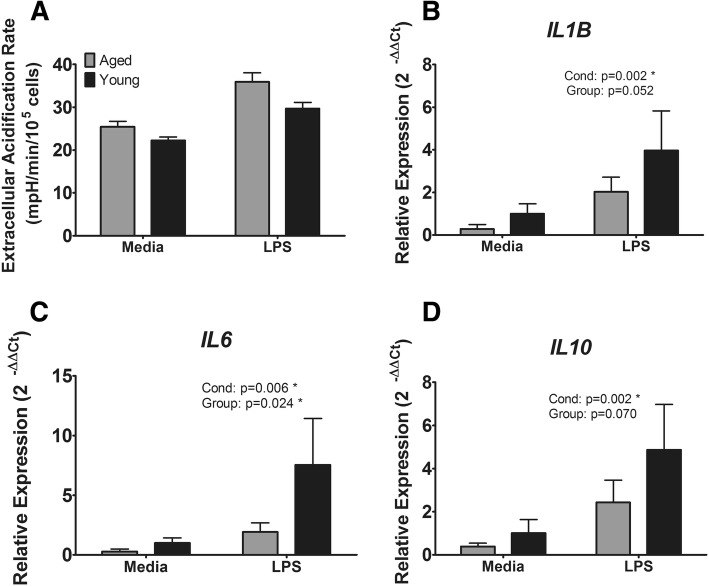
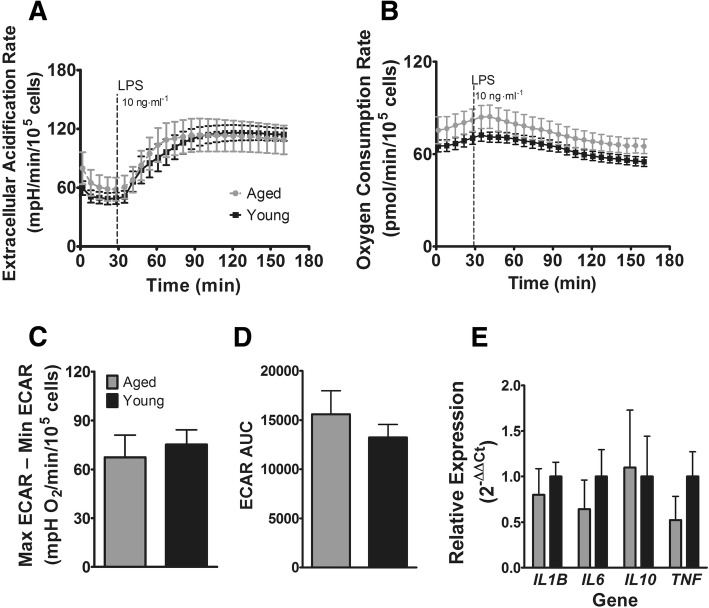
Using Seahorse assays, we profiled glycolysis in classical monocytes isolated from older (60-80 yr) and younger (18-35 yr) adults. Aging did not affect parameters of basal glycolysis in the glycolysis stress test, nor did it alter glycolytic activation early (2 h) or later (24 h) post-LPS stimulation. Cytokine gene expression was unchanged between aged and young subjects at 2 h post-LPS but was reduced in older subjects at 24 h post-LPS either significantly () or near-significantly (, ).
Aging appears not to affect glycolytic metabolism ex vivo in classical monocytes, but may reduce cytokine expression at later timepoints. Studies examining monocytes stimulated with age-altered circulating factors or with other pattern recognition receptor agonists may shed further light on monocyte metabolism as a determinant of immunosenescence and inflammaging.
炎症衰老(inflammaging)是一种因衰老过程导致的慢性低度炎症状态,与多种慢性疾病相关。单核细胞是先天性免疫细胞,参与炎症反应,且在衰老过程中失调,表现为吞噬作用降低、炎症增加以及亚群比例改变。已知代谢决定免疫细胞功能,静止和抗炎细胞主要依赖脂肪酸氧化,而活化和炎症细胞主要依赖糖酵解。我们之前已表明单核细胞中线粒体呼吸能力随年龄下降,因此我们在此假设会发生向糖酵解的代偿性转变,这也会加剧炎症。
使用海马分析(Seahorse assays),我们对从老年(60 - 80岁)和年轻(18 - 35岁)成年人中分离出的经典单核细胞的糖酵解进行了分析。在糖酵解应激试验中,衰老并未影响基础糖酵解参数,在脂多糖(LPS)刺激后早期(2小时)或晚期(24小时)也未改变糖酵解激活情况。LPS刺激后2小时,老年和年轻受试者之间细胞因子基因表达没有变化,但在LPS刺激后24小时,老年受试者的细胞因子基因表达显著()或接近显著(,)降低。
衰老似乎不会在体外影响经典单核细胞的糖酵解代谢,但可能在后期时间点降低细胞因子表达。研究用随年龄改变的循环因子或其他模式识别受体激动剂刺激单核细胞,可能会进一步揭示单核细胞代谢作为免疫衰老和炎症衰老决定因素的情况。