Huang Luodong, Gao Baoyan, Wu Manman, Wang Feifei, Zhang Chengwu
Department of Ecology, Institute of Hydrobiology, College of Life Science and Technology, Jinan University, No.601 Huangpu Road, Tianhe District, Guangzhou, 510632 Guangdong People's Republic of China.
Biotechnol Biofuels. 2019 Jan 28;12:18. doi: 10.1186/s13068-019-1355-5. eCollection 2019.
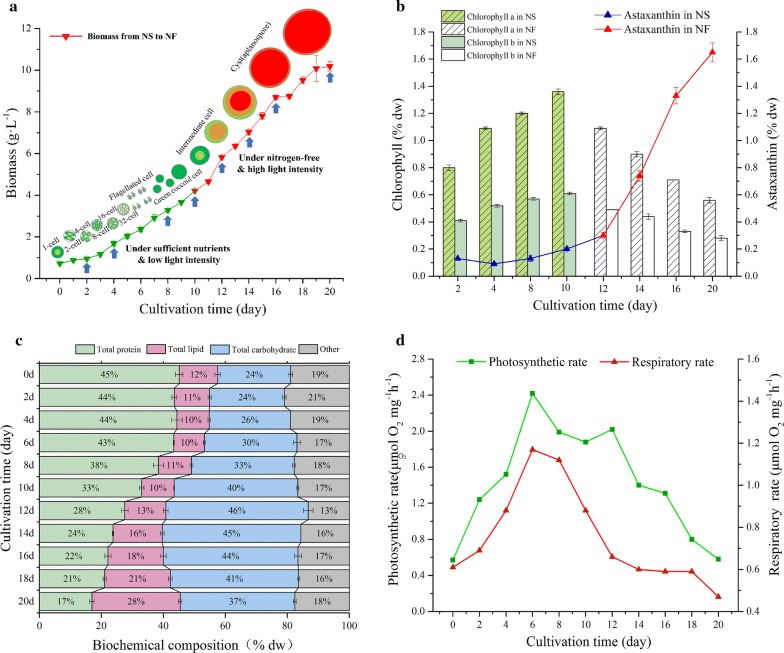
Among all organisms tested, can accumulate the highest levels of natural astaxanthin. Nitrogen starvation and high irradiance promote the accumulation of starch, lipid, and astaxanthin in . , yet their cell division is significantly retarded. Accordingly, adaptive regulatory mechanisms are very important and necessary to optimize the cultivation conditions enabling an increase in biomass; as well as promoting astaxanthin accumulation by . To clarify the intrinsic mechanism of high-level astaxanthin and biomass accumulation in the newly isolated strain, JNU35, nitrogen-sufficiency and nitrogen-depletion conditions were employed. Time-resolved comparative transcriptome analysis was also conducted by crossing the two-step culture process.
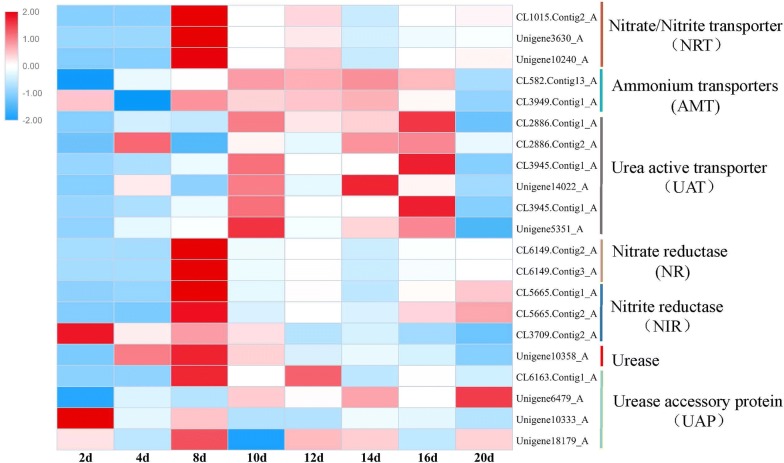
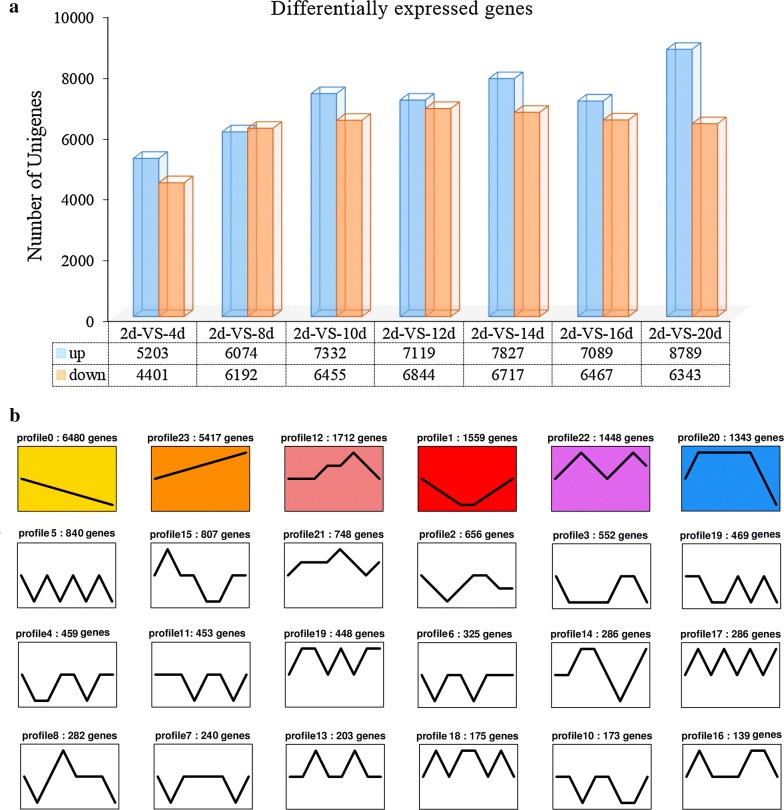
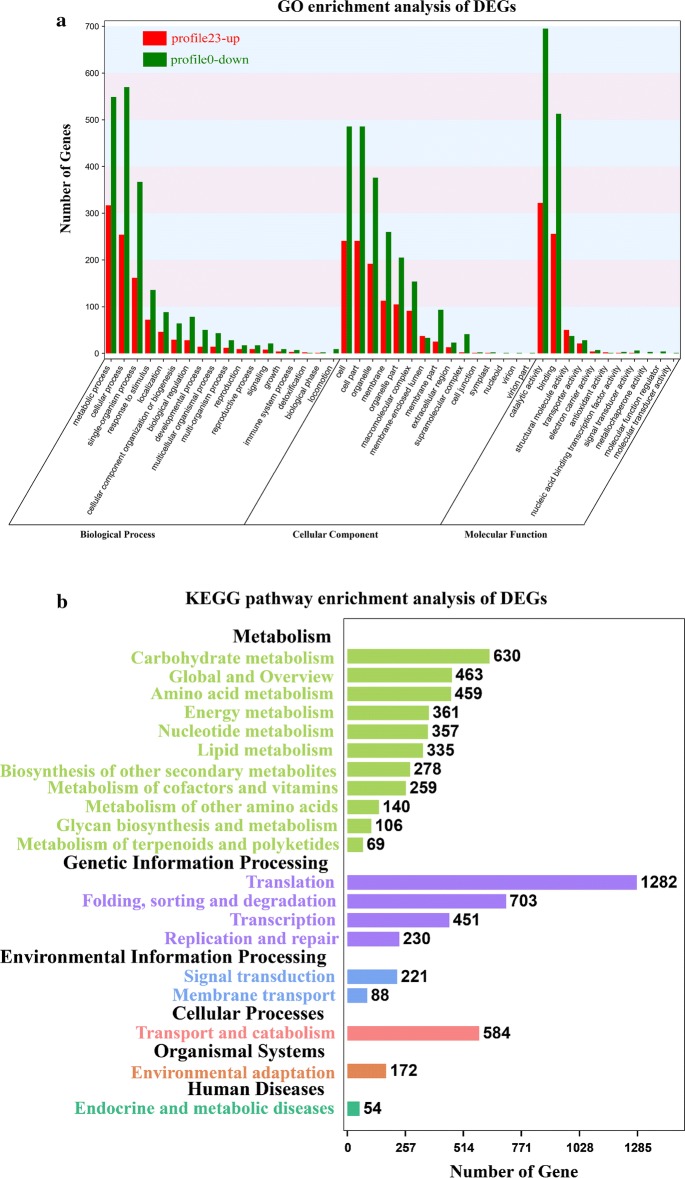
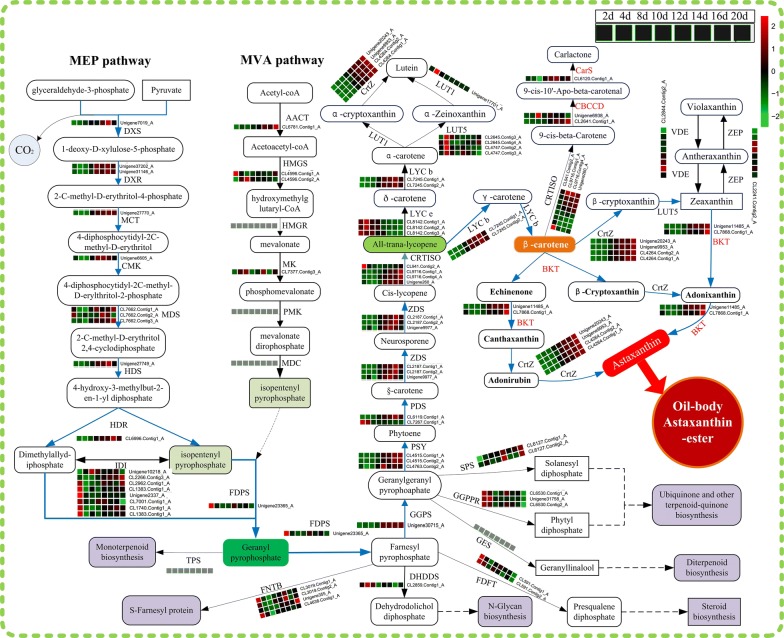
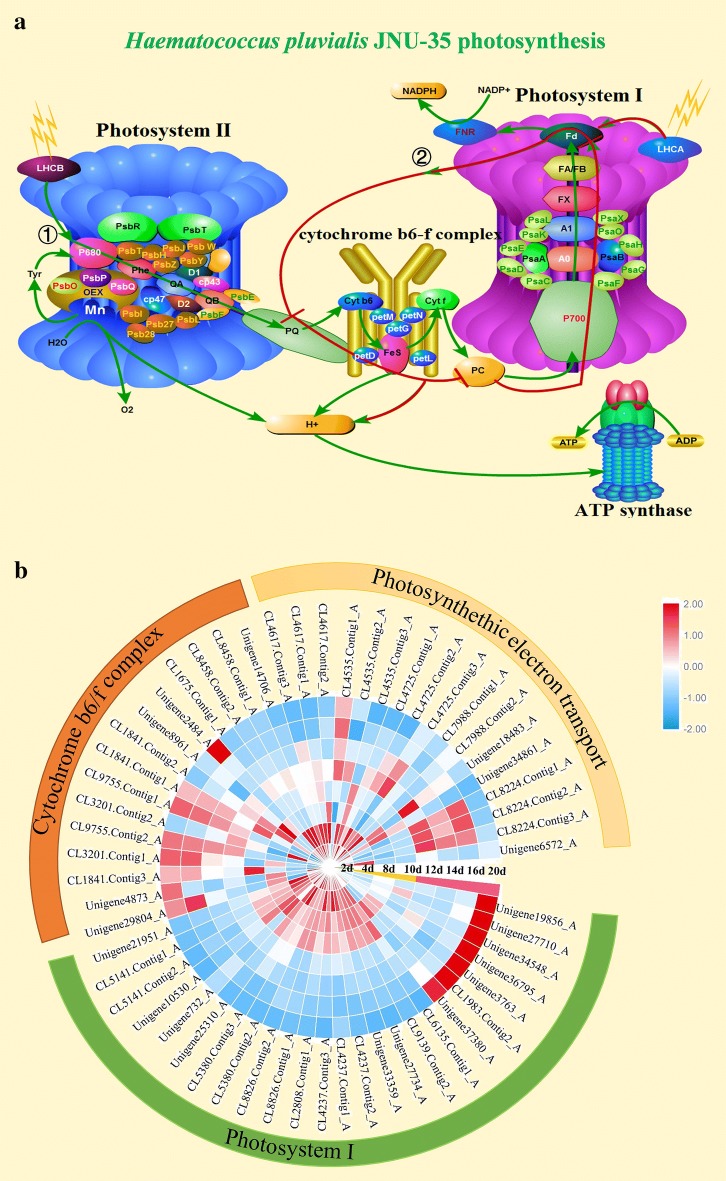
In the present study, we report the overall growth and physiological, biochemical, and transcriptomic characteristics of JNU35 in response to nitrogen variation. From eight sampling time-points (2 days, 4 days, 8 days, 10 days, 12 days, 14 days, 16 days, and 20 days), 25,480 differentially expressed genes were found. These genes included the significantly responsive unigenes associated with photosynthesis, astaxanthin biosynthesis, and nitrogen metabolic pathways. The expressions of all key and rate-limiting genes involved in astaxanthin synthesis were significantly upregulated. The photosynthetic pathway was found to be attenuated, whereas the ferredoxin gene was upregulated, which might activate the cyclic electron-transport chain as compensation. Moreover, the expressions of genes related to nitrogen transport and assimilation were upregulated. The expressions of genes in the proteasome pathway were also upregulated. In contrast, the chloroplasts and nonessential proteins were gradually degraded, activating the specific ornithine-urea cycle pathway. These changes may promote the sustained accumulation of astaxanthin and biomass.
To the best of our knowledge, this paper is the first to investigate the long-term differences of gene expression from two-step culture process in the astaxanthin producer, JNU35. According to our results, β-carotene ketolase ( and ) serves as the key enzyme regulating astaxanthin accumulation in JNU35. The cyclic electron-transport chain and novel nitrogen metabolic process were used adaptively as the regulatory mechanism compensating for different levels of stress. The in-depth study of these metabolic pathways and related key genes can reveal the underlying relationship between cell growth and astaxanthin accumulation in JNU35.
在所有测试的生物体中,[具体生物名称未给出]能积累最高水平的天然虾青素。氮饥饿和高辐照度会促进[具体生物名称未给出]中淀粉、脂质和虾青素的积累。然而,它们的细胞分裂会显著延迟。因此,适应性调节机制对于优化培养条件以增加生物量非常重要且必要;同时通过[具体生物名称未给出]促进虾青素积累。为阐明新分离菌株JNU35中高水平虾青素和生物量积累的内在机制,采用了氮充足和氮缺乏条件。还通过交叉两步培养过程进行了时间分辨比较转录组分析。
在本研究中,我们报告了JNU35在响应氮变化时的整体生长以及生理、生化和转录组特征。从八个采样时间点(2天、4天、8天、10天、12天、14天、16天和20天)发现了25,480个差异表达基因。这些基因包括与光合作用、虾青素生物合成和氮代谢途径相关的显著响应单基因。参与虾青素合成的所有关键和限速基因的表达均显著上调。发现光合途径减弱,而铁氧还蛋白基因上调,这可能激活循环电子传递链作为补偿。此外,与氮转运和同化相关的基因表达上调。蛋白酶体途径中的基因表达也上调。相反,叶绿体和非必需蛋白逐渐降解,激活特定的鸟氨酸 - 尿素循环途径。这些变化可能促进虾青素和生物量的持续积累。
据我们所知,本文首次研究了虾青素产生菌JNU35两步培养过程中基因表达的长期差异。根据我们的结果,β - 胡萝卜素酮酶([具体酶名称未给出]和[具体酶名称未给出])是调节JNU35中虾青素积累的关键酶。循环电子传递链和新的氮代谢过程被适应性地用作补偿不同水平胁迫的调节机制。对这些代谢途径和相关关键基因的深入研究可以揭示JNU35中细胞生长与虾青素积累之间的潜在关系。