Centre for Cognitive Neuroscience, Duke-NUS Medical School, Singapore 169857.
Sleep. 2019 Apr 1;42(4). doi: 10.1093/sleep/zsz018.
Chronic sleep restriction in adolescents is widespread, yet we know little about how to apportion the limited amount of sleep obtained to minimize cognitive impairment: should sleep occur only nocturnally, or be split across separate nocturnal and daytime nap periods? This is particularly relevant to hippocampal-dependent cognitive functions that underpin several aspects of learning.
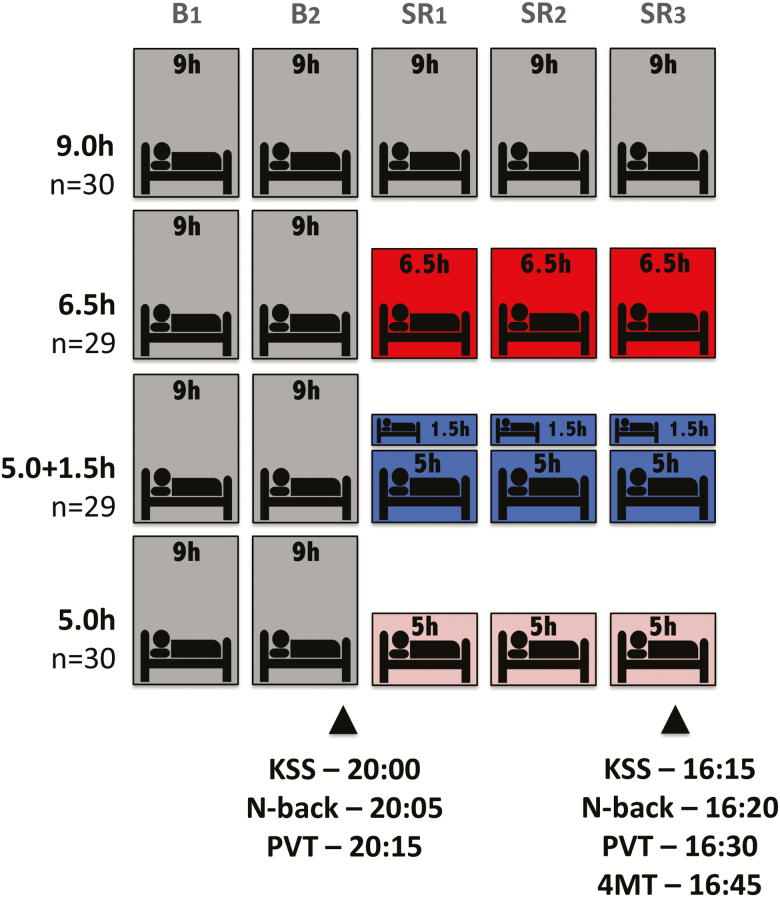
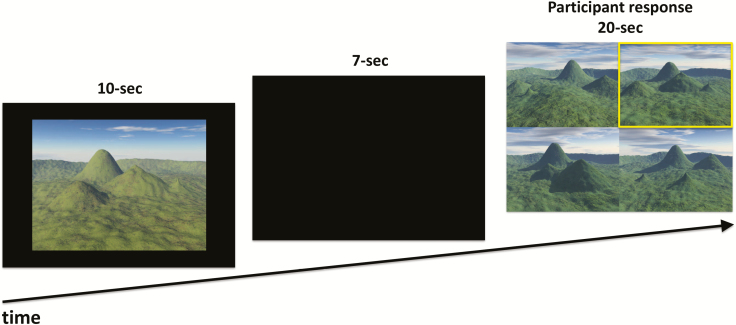
We assessed hippocampal function in four groups by evaluating short-term topographical memory with the Four Mountains Test (4MT). All participants began with 9 hours nocturnal time-in-bed (TIB) for 2 days before following different sleep schedules over the next 3 days. Each day, one group had 5 hours nocturnal TIB (5.0h; n = 30), another, 6.5 hours nocturnal TIB (6.5h; n = 29), and a third had 6.5 hours split into 5 hours nocturnal TIB and a 1.5 hour TIB daytime nap (5.0 + 1.5h; n = 29). A control group maintained 9 hours nocturnal TIB (9.0h; n = 30). The 4MT was administered mid-afternoon (1.5 hours after awakening for those who napped).
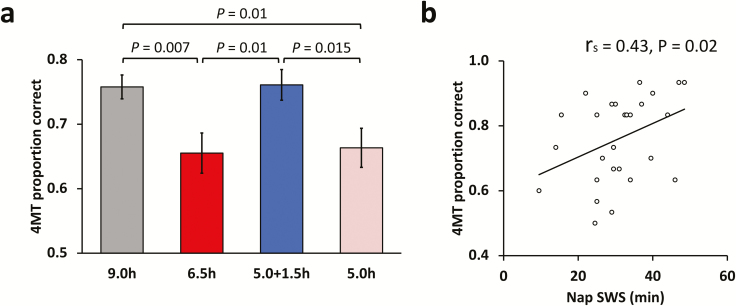
Performance of the 5.0h and 6.5h nocturnal TIB groups was significantly impaired relative to the 9.0h control group. Performance of participants on the split- sleep schedule (5.0 + 1.5h) did not significantly differ from controls.
These findings suggest that hippocampal function is sensitive to moderate multi-night sleep restriction, but deficits can be ameliorated by splitting sleep, at least for a period after waking from a daytime nap. While this split sleep schedule should not be considered a replacement for adequate nocturnal sleep, it appears to benefit the cognitive and neurophysiological functions that underpin learning in those who are chronically sleep deprived.
青少年慢性睡眠限制普遍存在,但我们对如何分配有限的睡眠时间以最大程度地减少认知障碍知之甚少:睡眠应该仅在夜间进行,还是在夜间和白天的小睡期间分开进行?这对于依赖海马体的认知功能特别重要,这些功能是学习的几个方面的基础。
我们通过评估四山测试(4MT)评估了四个组的海马体功能,以评估短期地形记忆。所有参与者首先在 2 天内获得 9 小时夜间卧床时间(TIB),然后在接下来的 3 天内遵循不同的睡眠时间表。每天,一组有 5 小时夜间 TIB(5.0h;n = 30),另一组有 6.5 小时夜间 TIB(6.5h;n = 29),第三组有 6.5 小时,分为 5 小时夜间 TIB 和 1.5 小时白天小睡 TIB(5.0 + 1.5h;n = 29)。对照组保持 9 小时夜间 TIB(9.0h;n = 30)。4MT 在下午(对于那些小睡的人,在醒来后 1.5 小时)进行管理。
5.0h 和 6.5h 夜间 TIB 组的表现明显比 9.0h 对照组差。分睡组(5.0 + 1.5h)的参与者的表现与对照组无显著差异。
这些发现表明,海马体功能对多夜睡眠限制敏感,但通过分睡可以改善缺陷,至少在从白天小睡中醒来后一段时间内是如此。虽然这种分睡时间表不应被视为替代充足的夜间睡眠,但它似乎对那些长期睡眠不足的人的学习相关认知和神经生理功能有益。