Department of Cell Biology, UConn Health, Farmington, CT, USA.
Sci Rep. 2019 Feb 4;9(1):1262. doi: 10.1038/s41598-018-37766-2.
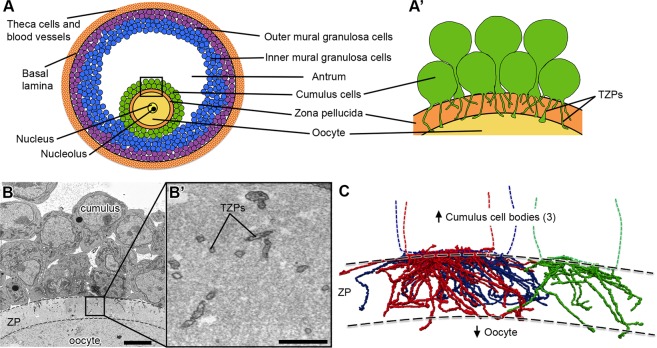
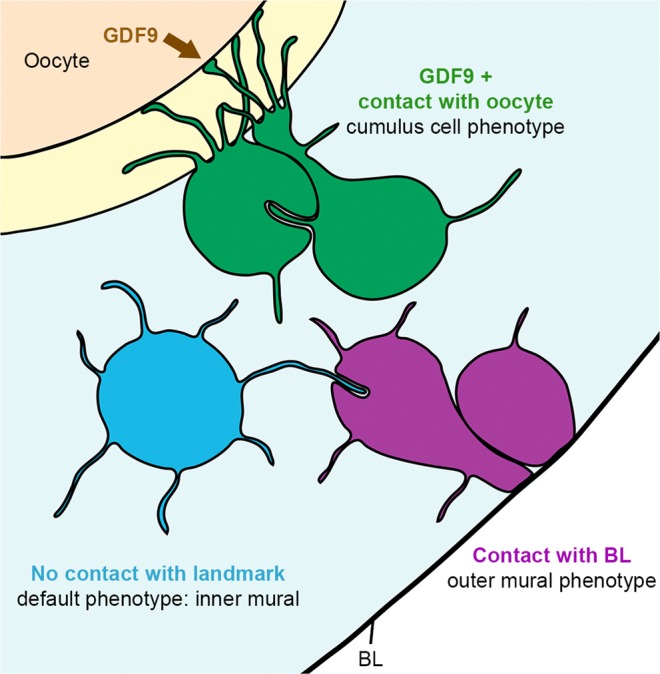
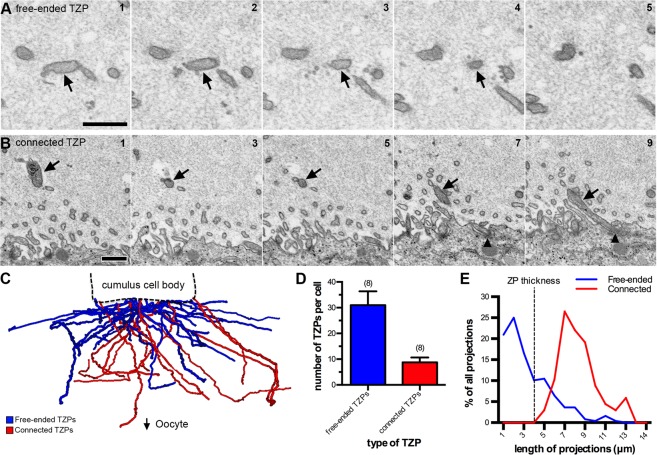
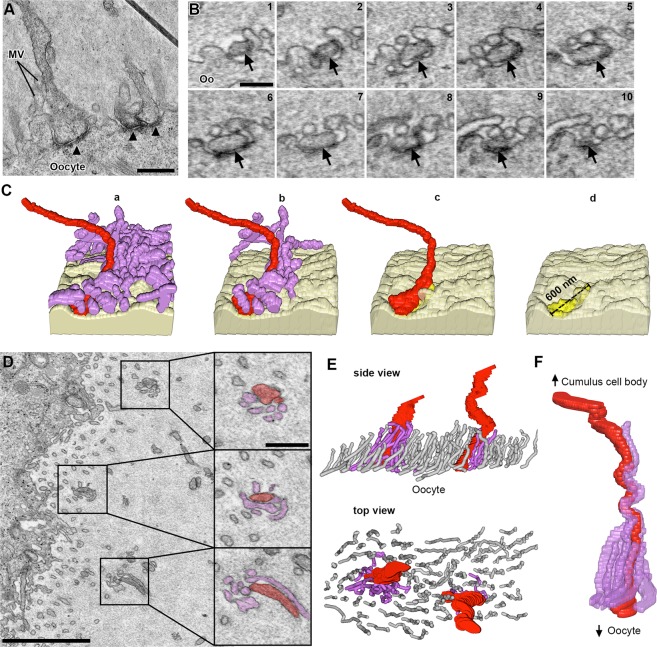
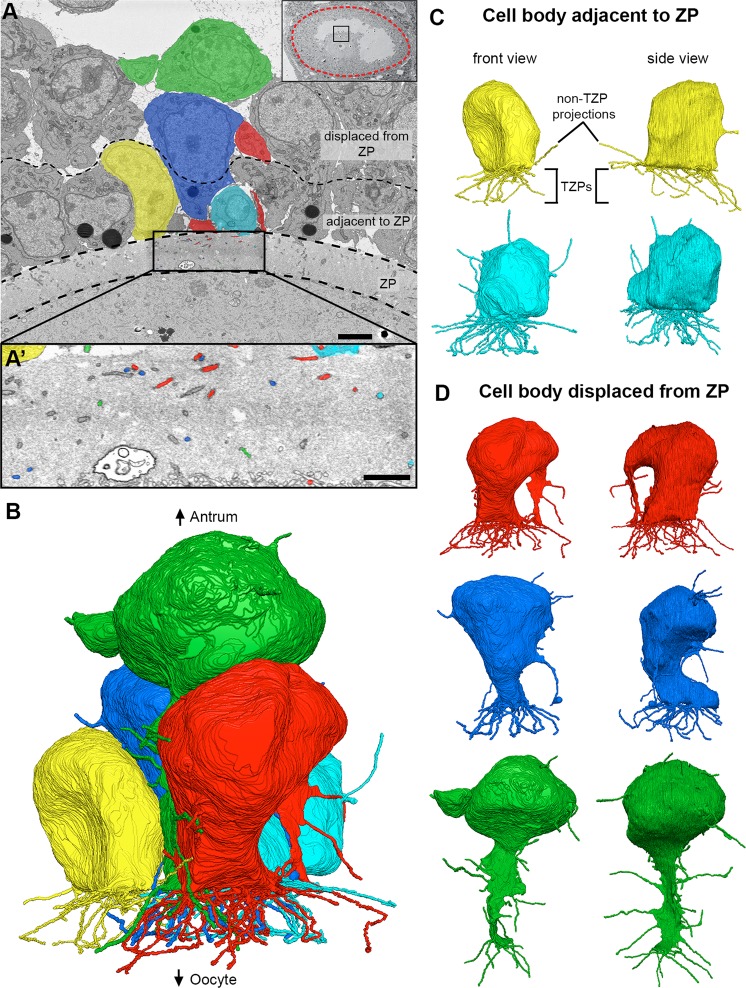
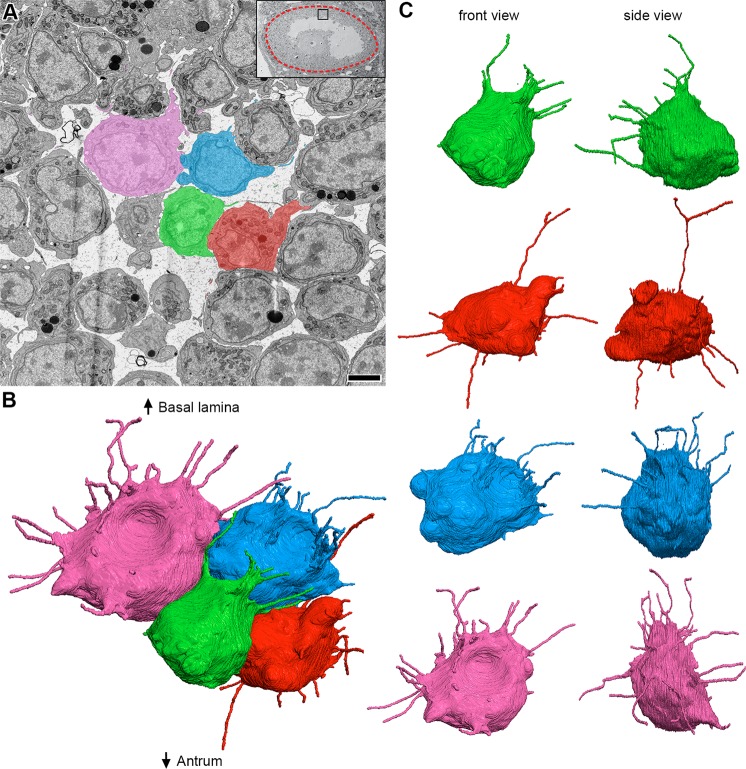
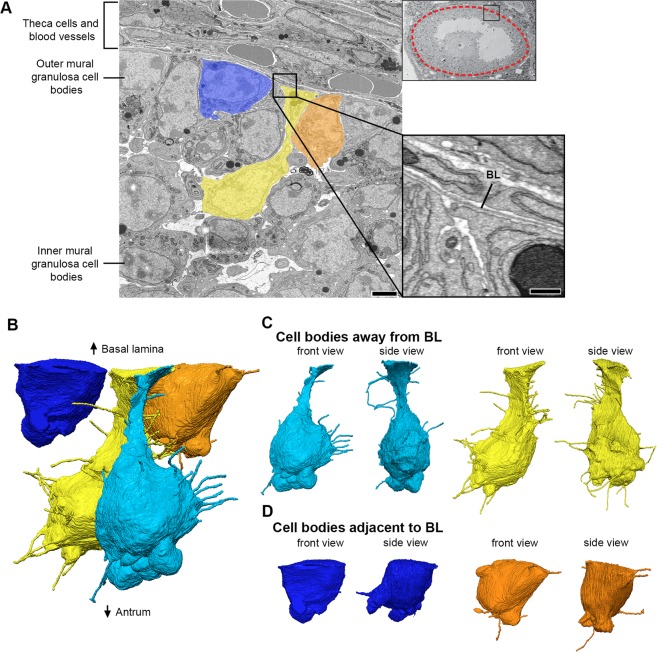
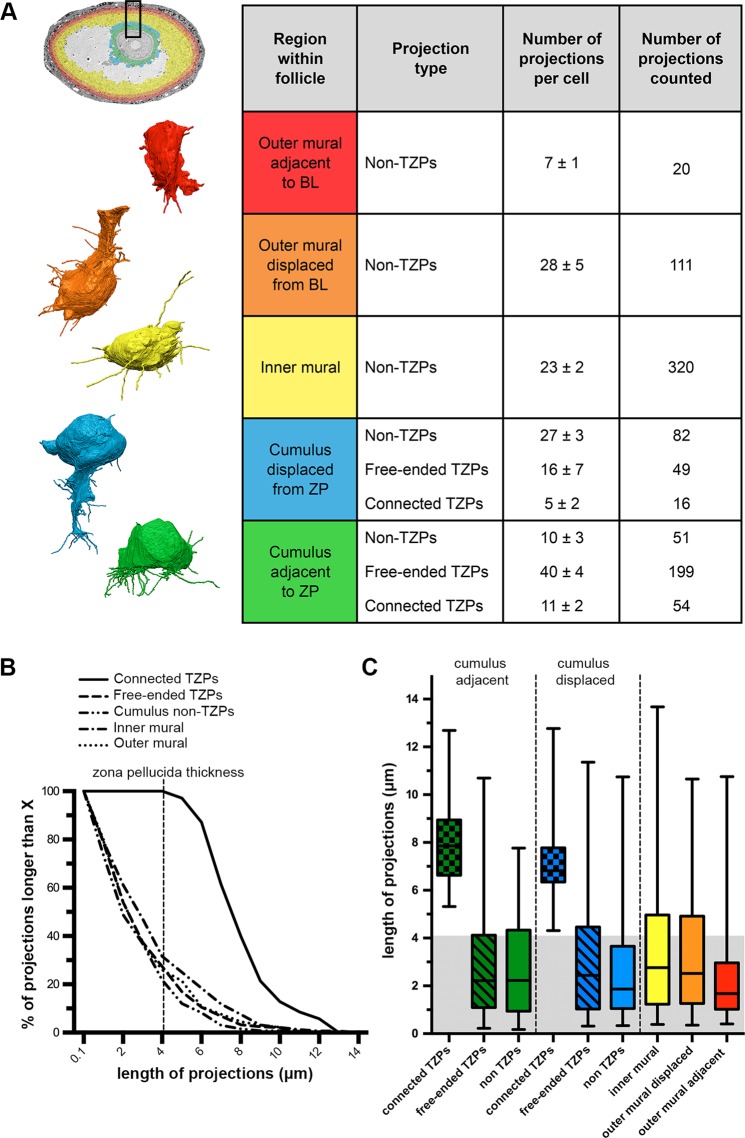
Each mammalian oocyte is nurtured by its own multi-cellular structure, the ovarian follicle. We used new methods for serial section electron microscopy to examine entire cumulus and mural granulosa cells and their projections in mouse antral ovarian follicles. Transzonal projections (TZPs) are thin cytoplasmic projections that connect cumulus cells to the oocyte and are crucial for normal oocyte development. We studied these projections in detail and found that most TZPs do not reach the oocyte, and that they often branch and make gap junctions with each other. Furthermore, the TZPs that connect to the oocyte are usually contacted on their shaft by oocyte microvilli. Mural granulosa cells were found to possess randomly oriented cytoplasmic projections that are strikingly similar to the free-ended TZPs. We propose that granulosa cells use cytoplasmic projections to search for the oocyte, and cumulus cell differentiation results from a contact-mediated paracrine interaction with the oocyte.
每个哺乳动物的卵母细胞都由其自身的多细胞结构——卵巢滤泡滋养。我们使用新的连续切片电子显微镜方法来研究小鼠腔前卵泡中的整个卵丘和壁颗粒细胞及其突起。透明带突起(TZPs)是连接卵母细胞的薄细胞质突起,对正常卵母细胞的发育至关重要。我们详细研究了这些突起,发现大多数 TZPs 并未到达卵母细胞,而且它们经常分支并与彼此形成间隙连接。此外,与卵母细胞相连的 TZPs 通常在其轴上被卵母细胞微绒毛接触。我们发现壁颗粒细胞具有随机定向的细胞质突起,与无末端的 TZPs 非常相似。我们提出,颗粒细胞使用细胞质突起来寻找卵母细胞,而卵丘细胞的分化是由于与卵母细胞的接触介导的旁分泌相互作用所致。