Host-Microbiota Interactions Laboratory, Wellcome Sanger Institute, Wellcome Genome Campus, Hinxton, UK.
Centre for Innate Immunity and Infectious Diseases, Hudson Institute of Medical Research, Clayton, Victoria, Australia.
Nat Biotechnol. 2019 Feb;37(2):186-192. doi: 10.1038/s41587-018-0009-7. Epub 2019 Feb 4.
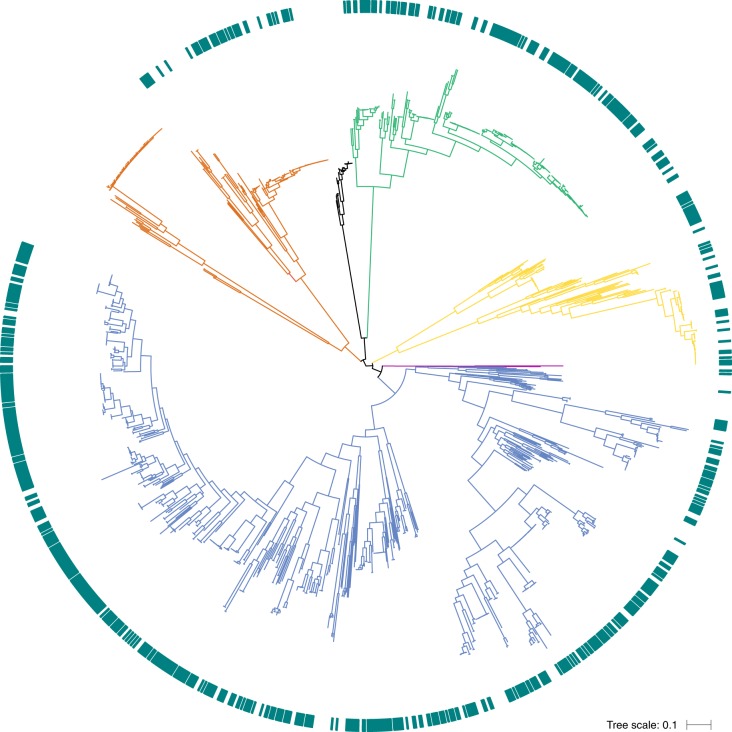
Understanding gut microbiome functions requires cultivated bacteria for experimental validation and reference bacterial genome sequences to interpret metagenome datasets and guide functional analyses. We present the Human Gastrointestinal Bacteria Culture Collection (HBC), a comprehensive set of 737 whole-genome-sequenced bacterial isolates, representing 273 species (105 novel species) from 31 families found in the human gastrointestinal microbiota. The HBC increases the number of bacterial genomes derived from human gastrointestinal microbiota by 37%. The resulting global Human Gastrointestinal Bacteria Genome Collection (HGG) classifies 83% of genera by abundance across 13,490 shotgun-sequenced metagenomic samples, improves taxonomic classification by 61% compared to the Human Microbiome Project (HMP) genome collection and achieves subspecies-level classification for almost 50% of sequences. The improved resource of gastrointestinal bacterial reference sequences circumvents dependence on de novo assembly of metagenomes and enables accurate and cost-effective shotgun metagenomic analyses of human gastrointestinal microbiota.
了解肠道微生物组的功能需要培养细菌进行实验验证,以及参考细菌基因组序列来解释宏基因组数据集并指导功能分析。我们介绍了人类胃肠道细菌培养集(HBC),这是一组全面的 737 株全基因组测序的细菌分离株,代表了人类胃肠道微生物群中 31 个科的 273 个物种(105 个新物种)。HBC 增加了源自人类胃肠道微生物群的细菌基因组数量的 37%。由此产生的全球人类胃肠道细菌基因组集(HGG)通过 13490 个 shotgun 测序的宏基因组样本的丰度对 83%的属进行分类,与人类微生物组计划(HMP)基因组集相比,提高了 61%的分类准确性,并实现了近 50%序列的亚种水平分类。肠道细菌参考序列的改进资源避免了对宏基因组从头组装的依赖,并实现了对人类胃肠道微生物组的准确和具有成本效益的 shotgun 宏基因组分析。