Shibata Sayaka, Shinozaki Natsuki, Suganami Akiko, Ikegami Shiro, Kinoshita Yuki, Hasegawa Ryozo, Kentaro Hirata, Okamoto Yoshiharu, Aoki Ichio, Tamura Yutaka, Iwadate Yasuo
National Institutes for Quantum and Radiological Science and Technology (QST), Chiba, Japan.
Department of Neurological Surgery, Graduate School of Medicine, Chiba University, Chiba, Japan.
Oncotarget. 2019 Jan 4;10(2):175-183. doi: 10.18632/oncotarget.26544.
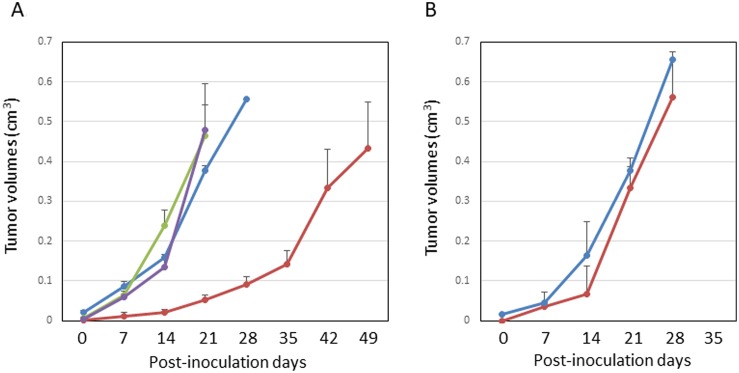
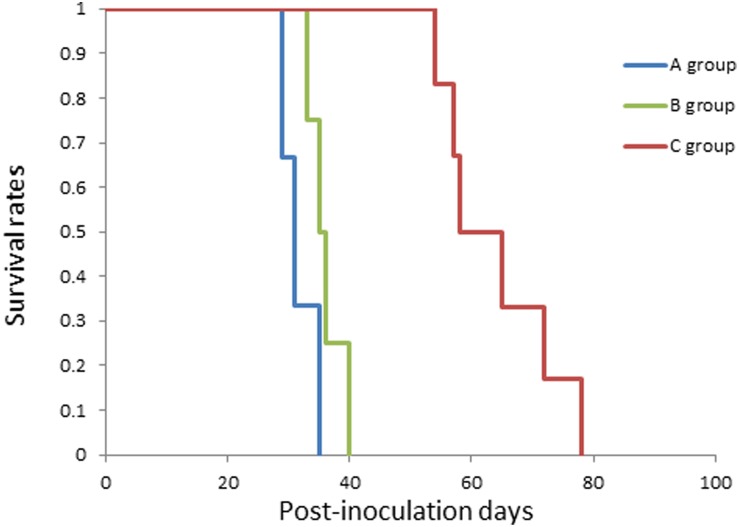
Glioblastoma (GBM) is the most common malignant brain tumor, and infiltrates into the surrounding normal brain tissue. Induction of a tumor-specific immune response is one of the best methods to obtain tumor-specific cytotoxicity. Photodynamic therapy (PDT) is known to effectively induce an antitumor immune response. We have developed a clinically translatable nanoparticle, liposomally formulated phospholipid-conjugated indocyanine green (LP-iDOPE), applicable for PDT. This nanoparticle accumulates in tumor tissues by the enhanced permeability and retention effect, and releases heat and singlet oxygen to injure cancer cells when activated by near infrared (NIR) light. We assessed the effectiveness of the LP-iDOPE system in brain using the rat 9L glioblastoma model. Treatment with LP-iDOPE and NIR irradiation resulted in significant tumor growth suppression and prolongation of survival. Histopathological examination showed induction of both apoptosis and necrosis and accumulation of CD8+ T-cells and macrophages/microglia accompanied by marked expressions of heat shock protein-70 (HSP70), which was not induced by mild hyperthermia alone at 45° C or an interleukin-2-mediated immune reaction. Notably, the efficacy was lost in immunocompromised nude rats. These results collectively show that the novel nanoparticle LP-iDOPE in combination with NIR irradiation can efficiently induce a tumor-specific immune reaction for malignant gliomas possibly by inducing HSP70 expression which is known to activate antigen-presenting cells through toll-like receptor signaling.
胶质母细胞瘤(GBM)是最常见的恶性脑肿瘤,会浸润到周围正常脑组织中。诱导肿瘤特异性免疫反应是获得肿瘤特异性细胞毒性的最佳方法之一。已知光动力疗法(PDT)能有效诱导抗肿瘤免疫反应。我们开发了一种可临床转化的纳米颗粒,脂质体包裹的磷脂共轭吲哚菁绿(LP-iDOPE),适用于PDT。这种纳米颗粒通过增强的渗透和滞留效应在肿瘤组织中蓄积,并在近红外(NIR)光激活时释放热量和单线态氧来损伤癌细胞。我们使用大鼠9L胶质母细胞瘤模型评估了LP-iDOPE系统在脑部的有效性。LP-iDOPE与NIR照射联合治疗导致肿瘤生长显著受抑和生存期延长。组织病理学检查显示诱导了凋亡和坏死,CD8 + T细胞以及巨噬细胞/小胶质细胞蓄积,并伴有热休克蛋白-70(HSP70)的显著表达,而单独45℃的轻度热疗或白细胞介素-2介导的免疫反应均未诱导这种表达。值得注意的是,在免疫缺陷的裸鼠中疗效丧失。这些结果共同表明,新型纳米颗粒LP-iDOPE与NIR照射联合使用可通过诱导HSP70表达有效诱导恶性胶质瘤的肿瘤特异性免疫反应,已知HSP70可通过Toll样受体信号通路激活抗原呈递细胞。