Physical Science Research Area, Tata Research Development and Design Centre, TCS Research, Tata Consultancy Services, 54B, Hadapsar Industrial Estate, Pune, 411013, India.
School of Engineering and Applied Sciences and Wyss Institute, Harvard University, 29 Oxford Street, Pierce 211, Cambridge, MA 02138, USA.
Sci Rep. 2019 Feb 6;9(1):1456. doi: 10.1038/s41598-018-37900-0.
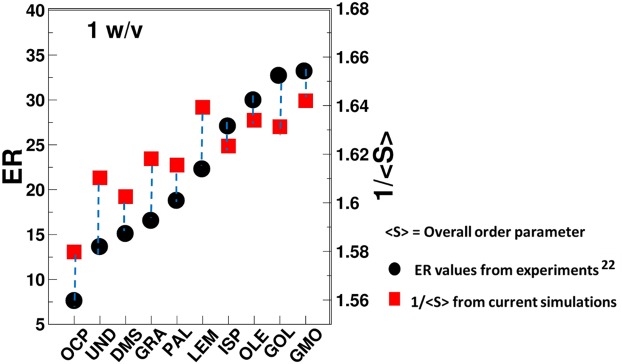
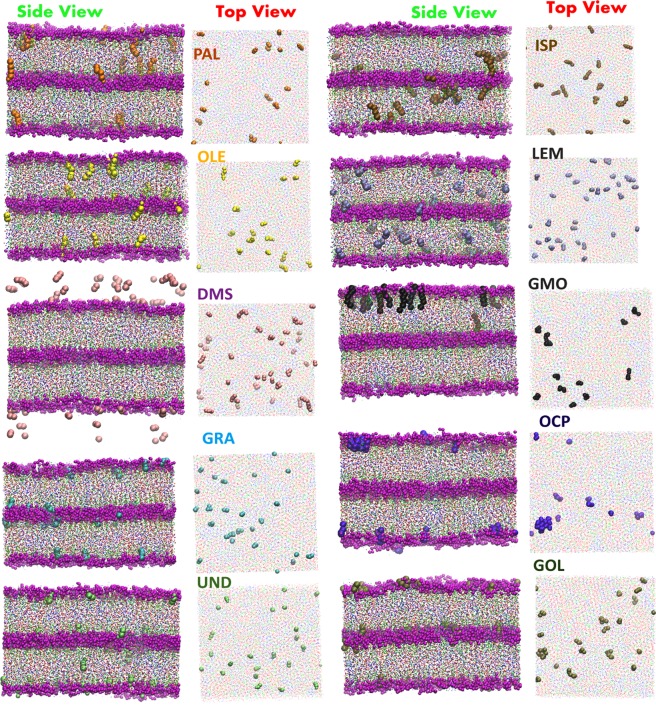
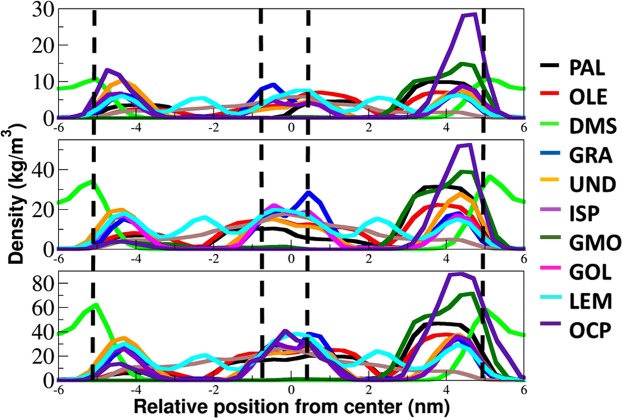
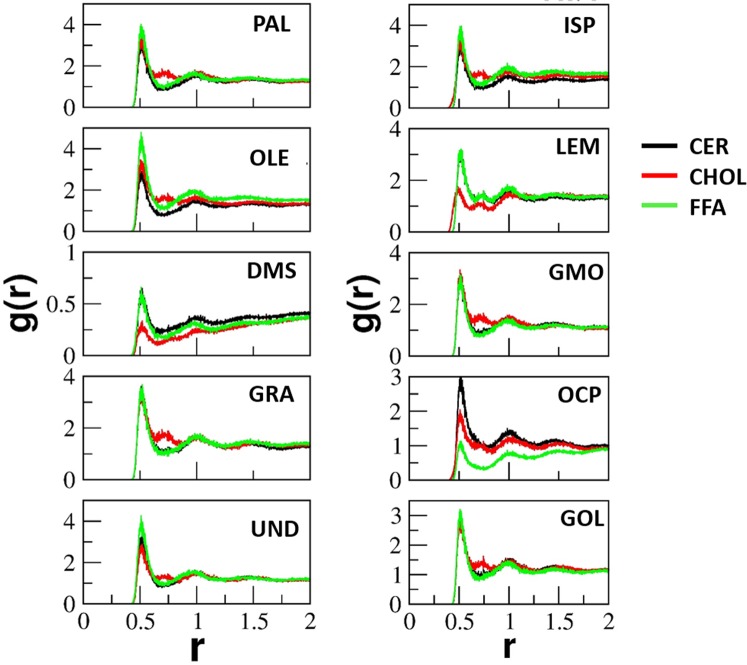
Breaching of the skin barrier is essential for delivering active pharmaceutical ingredients (APIs) for pharmaceutical, dermatological and aesthetic applications. Chemical permeation enhancers (CPEs) are molecules that interact with the constituents of skin's outermost and rate limiting layer stratum corneum (SC), and increase its permeability. Designing and testing of new CPEs is a resource intensive task, thus limiting the rate of discovery of new CPEs. In-silico screening of CPEs in a rigorous skin model could speed up the design of CPEs. In this study, we performed coarse grained (CG) molecule dynamics (MD) simulations of a multilayer skin lipid matrix in the presence of CPEs. The CPEs are chosen from different chemical functionalities including fatty acids, esters, and alcohols. A multi-layer in-silico skin model was developed. The CG parameters of permeation enhancers were also developed. Interactions of CPEs with SC lipids was studied in silico at three different CPE concentrations namely, 1% w/v, 3% w/v and 5% w/v. The partitioning and diffusion coefficients of CPEs in the SC lipids were found to be highly size- and structure-dependent and these dependencies are explained in terms of structural properties such as radial distribution function, area per lipid and order parameter. Finally, experimentally reported effects of CPEs on skin from the literature are compared with the simulation results. The trends obtained using simulations are in good agreement with the experimental measurements. The studies presented here validate the utility of in-silico models for designing, screening and testing of novel and effective CPEs.
皮肤屏障的破坏对于药物、皮肤病学和美容应用中的活性药物成分 (API) 的传递至关重要。化学渗透增强剂 (CPE) 是与皮肤最外层和限速层角质层 (SC) 的成分相互作用的分子,并增加其通透性。新 CPE 的设计和测试是一项资源密集型任务,因此限制了新 CPE 的发现速度。在严格的皮肤模型中对 CPE 进行计算机筛选可以加快 CPE 的设计。在这项研究中,我们在存在 CPE 的情况下对多层皮肤脂质基质进行了粗粒度 (CG) 分子动力学 (MD) 模拟。CPE 选自不同的化学功能,包括脂肪酸、酯和醇。开发了多层计算机皮肤模型。还开发了渗透增强剂的 CG 参数。在三种不同的 CPE 浓度(即 1%w/v、3%w/v 和 5%w/v)下,研究了 CPE 与 SC 脂质的相互作用。发现 CPE 在 SC 脂质中的分配和扩散系数高度依赖于大小和结构,并且这些依赖性可以根据结构特性(如径向分布函数、每个脂质的面积和有序参数)来解释。最后,将文献中报道的 CPE 对皮肤的实验影响与模拟结果进行了比较。使用模拟获得的趋势与实验测量结果吻合良好。这里呈现的研究验证了计算机模型在设计、筛选和测试新型有效 CPE 方面的实用性。