Department of Global Health and Population, Harvard T.H. Chan School of Public Health, Boston, United States of America (USA).
International Development Division, Abt Associates Inc., 6130 Executive Blvd, Rockville, MD 20852, USA.
Bull World Health Organ. 2019 Feb 1;97(2):97-107. doi: 10.2471/BLT.18.219980. Epub 2018 Dec 5.
To assess the potential impact of a new tax on sweetened beverages on premature deaths associated with noncommunicable diseases in the Philippines.
In January 2018, the Philippines began imposing a tax of 6 Philippine pesos per litre (around 13%) on sweetened beverages to curb the obesity burden. Using national data sources, we conducted an extended cost-effectiveness analysis to estimate the effect of the tax on the numbers of premature deaths averted attributed to type 2 diabetes mellitus, ischaemic heart disease and stroke, across income quintiles over the period 2018-2037. We also estimated the financial benefits of the tax from reductions in out-of-pocket payments, direct medical costs averted and government health-care cost savings.
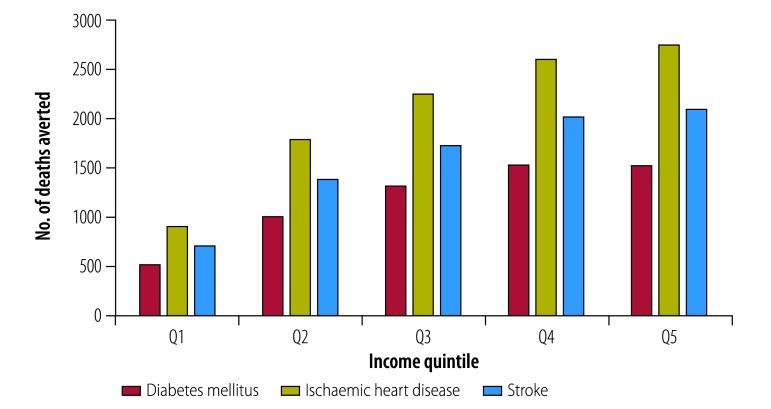
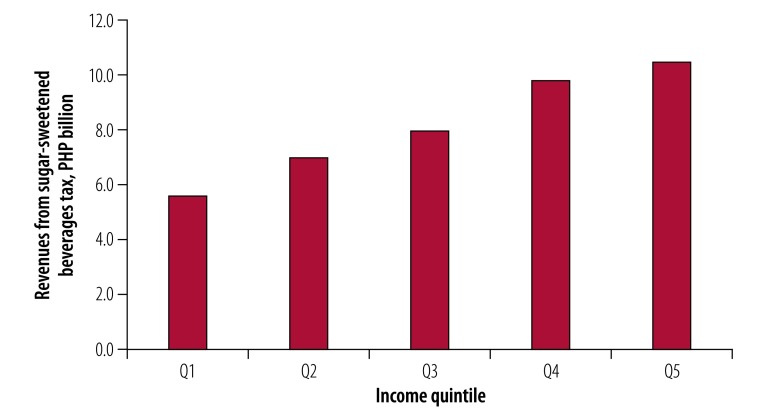
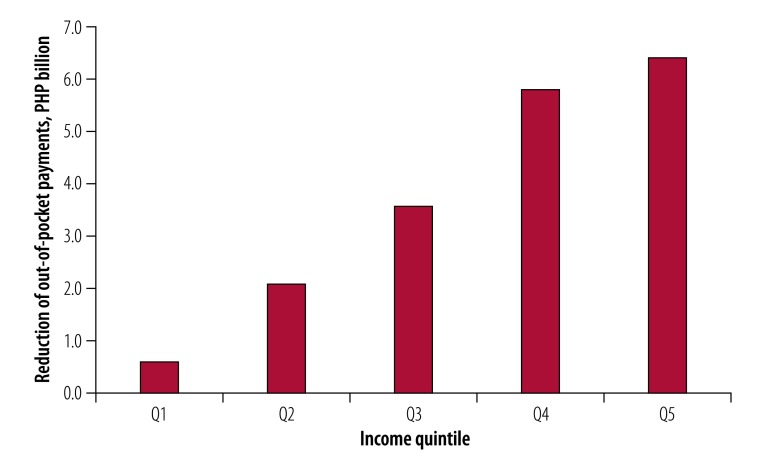
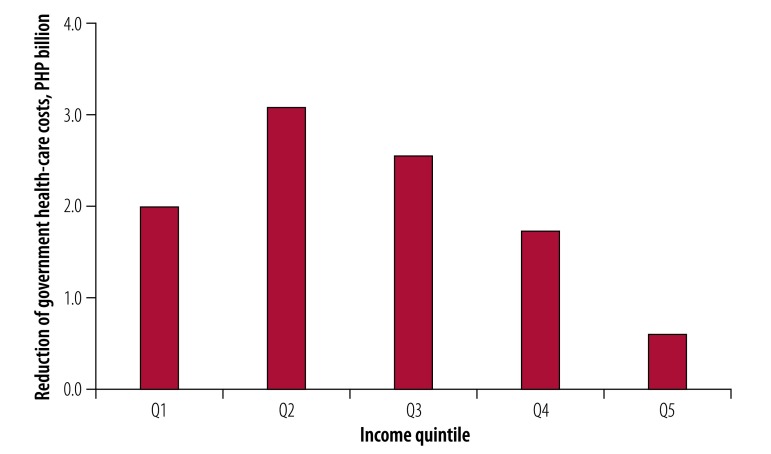
The tax could avert an estimated 5913 deaths related to diabetes, 10 339 deaths from ischaemic heart disease and 7950 deaths from stroke over 20 years. The largest number of deaths averted could be among the fourth and fifth (highest) income quintiles. The tax could generate total health-care savings of 31.6 billion Philippine pesos (627 million United States dollars, US$) over 20 years, and raise 41.0 billion Philippine pesos (US$ 813 million) in revenue per annum. The poorest quintile could bear the smallest tax burden increase (14% of the additional tax; 5.6 billion Philippine pesos) and have the lowest savings in out-of-pocket payments due to relatively large health-care subsidies. Finally, we estimated that 13 890 cases of catastrophic expenditure could be averted.
The new sweetened beverage tax may help to reduce obesity-related premature deaths and improve financial well-being in the Philippines.
评估对菲律宾含糖饮料征收新税对与非传染性疾病相关的过早死亡的潜在影响。
2018 年 1 月,菲律宾开始对含糖饮料征收每升 6 菲律宾比索(约 13%)的税,以遏制肥胖负担。我们利用国家数据源进行了扩展成本效益分析,以估计该税收对 2018-2037 年间 5 个收入五分位数中因 2 型糖尿病、缺血性心脏病和中风而避免的过早死亡人数的影响。我们还估计了税收从减少自付费用、避免的直接医疗费用和政府医疗保健节省中获得的经济利益。
该税收可在 20 年内避免约 5913 例与糖尿病相关的死亡、10339 例缺血性心脏病死亡和 7950 例中风死亡。避免的死亡人数最多的可能是第四和第五(最高)收入五分位数。该税收可在 20 年内产生 316 亿菲律宾比索(6.27 亿美元)的总医疗保健储蓄,并每年产生 410 亿菲律宾比索(8.13 亿美元)的税收收入。最贫困的五分位数可能承担最小的税收负担增加(额外税收的 14%;56 亿菲律宾比索),由于相对较大的医疗保健补贴,自付费用的节省最低。最后,我们估计可以避免 13890 例灾难性支出。
新的含糖饮料税可能有助于减少与肥胖相关的过早死亡,并改善菲律宾的财务状况。