Çilgin Hasan
Medicine Faculty, Obstetric and Gynecology Department, Kafkas University, Kars, Turkey.
ScientificWorldJournal. 2019 Jan 9;2019:1814804. doi: 10.1155/2019/1814804. eCollection 2019.
Some of the social factors were related to hormone replacement therapy. The purpose of this study is to determine hormone replacement therapy (HRT) rates and to illustrate social factors affecting hormone replacement therapy in postmenopausal women.
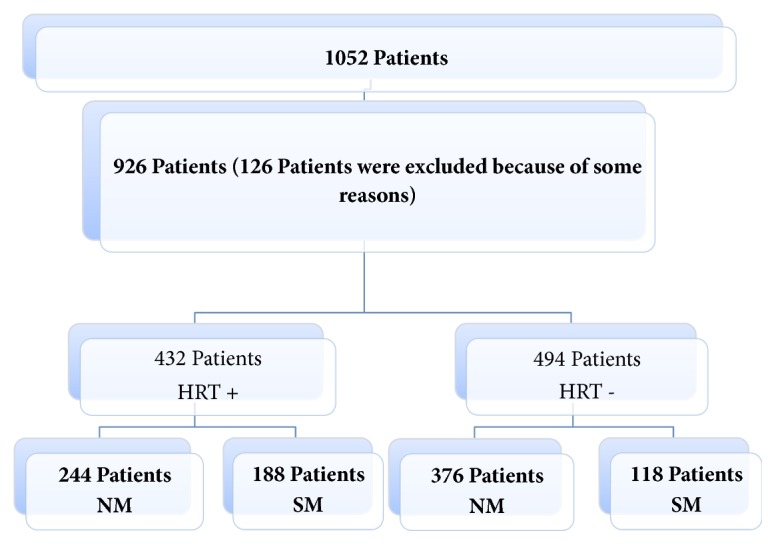
This study comprised a total of 1052 postmenopausal women, 926 of whom were reported menopausal symptoms and sought for the treatment. 432 of these 926 participants had treated their symptoms by receiving HRT. The data was collected with a data collection form prepared by the researcher by using face-to-face interview technique. In these analyses, chi-square and Backward Logistic regression analyses were used.
The multivariate analyses indicated that the decision to seek treatment was influenced by a multitude of factors. These factors included location of hormone replacement therapy (OR: 12.32 [3.21-44.46] in university hospital and OR: 5.42 [2.43-13.26] in private hospital), information received about HRT (OR: 7.25 [2.14,-30.80]), physicians' counselling and involvement (OR: 5.24 [2.82-9.86]), knowledge of complications associated with HRT (OR: 6.21 [3.28-16.62]), and employment status (OR: 3.42 [1.86-5.58]). The current study identifies these factors affecting the HRT process in postmenopausal women.
This study suggests that although the results do not demonstrate an exhaustive list of factors affecting the HRT process, they nonetheless provide evidence that the location participants applied for, physicians' counselling and involvement, participant employment status, and knowledge surrounding HRT may affect a woman's intent to receive HRT. Therefore, these results indicate that health professional influence and HRT awareness are important for HRT use. Suggestions for health care include informing women of the advantages and disadvantages of HRT to encourage popularity.
一些社会因素与激素替代疗法相关。本研究的目的是确定激素替代疗法(HRT)的使用率,并阐明影响绝经后女性激素替代疗法的社会因素。
本研究共纳入1052名绝经后女性,其中926名报告有绝经症状并寻求治疗。这926名参与者中有432名通过接受激素替代疗法治疗了症状。数据通过研究人员编制的数据收集表,采用面对面访谈技术收集。在这些分析中,使用了卡方检验和向后逻辑回归分析。
多变量分析表明,寻求治疗的决定受多种因素影响。这些因素包括激素替代疗法的地点(大学医院的比值比:12.32 [3.21 - 44.46],私立医院的比值比:5.42 [2.43 - 13.26])、获得的关于激素替代疗法的信息(比值比:7.25 [2.14, - 30.80])、医生的咨询和参与(比值比:5.24 [2.82 - 9.86])、对激素替代疗法相关并发症的了解(比值比:6.21 [3.28 - 16.62])以及就业状况(比值比:3.42 [1.86 - 5.58])。本研究确定了这些影响绝经后女性激素替代疗法过程的因素。
本研究表明,尽管结果并未展示影响激素替代疗法过程的所有因素,但它们提供了证据,表明参与者申请治疗的地点、医生的咨询和参与、参与者的就业状况以及对激素替代疗法的了解可能会影响女性接受激素替代疗法的意愿。因此,这些结果表明医疗专业人员的影响和激素替代疗法的认知度对激素替代疗法的使用很重要。对医疗保健的建议包括告知女性激素替代疗法的利弊以促进其普及。