Zhang Wen, Chen Si-Tai, He Qiu-Yan, Huang Li-Quan, Li Xiong, Lai Xiao-Ping, Zhan Shao-Feng, Huang Hui-Ting, Liu Xiao-Hong, Wu Jianguo, Li Geng
Laboratory Animal Center, Guangzhou University of Chinese Medicine, Guangzhou, China.
The First Affiliated Hospital of Zhejiang Chinese Medical University, Hangzhou, China.
Front Microbiol. 2019 Jan 23;9:3325. doi: 10.3389/fmicb.2018.03325. eCollection 2018.
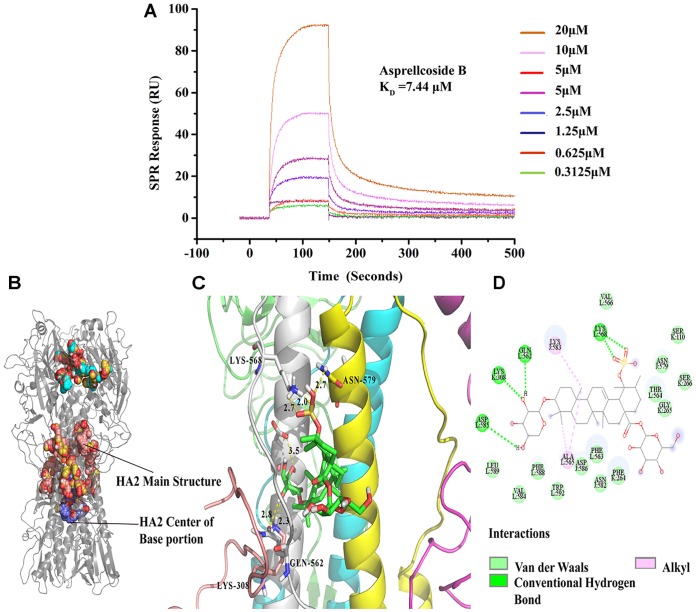
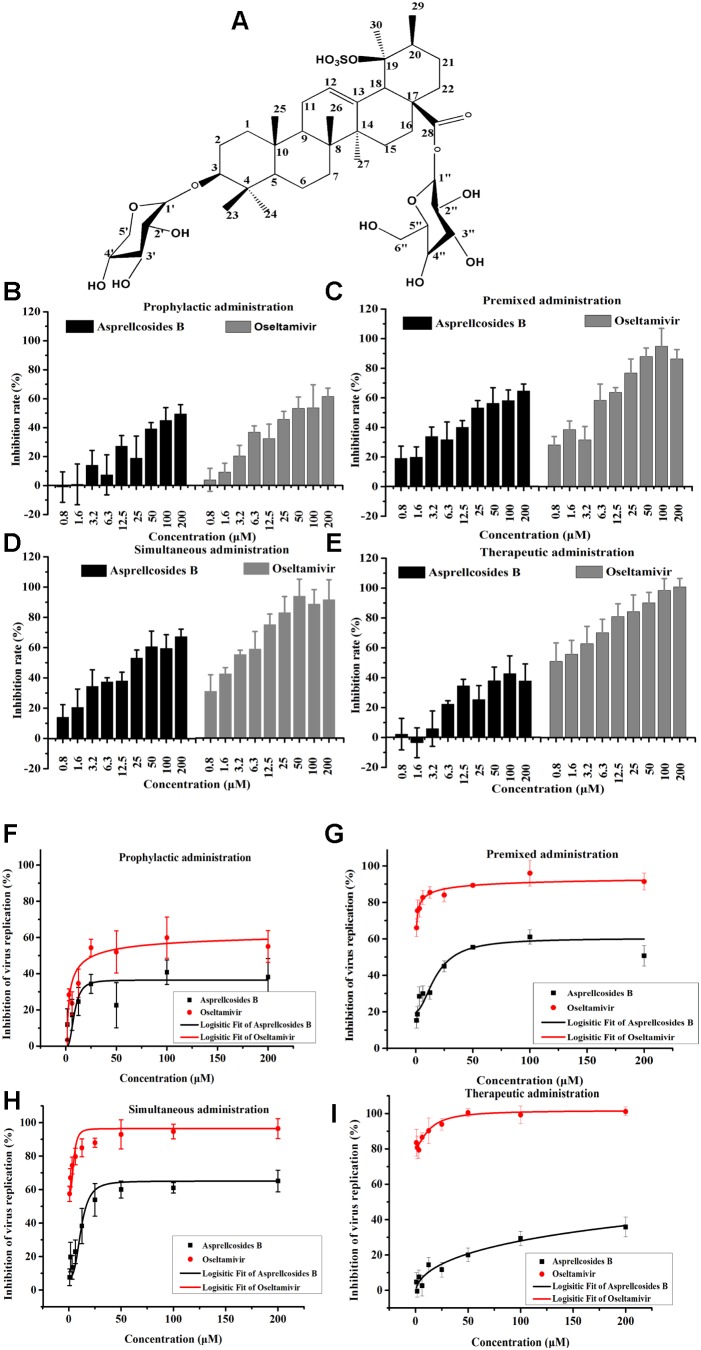
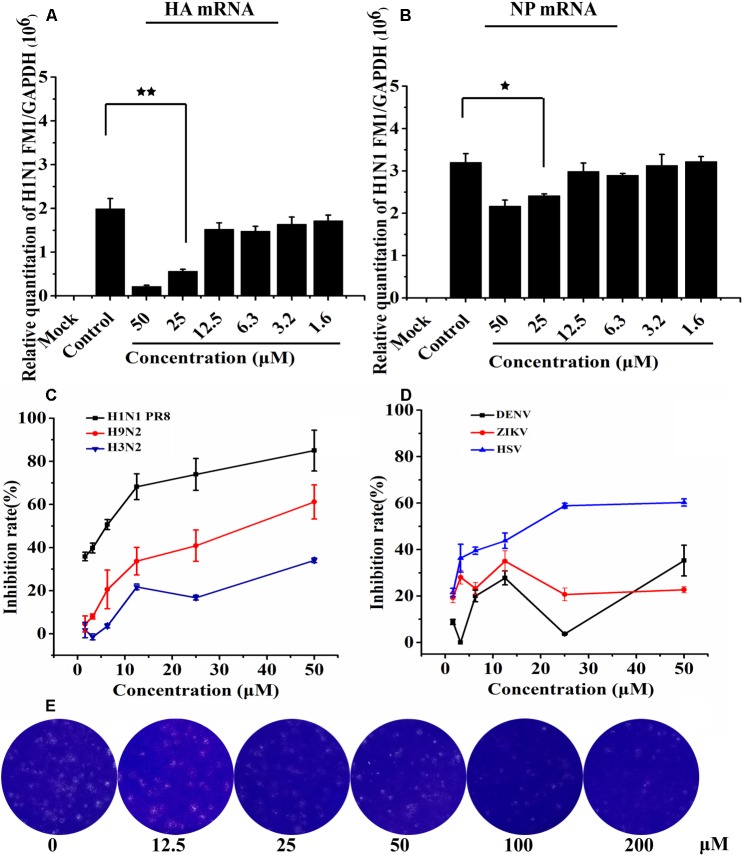
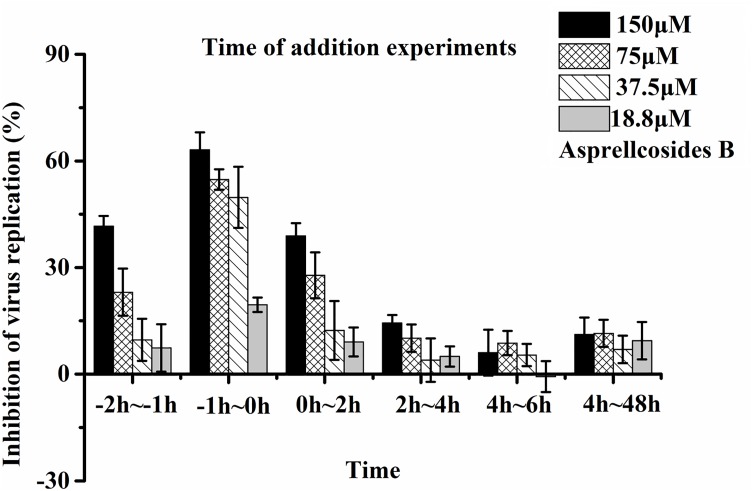
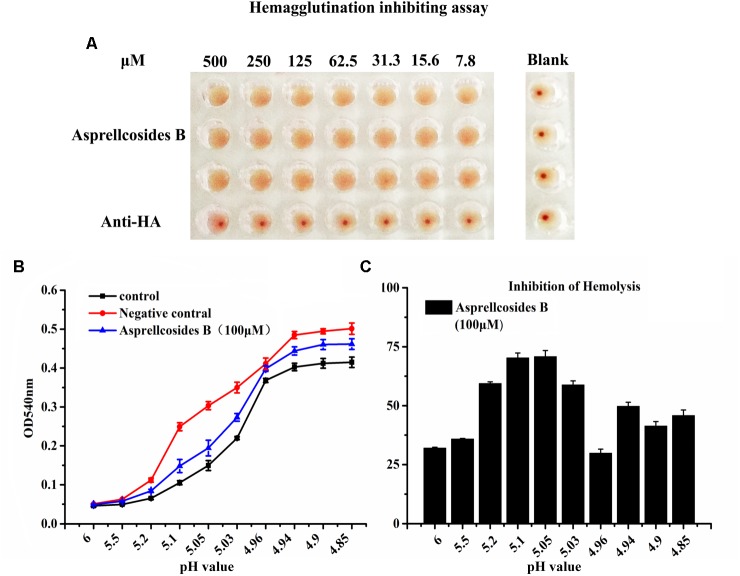
is routinely used in China as a traditional medicinal herb to treat influenza (Flu). However, its specific antiviral activity and underlying molecular mechanism have not yet been determined. In this study, we sought to determine the antiviral activity and mechanism of Asprellcosides B, an active component extracted from , and used against the influenza A virus cell culture. We also performed a computer-assisted structural modeling analysis and carried out surface plasmon resonance (SPR) experiments in the hope of determining the viral target of Asprellcosides B. Results from our studies show that Asprellcosides B reduced virus replication by up to 63% with an IC50 of about 9 μM. It also decreased the low pH-induced and virus-mediated hemolysis by 71% . Molecular docking simulation analysis suggested a possible binding of Asprellcosides B to the hemagglutinin (HA), which was confirmed by a surface plasmon resonance (SPR) assay. Altogether, our findings demonstrate that Asprellcosides B inhibits the influenza A virus, through a specific binding to the HA, resulting in the blockade of the HA-mediated membrane fusion.
在中国,它常被用作传统草药来治疗流感。然而,其具体的抗病毒活性和潜在分子机制尚未确定。在本研究中,我们试图确定从[植物名称]中提取的活性成分阿斯普雷科斯苷B对甲型流感病毒细胞培养的抗病毒活性和机制。我们还进行了计算机辅助结构建模分析并开展了表面等离子体共振(SPR)实验,以期确定阿斯普雷科斯苷B的病毒靶点。我们的研究结果表明,阿斯普雷科斯苷B可将病毒复制降低多达63%,半数抑制浓度(IC50)约为9μM。它还使低pH诱导的和病毒介导的溶血降低了71%。分子对接模拟分析表明阿斯普雷科斯苷B可能与血凝素(HA)结合,表面等离子体共振(SPR)测定证实了这一点。总之,我们的研究结果表明,阿斯普雷科斯苷B通过与HA特异性结合来抑制甲型流感病毒,从而导致HA介导的膜融合受阻。