Dey Priyankar, Saha Manas Ranjan, Roy Choudhuri Sumedha, Sarkar Indrani, Halder Biswajit, Poddar-Sarkar Mousumi, Sen Arnab, Chaudhuri Tapas Kumar
Cellular Immunology Laboratory, Department of Zoology, University of North Bengal, Siliguri, West Bengal 734013, India.
Human Nutrition Program, Department of Human Sciences, The Ohio State University, Columbus, Ohio 43210, USA.
Adv Pharmacol Sci. 2019 Jan 8;2019:7865359. doi: 10.1155/2019/7865359. eCollection 2019.
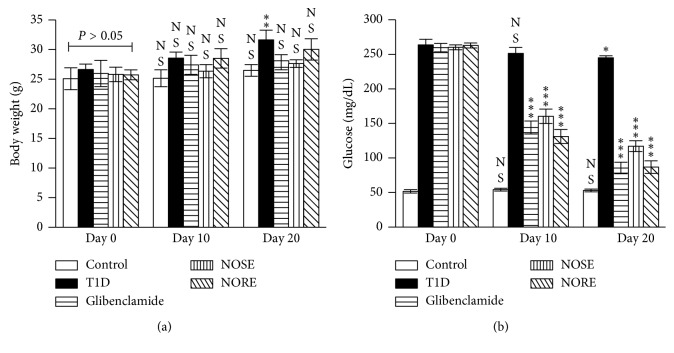
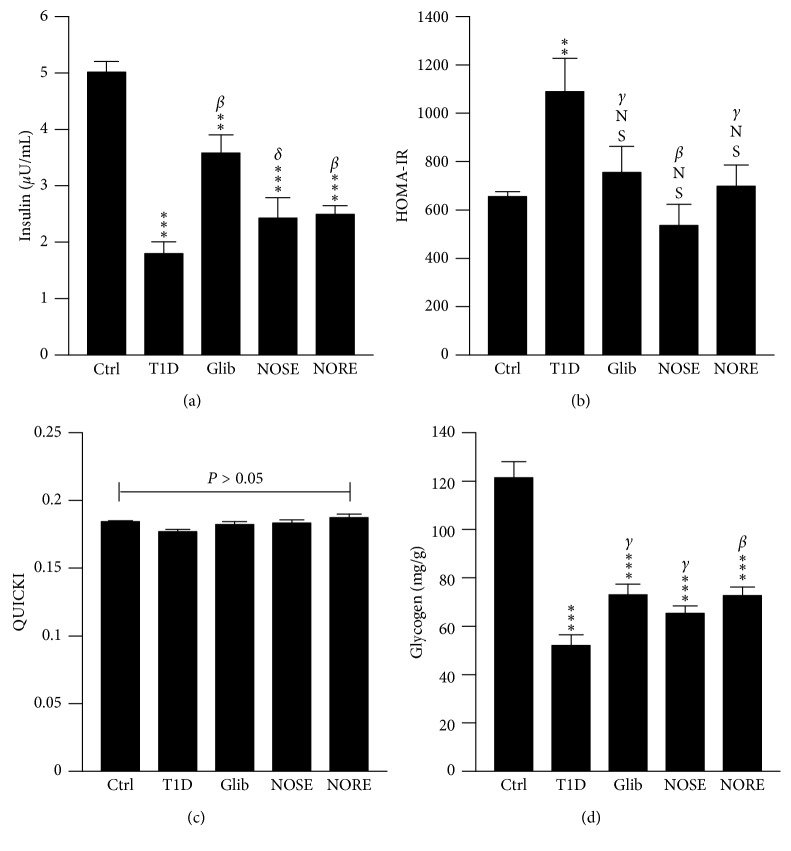
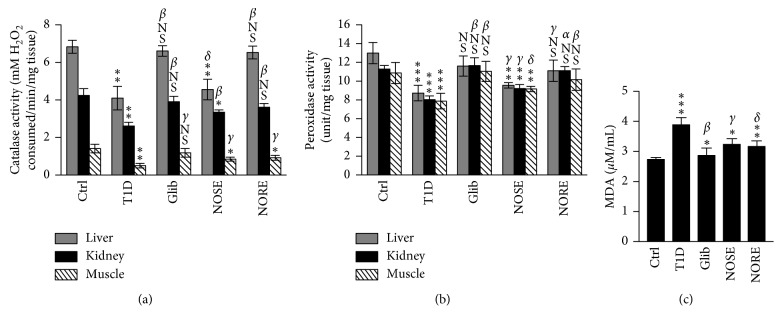
The extracts of different parts of L. are used as antidiabetic remedy in the traditional medicinal systems of different parts of the world. Despite these uses in ethnomedicinal system, the antihyperglycemic potentials of oleander stem (NOSE) and root (NORE) extracts have not been pharmacologically evaluated. Therefore, we aimed at evaluating the antidiabetic ethnomedicinal claims of NOSE and NORE, primarily focusing on glucose homeostasis and associated metabolic implications. Alloxan-treated mice with hyperglycaemia (blood glucose >200 mg/dL) were treated with oleander 70% hydromethanolic extracts (200 mg/kg) for 20 consecutive days, and the results were compared with positive control glibenclamide. Blood glucose level was 52-65% lowered ( < 0.001) in oleander treated groups, which was otherwise 4.62 times higher in diabetic mice, compared to control. Insulin resistance was lowered 51-36% irrespective of any significant ( > 0.05) changes in insulin sensitivity throughout the treatments. Improved serum insulin remained associated with lowered glucose level ( = -0.847 and -0.772; < 0.01). Markers of hyperglycaemia-related hepatic glycogen, glycated haemoglobin (HbA1c), hyperlipidaemia, hepatic injury, and diabetic nephropathy were normalized as well. Improvement of systemic intrinsic antioxidant enzymes (catalase and peroxidase) were correlated ( = -0.952 to -0.773; < 0.01) with lower lipid peroxidation by-product malondialdehyde (MDA) in the circulation. Principal component analysis coupled with hierarchical cluster analysis represented shift in metabolic homeostasis in diabetic mice, which was further normalized by oleander and glibenclamide treatment. Additionally, molecular docking studies of the phenolic acids measured by HPLC with intracellular cytoprotective transcription factor nuclear factor erythroid 2-related factor 2 (Nrf2) revealed strong molecular interactions. The results collectively support the ethnomedicine antidiabetic claims of oleander stem and root and suggest that the oleander mediated elevation of systemic antioxidant status is likely responsible for the improved glycaemic control.
夹竹桃不同部位的提取物在世界不同地区的传统医学体系中被用作抗糖尿病药物。尽管在民族医学体系中有这些用途,但夹竹桃茎(NOSE)和根(NORE)提取物的降血糖潜力尚未进行药理学评估。因此,我们旨在评估NOSE和NORE的抗糖尿病民族医学主张,主要关注葡萄糖稳态及相关代谢影响。用四氧嘧啶诱导高血糖(血糖>200mg/dL)的小鼠连续20天用夹竹桃70%甲醇提取物(200mg/kg)治疗,并将结果与阳性对照格列本脲进行比较。夹竹桃治疗组的血糖水平降低了52 - 65%(P<0.001),与对照组相比,糖尿病小鼠的血糖水平高出4.62倍。无论在整个治疗过程中胰岛素敏感性有无显著(P>0.05)变化,胰岛素抵抗均降低了51 - 36%。血清胰岛素水平的改善与血糖水平降低相关(r = -0.847和-0.772;P<0.01)。高血糖相关的肝糖原、糖化血红蛋白(HbA1c)、高脂血症、肝损伤和糖尿病肾病的标志物也恢复正常。全身内源性抗氧化酶(过氧化氢酶和过氧化物酶)的改善与循环中脂质过氧化副产物丙二醛(MDA)水平降低相关(r = -0.952至-0.773;P<0.01)。主成分分析结合层次聚类分析表明糖尿病小鼠的代谢稳态发生了变化,夹竹桃和格列本脲治疗使其进一步恢复正常。此外,通过高效液相色谱法测定的酚酸与细胞内细胞保护转录因子核因子红细胞2相关因子2(Nrf2)的分子对接研究显示出强烈的分子相互作用。这些结果共同支持了夹竹桃茎和根的民族医学抗糖尿病主张,并表明夹竹桃介导的全身抗氧化状态升高可能是血糖控制改善的原因。