Unit of Epidemiology and Medical Statistics, Department of Diagnostics and Public Health, University of Verona, Verona, Italy.
UMR1152, Department of Pathophysiology and Epidemiology of Respiratory Diseases, INSERM, Paris, France.
PLoS One. 2019 Feb 7;14(2):e0211976. doi: 10.1371/journal.pone.0211976. eCollection 2019.
Smoking is the main risk factor for most of the leading causes of death. Cessation is the single most important step that smokers can take to improve their health. With the aim of informing policy makers about decisions on future tobacco control strategies, we estimated time and age trends in smoking cessation in Europe between 1980 and 2010.
Data on the smoking history of 50,228 lifetime smokers from 17 European countries were obtained from six large population-based studies included in the Ageing Lungs in European Cohorts (ALEC) consortium. Smoking cessation rates were assessed retrospectively, and age trends were estimated for three decades (1980-1989, 1990-1999, 2000-2010). The analyses were stratified by sex and region (North, East, South, West Europe).
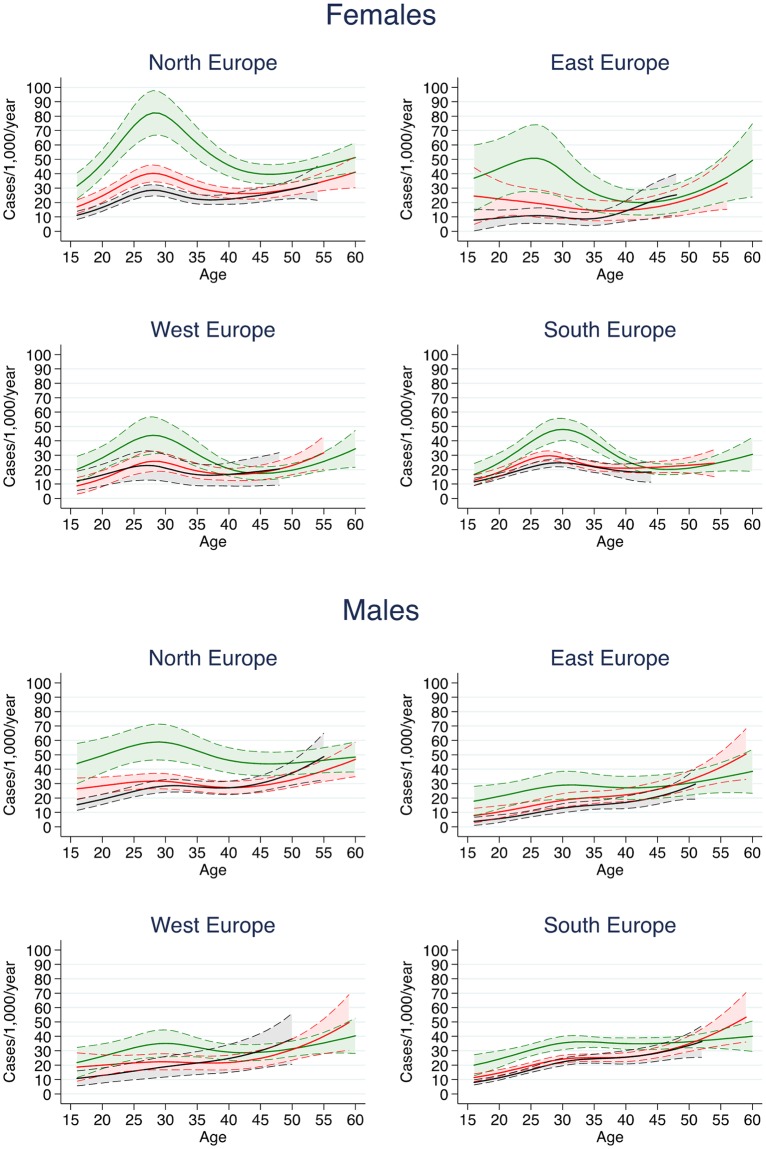
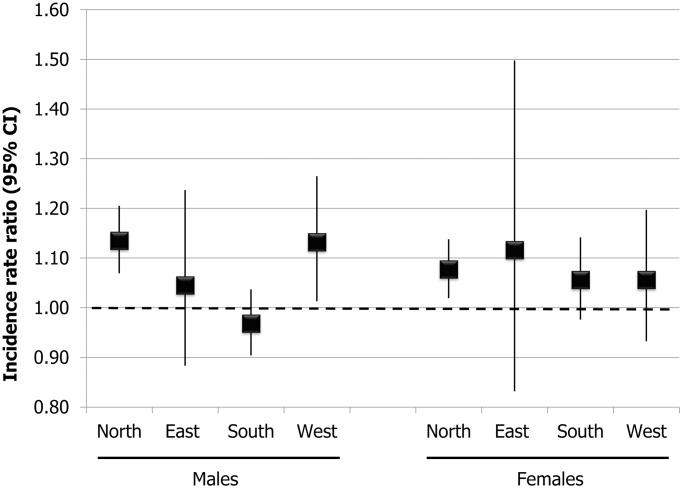
Overall, 21,735 subjects (43.3%) quit smoking over a total time-at-risk of 803,031 years. Cessation rates increased between 1980 and 2010 in young adults (16-40 years), especially females, from all the regions, and in older adults (41-60 years) from North Europe, while they were stable in older adults from East, South and West Europe. In the 2000s, the cessation rates for men and women combined were highest in North Europe (49.9 per 1,000/year) compared to the other regions (range: 26.5-32.7 per 1,000/year). A sharp peak in rates was observed for women around the age of 30, possibly as a consequence of pregnancy-related smoking cessation. In most regions, subjects who started smoking before the age of 16 were less likely to quit than those who started later.
Our findings suggest an increasing awareness on the detrimental effects of smoking across Europe. However, East, South and West European countries are lagging behind North Europe, suggesting the need to intensify tobacco control strategies in these regions. Additional efforts should be made to keep young adolescents away from taking up smoking, as early initiation could make quitting more challenging during later life.
吸烟是大多数主要死亡原因的主要危险因素。戒烟是吸烟者改善健康的最重要步骤。为了向决策者提供有关未来烟草控制策略决策的信息,我们估计了 1980 年至 2010 年期间欧洲戒烟的时间和年龄趋势。
从参与欧洲老龄化肺队列(ALEC)联盟的六项大型基于人群的研究中获得了来自 17 个欧洲国家的 50228 名终生吸烟者的吸烟史数据。回顾性评估戒烟率,并估计了三个十年(1980-1989 年、1990-1999 年、2000-2010 年)的年龄趋势。分析按性别和地区(北欧、东欧、南欧、西欧)分层。
总体而言,在总共 803031 年的风险时间内,有 21735 名受试者(43.3%)戒烟。1980 年至 2010 年间,所有地区的年轻成年人(16-40 岁),尤其是女性,以及北欧的老年成年人(41-60 岁)的戒烟率均有所上升,而东欧、南欧和西欧的老年成年人的戒烟率则保持稳定。在 21 世纪 00 年代,北欧的男性和女性综合戒烟率最高(每年每 1000 人 49.9 人),而其他地区的戒烟率为每年每 1000 人 26.5-32.7 人。女性在 30 岁左右时,戒烟率出现明显高峰,可能是由于与怀孕有关的戒烟。在大多数地区,16 岁前开始吸烟的人比后来开始吸烟的人更不容易戒烟。
我们的研究结果表明,欧洲各地对吸烟的危害的认识不断提高。然而,东欧、南欧和西欧国家落后于北欧国家,这表明需要在这些地区加强烟草控制策略。应该做出更多努力,让青少年远离吸烟,因为早期开始吸烟可能会使以后的生活更难戒烟。